

Maddy summaryThe HEIRS Act of 2025 establishes two grant programs to help homeowners with "heirs' property" - residential land held by multiple heirs without clear title due to intestacy. It provides $30 million annually (2026-2036) to states/local governments that adopt the Uniform Partition of Heirs Property Act, funding title documentation, legal fees, and estate planning. An additional $10 million annually (2026-2030) supports HUD-approved housing counselors and legal services to assist low- and moderate-income minority homeowners in clearing title and retaining homes. The bill requires grantees to prioritize neighborhoods with high concentrations of affected residents and includes mandatory education about heirs' property risks and solutions.
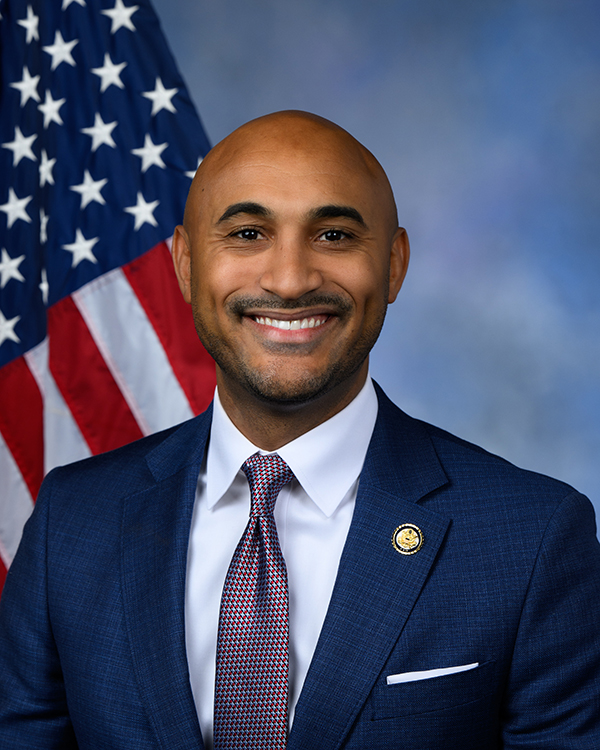
Rep. Shomari Figures
Sponsored bills
Maddy summaryThe High School Voter Empowerment Act of 2026 requires all public high schools in the United States to be designated as voter registration agencies under federal law. Schools must conduct at least one voter registration drive each academic year, with a specific goal of registering eligible students who are at least 17 years old and enrolled in American Government or Economics classes. To support these efforts, the Department of Education would establish a grant program that reimburses schools for the reasonable costs associated with running these drives. Additionally, state election officials may provide voting machines to schools upon request for use in student council elections.
Maddy summaryThe PERFORM Act restricts the Postmaster General from receiving bonuses or performance-based pay if the Postal Service runs a financial deficit, misses service targets, or fails to pass its annual audit. To enforce this, the law requires the Postmaster General to submit an annual report to Congress detailing all executive compensation, the metrics used to justify those payments, and the agency's financial and service performance data. Additionally, the Postal Service Inspector General must review these reports to ensure compliance with the new restrictions. These measures directly affect the compensation of senior Postal Service leadership and increase transparency regarding the agency's financial and operational results.
Maddy summaryThe WINGS Act of 2026 expands federal financial aid eligibility to cover specific aviation training expenses for students enrolled in qualifying aviation programs at colleges and universities. Under this bill, students could use federal funds to pay for costs such as flight simulator hours, aircraft instruction, aviation training materials, and licensing exam fees. The legislation defines eligible programs as those offering associate's or bachelor's degrees in aviation-related fields and includes professional degree programs that meet specific regulatory training standards. These changes would take effect on July 1, 2027, allowing students to access financial support for practical aviation training components starting with the 2027-2028 award year.
Maddy summaryThe Polling Place Standards Act requires states to establish at least one voting location for every 2,000 registered voters before federal elections, ensuring these sites are spread across diverse geographic areas rather than concentrated in specific regions. This law mandates that each polling place be adequately staffed to handle ballot processing, maintain security, and accommodate accessibility needs while keeping voter wait times at 30 minutes or less. States that allow voters to cast ballots via drop boxes or mail-in methods are exempt from these physical location requirements. To help states meet these new standards, the bill creates a federal grant program to provide funding for implementing the necessary changes.
Maddy summaryThe Tuskegee Airmen Memorial Act of 2026 authorizes the organization Tuskegee Airmen, Inc. to build a commemorative monument on federal land in Washington, D.C., honoring the original Tuskegee Airmen who served in World War II. This legislation allows the group to accept private donations and cover all costs for the project without using federal funds, while requiring any leftover money to be deposited into specific government accounts. The bill also mandates that the memorial be constructed in compliance with existing federal standards for commemorative works.
Maddy summaryThis bill requires pharmacy benefits managers (PBMs) administering prescription drug benefits for federal employee health plans to reimburse pharmacies at specific rates, including the national average drug cost plus a small percentage or $50, whichever is lower. It prohibits PBMs from favoring their own pharmacies, restricting patient choice, or reducing pharmacy payments after claims are processed. The bill establishes $10,000 civil penalties for violations, with debarment from federal health plans after 10 penalties in 10 years. This directly affects PBMs, in-network pharmacies, and federal health benefit plans covering millions of federal employees and their families. The law aims to ensure fair reimbursement practices and maintain pharmacy choice under the Federal Employees Health Benefits Program.
Maddy summaryThis concurrent resolution formally recognizes the persistent wage gap between Black women and white, non-Hispanic men in the United States. It highlights data showing that Black women earn significantly less than their male counterparts and reaffirms Congress's support for existing laws that prohibit pay discrimination based on sex or race. The document does not create new laws or change policy but serves as a symbolic statement to raise awareness about the economic disparities faced by Black women.
Maddy summaryThe Justice for Incarcerated Moms Act aims to improve maternal health outcomes for pregnant and postpartum individuals in the criminal justice system by restricting financial incentives for states that use restraints on pregnant inmates. Under the bill, states receiving federal justice grants would face a 25 percent funding penalty if they fail to implement laws limiting the use of shackles on pregnant individuals, with those withheld funds redirected to compliant states. The legislation also directs the Bureau of Prisons and the Department of Justice to create and fund programs in at least six federal facilities and across various state and local prisons that provide specialized prenatal care, mental health support, and reentry assistance. These programs are designed to address specific health disparities, particularly for racial and ethnic minority groups, by offering culturally competent care, nutrition counseling, and opportunities to maintain contact with newborn children. Additionally, the act requires an independent oversight organization to monitor program implementation and mandates a Government Accountability Office report to analyze maternal and infant health data within the correctional system.
Maddy summaryThe AADAPT Act reauthorizes and expands Project ECHO grants to improve Alzheimer’s and dementia care through technology-enabled training. It specifically funds grants for healthcare providers in rural, frontier, or medically underserved areas to enhance early diagnosis, quality care, and provider retention for dementia patients. The bill authorizes $1 million annually (2027-2032) for these dementia-focused training programs, requiring funds to supplement - not replace - existing resources. This directly supports primary care providers licensed to serve underserved communities, using collaborative online learning to address care gaps.