

Maddy summarySB 99 creates a refundable tax credit against personal income tax equal to the motor vehicle property tax paid by qualifying taxpayers. It directly affects low-to-moderate-income individuals: single filers with adjusted gross income under $100,000 and married couples filing jointly with income under $200,000. The credit is refundable, meaning eligible taxpayers receive cash back even if the credit exceeds their income tax liability. The bill specifically applies to motor vehicle property tax, not home property tax (though the text references a separate residence tax limitation, which is unrelated to this vehicle credit). This is a concrete policy change that reduces the tax burden for vehicle owners meeting the income thresholds.
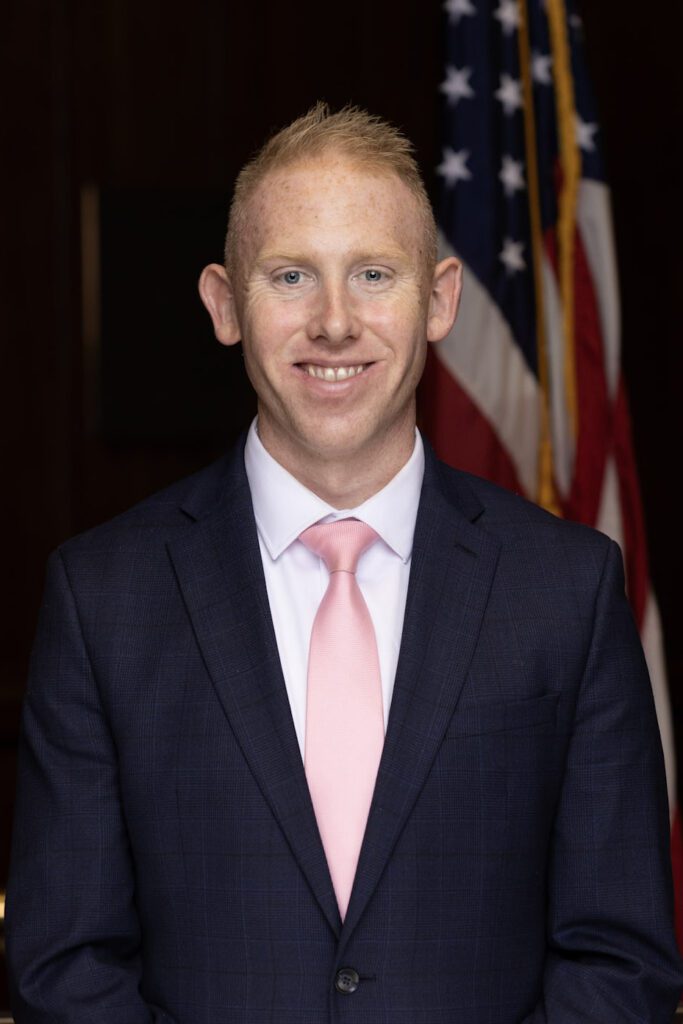
Sen. Stephen Harding
Sponsored bills
Maddy summarySB 27 provides funding from the state General Fund for rural hospitals to maintain labor and delivery and intensive care units during the 2026-2027 fiscal year. The bill directs the Department of Public Health to distribute these funds to eligible rural hospitals, directly supporting healthcare access for residents in underserved communities. Key provisions include appropriating unspecified funds (as the exact amount is blanked in the text) specifically for these critical hospital services. The legislation aims to prevent service closures in rural areas by ensuring hospitals can sustain essential care units. This is a concrete funding measure targeting operational costs, not a policy change to healthcare delivery standards.
Maddy summarySB 33 establishes the "Learn Here, Live Here" program, requiring the Commissioner of Economic and Community Development to create it with an annual budget of up to $5 million. The program targets individuals with an annual federal adjusted gross income of $75,000 or less. Key provisions include setting a funding cap of $5 million per year and restricting eligibility to low-income residents based on income thresholds. This bill directly affects qualifying low-income residents seeking housing support within the state.
Maddy summarySB 62 authorizes the state to issue bonds up to a specified amount to fund high-speed broadband improvements in rural areas. The proceeds will be distributed as grants by the Department of Energy and Environmental Protection to enhance and extend broadband internet and cellular service access. This bill directly affects rural communities by targeting funding to address connectivity gaps in underserved areas. It creates a mechanism for state financial support through bond issuance, with no specific dollar amount listed in the proposed text. The policy change focuses on expanding infrastructure access, not on regulatory or tax measures.
Maddy summarySB 74 would create a $20 million state tax credit for dairy farmers to help offset income losses during periods when milk prices drop. The credit directly affects dairy farmers in the state who experience cyclical price fluctuations in milk sales. The bill establishes this tax credit as a fixed pool, meaning it would provide financial relief to eligible farmers when milk prices fall below certain levels. This is a direct policy change to support dairy farm revenue stability, not a procedural measure.
Maddy summaryThis bill (HB 5647) renames a bridge over U.S. Route 7 in Brookfield, Connecticut, from the "Petty Officer 1st Class Dale Lewis Memorial Bridge" to the "Petty Officer 1st Class Jason D. Lewis Memorial Bridge." The change honors Jason D. Lewis, with no other policy provisions or affected parties beyond the bridge's official designation. It is a purely commemorative act with no substantive legislative impact.
Maddy summaryHB 5404 requires the Public Utilities Regulatory Authority (PURA) to have full bipartisan membership, mandating three majority-party and two minority-party members, with vacancies filled by the Senate President Pro Tempore and House Speaker. It separates PURA from the Department of Energy and Environmental Protection, prohibits private communications between PURA members and officials, and allows electric companies to recover known costs in rate reviews. The bill also requires both legislative chambers to approve any policy restricting utility shutoffs for nonpayment due to hardship. These changes aim to make PURA more independent and balanced in its regulatory decisions affecting electricity and gas utilities.