Maddy summaryThis bill directs the Commissioner of Social Services, working with the Commissioner of Public Health, to study the need for palliative and hospice care services in Litchfield County. The study must consider existing findings from the state's Palliative Care Advisory Council and must be completed by October 1, 2026. If the study finds a need, the commissioner may create a pilot program using available funds, federal resources, and Medicaid options to provide these services. The bill requires a final report to be submitted to the relevant legislative committees.
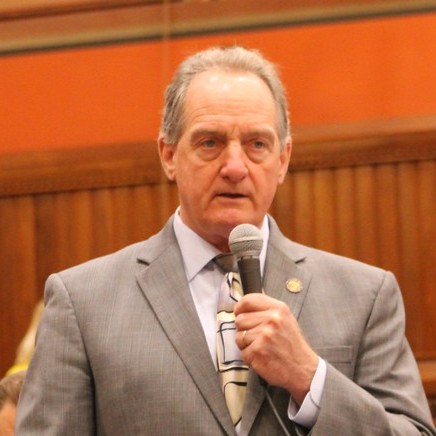
Rep. John Piscopo
Sponsored bills
Maddy summaryHB 5211 requires providers offering sales-based commercial financing (repayments tied to a business's sales/revenue) to disclose four specific details to recipients: the total financing amount, disbursement amount (excluding finance charges), finance charge, and an estimated annual percentage rate (APR) based on projected sales. This applies to financing under $250,000 not intended for personal use, directly affecting small businesses and the providers (like brokers or non-bank lenders) offering this financing. The APR must be calculated using either historical sales data or an opt-in method, with providers notifying the Banking Commissioner of their chosen method. Banks, credit unions, and certain large lenders are exempt from these requirements. The bill takes effect October 1, 2026.
Maddy summarySB 388 establishes the "Mashantucket Pequot and Mohegan Fund" as a permanent state fund to manage payments received from Connecticut's Mashantucket Pequot Tribe and Mohegan Tribe. The bill requires transferring $152.38 million annually from Connecticut's General Fund to this new fund starting July 1, 2026, using revenue from tribal agreements. Funds will be distributed to Connecticut towns through the Office of Policy and Management following existing grant guidelines (Section 3-55j), with payments made in three installments each year. This directly affects Connecticut towns receiving these grants, which were previously managed under a different funding mechanism.
Maddy summaryThis bill establishes a new lump sum death benefit of $100,000 for surviving families of first responders who die from firefighter cancer while performing their duties. It creates a dedicated "Fallen Hero Fund" to finance these payments and expands the definition of firefighter cancer to include various types of cancer affecting multiple body systems. The law applies to first responders including firefighters, police officers, paramedics, and emergency medical technicians, and ensures these benefits are paid in addition to any other compensation or survivor benefits they may receive.
Maddy summarySB 77 would create a personal income tax deduction of up to $60,000 for individuals paying full-time home health care costs. It directly affects residents who cover expenses like in-home medical services and medical supplies for themselves or a dependent. The bill amends tax law to allow these costs to reduce taxable income, lowering the amount of tax owed. This is a concrete policy change focused on reducing tax liability for specific health care expenses, without altering eligibility or benefit amounts.
Maddy summaryHB 5011 eliminates the highway use tax by amending Section 12-493a of the general statutes. This bill directly affects drivers who previously paid this tax on vehicle registration or use. The key change removes the tax requirement from state law, resulting in no additional cost for affected drivers under this provision. The bill focuses solely on repealing the tax without altering other vehicle-related fees or requirements.
Maddy summaryHB 6982 (now Public Act 25-74) limits liability for private campground operators regarding injuries naturally associated with camping activities, such as slips on uneven terrain or encounters with wildlife. The law specifically exempts operators from legal responsibility for injuries that are inherent to the camping experience itself, not caused by negligence. This directly affects private campground owners by reducing their legal exposure for common, unavoidable risks of outdoor recreation. The bill became effective after the governor signed it on June 23, 2025.
Maddy summaryHB 5425 revises rules for cafe permits allowing the sale of alcoholic liquor in Connecticut. It permits cafes to meet food availability requirements using food from outside vendors (including delivery), allows outdoor alcohol service in screened or unscreened areas (per fire/zoning rules), and authorizes limited off-premises sales of draught beer (max 4 liters/day) during package store hours. The bill sets a $2,000 annual fee for standard cafe permits, but reduces fees to $200 for railway businesses and offers phased rates for former tavern permit holders. Effective July 1, 2025, this law directly affects cafes serving alcohol and railway operations seeking permit exemptions.
Maddy summaryHB 5026 exempts the sale, storage, use, and consumption of aircraft weighing less than 6,000 pounds (maximum certificated takeoff weight) from state sales and use taxes. This change directly affects owners, buyers, and sellers of small aircraft, such as personal or small business planes. The bill amends existing tax law to create a uniform exemption for this category of aircraft, removing a tax burden previously applied to their purchase and use. It does not apply to larger aircraft or other taxable items.
Maddy summaryHB 6525 dissolves the Laura Andrews Free Library Association and directs its assets to be distributed to the Town of Thomaston. This bill directly affects the library association, ending its legal existence, and the Town of Thomaston, which will receive the association's funds and property. The key provision is the automatic transfer of all assets upon dissolution, with no further action required by the association. The bill serves a procedural purpose to finalize the association's termination and redirect its resources.