Maddy summarySB 95 creates a $500 credit against personal income tax for employees working at defense contractors or their direct suppliers/subcontractors. To qualify, individuals must earn under $125,000 annually as single filers or under $250,000 as married couples filing jointly. The credit directly benefits lower-to-moderate income workers in the defense supply chain by reducing their state tax burden. This is a specific tax incentive targeting employees in defense-related industries, not a general tax cut. The bill establishes this credit through an amendment to existing tax law.
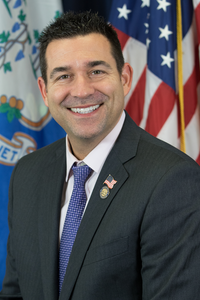
Rep. Tony Scott
Sponsored bills
Maddy summaryHB 7053 creates a working group to develop standardized legal definitions for "first responder" and "essential worker" across state laws. The group, composed of relevant state agency representatives, must finalize these definitions within 120 days. This bill directly affects state agencies and future legislation that relies on these terms, ensuring consistent application in laws and programs. It does not change existing definitions or create new rights but establishes a process for uniformity. The bill became law after the governor signed it on July 8, 2025.
Maddy summaryHB 5064 establishes a state grant program to fund agricultural preservation and improve farmland access. The program provides financial assistance to farmers and agricultural entities for projects that protect working farmland from development and help new or existing farmers access land. Key provisions include grant funding for conservation easements, farmland acquisition, and initiatives supporting beginning farmers. This law, now Public Act 25-141 after being signed by the governor on July 1, 2025, directly benefits agricultural landowners and operators seeking to preserve farmland or expand farming operations.
Maddy summarySB 1497 establishes a State Veterinarian position at the Department of Agriculture and updates registration requirements for fertilizers and soil amendments. It requires distributors to register fertilizer brands and soil amendments annually with the Department, including fees (up to $75) and specific labeling details, while exempting identical products already registered. The bill also creates a new tax provision for "eligible farmers" who meet income thresholds, allowing tax benefits for qualifying farm equipment, buildings, and structures used in agricultural production (like wine, Christmas trees, or apple juice operations) for at least five years. These changes directly affect agricultural businesses, distributors, and farmers in Connecticut.
Maddy summaryHB 7200 requires public schools and municipal buildings to provide bleeding control training and maintain emergency kits for severe bleeding incidents. It mandates that staff receive instruction on using tourniquets and hemostatic dressings to manage life-threatening wounds. The law applies to all public schools and high-traffic public facilities, replacing voluntary programs with mandatory requirements. Signed into law on June 30, 2025, it became Public Act 25-160.
Maddy summaryHB 6883 protects the addresses of domestic violence and sexual assault victims living in shelters or transitional housing. It prohibits housing providers from disclosing these locations without the victim’s explicit consent. This law directly affects victims seeking safety and their housing providers, preventing abusers from locating them through address sharing. The key provision requires confidentiality around housing addresses to enhance victim safety. The bill became law after Governor’s signature on June 23, 2025.
Maddy summarySB 1239 creates the Fallen Hero Fund to provide ongoing health insurance coverage for surviving spouses and dependents of first responders (like police, firefighters, and EMTs) who die while performing their duties. The bill establishes a permanent program where the fund covers the full cost of health insurance premiums for these survivors. This law, now Public Act 25-61 after being signed by the governor on June 10, 2025, directly affects the families of fallen first responders by ensuring they maintain health coverage without out-of-pocket costs.
Maddy summarySB 1465 allows the Commissioner of Consumer Protection to permit certain skilled trade licensees (like plumbers or electricians) to adjust their hiring ratios for local workers. The key provision gives the Commissioner authority to approve deviations from existing hiring requirements for these businesses. This directly affects licensed skilled trade companies operating in the state who face challenges meeting specific local hiring targets. The bill became law as Public Act 25-47 after the governor signed it on June 10, 2025. It changes how hiring ratio rules apply to these licensees without creating new statewide requirements.
Maddy summaryHB 6894 establishes a new interagency council within the state government to coordinate efforts addressing homelessness. The council, composed of relevant state agencies (like housing, health, and social services departments), must develop and implement a unified statewide strategy for homelessness prevention and housing solutions. This law directly affects state agencies by requiring them to collaborate and share data, rather than operating in isolation. The bill became law as Public Act 25-52 after the governor signed it on June 10, 2025.
Maddy summaryHB 7202 establishes two new training initiatives for law enforcement in Connecticut. First, it creates a "social work and law enforcement project" at Southern Connecticut State University to train police and social workers to collaborate, with goals including addressing systemic racism and improving community wellness. Second, it mandates a police training center at Central Connecticut State University focused on crime scene processing and forensic evidence. The bill also significantly increases required training for officers handling juvenile cases (to 27 hours minimum in basic training) and requires new curriculum by 2026 on interacting with people with autism, cognitive impairments, or mental health conditions, developed with input from affected communities. These changes directly affect all Connecticut police officers through updated training requirements.