Issue · Labor & Employment

Labor & Employment

Every labor & employment bill, vote, and legislator stance in Connecticut, automatically classified by Maddy, our AI policy reader.

Total bills
94
2026 Regular Session
Top supporter
Steve Stafstrom
100% support rate
Top opponent
Craig Fishbein
0% support rate
Ranked legislators
10
5 support · 5 oppose
Key legislators

Who's moving labor & employment in Connecticut

Legislators moving labor & employment in Connecticut
Legislator Party Stance Support rate Votes
Steve Stafstrom
Steve Stafstrom House · District 129
D
Strong +
100% 18
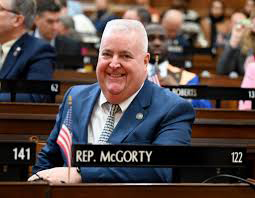
Ben McGorty
Ben McGorty House · District 122
R
Strong +
100% 21
John Kissel
John Kissel Senate · District 7
R
Strong +
89% 43
Roland Lemar
Roland Lemar House · District 96
D
Strong +
88% 20
Christie Carpino
Christie Carpino House · District 32
R
Strong +
88% 21
Craig Fishbein
Craig Fishbein House · District 90
R
Strong −
0% 18
Donna Veach
Donna Veach House · District 30
R
Strong −
12% 21
Karen Reddington-Hughes
Karen Reddington-Hughes House · District 66
R
Strong −
12% 21
John Piscopo
John Piscopo House · District 76
R
Strong −
12% 21
Mark DeCaprio
Mark DeCaprio House · District 48
R
Strong −
12% 21
Showing 81–90 of 94 bills

All labor & employment bills

signed · Connecticut · Senate Jun 2, 2026

SB 383: AN ACT IMPLEMENTING THE RECOMMENDATIONS OF THE OFFICE OF WORKFORCE STRATEGY RELATED TO HIGHER EDUCATION.

SB 383 establishes a Human Services Career Pipeline program to address workforce shortages in care for people with disabilities and elderly residents, requiring the Chief Workforce Officer to develop recruitment, retention, and salary strategies by July 2026. It also creates a Connecticut Career Accelerator Program Account to fund short-term training (like commercial driver's licenses) and other high-demand careers through income-share agreements, with implementation starting in 2027. The bill directly affects human services workers, training institutions, and individuals pursuing these careers by creating new pathways and funding mechanisms. Key provisions include mandatory workforce need assessments, program reports to legislative committees, and annual funding updates to support these initiatives.
signed · Connecticut · House May 20, 2026

HB 5143: AN ACT REQUIRING TRAINING FOR HOMEMAKER-COMPANION AGENCY EMPLOYEES.

HB 5143 requires homemaker-companion agencies to provide mandatory training to their employees. New employees must complete 10 hours of initial training within 90 days of hire, covering topics like CPR, safety, abuse reporting, and dementia care. Existing employees must complete 10 hours of annual continuing education from a state-approved training list, and agencies must maintain records of all training for state review. This bill directly affects homemaker-companion agencies and their staff, aiming to improve service quality and client safety through standardized training.
in committee · Connecticut · Senate Feb 17, 2026

SB 207: AN ACT EXEMPTING OVERTIME INCOME FROM THE PERSONAL INCOME TAX.

SB 207 would exempt overtime pay from personal income tax, directly affecting employees who earn overtime wages. The bill amends tax law to remove the amount earned through overtime work from taxable income calculations. This means workers would pay no state income tax on earnings from hours worked beyond their regular schedule. The policy change simplifies tax treatment for overtime income without altering the tax rate for regular wages.
in committee · Connecticut · House Mar 26, 2026

HB 5386: AN ACT REQUIRING PAYCHECK TRANSPARENCY.

HB 5386 requires employers with 50 or more employees (including state/local governments) to provide employees with detailed written or electronic pay statements showing hours worked, gross earnings (separating regular and overtime pay), deductions, and net pay. It also mandates that these employers create and post a multilingual guide online explaining pay codes like shift differentials, hazard pay, or holiday pay, including dispute resolution contact information. The guide must be provided to employees at hire and included on each pay statement, with updates for new pay codes. This law takes effect October 1, 2026, and applies to all covered employers in Connecticut.
Sub-Topics Labor Standards
signed · Connecticut · Senate May 14, 2026

SB 268: AN ACT AUTHORIZING THE COMPTROLLER TO WITHHOLD PAYMENT FOR VIOLATIONS OF THE PREVAILING WAGE STATUTES.

SB 268 authorizes Connecticut's Comptroller to withhold payments from contractors or subcontractors who violate prevailing wage laws (specifically section 31-53) on public works projects. If the Labor Commissioner issues a stop work order for such violations, the Comptroller must notify the contractor and give them 10 business days to comply. If they remain non-compliant, the Comptroller may withhold payments until the violation is resolved or penalties are paid. This directly affects contractors working on state or local government construction projects who fail to pay prevailing wages.
in committee · Connecticut · Senate Apr 20, 2026

SB 354: AN ACT CONCERNING STAFFING IN THE UNEMPLOYMENT INSURANCE BENEFITS DIVISION IN THE LABOR DEPARTMENT.

SB 354 requires the Labor Commissioner to employ a minimum number of staff at the Unemployment Insurance Benefits Division starting in fiscal year 2027. The bill directly affects unemployment claimants by aiming to improve processing of benefit claims through increased staffing. Its key provision mandates a specified minimum workforce level for the division, without changing benefit eligibility or amounts. This procedural bill focuses solely on staffing levels within the Labor Department's unemployment division.
Sub-Topics Unemployment
in committee · Connecticut · House Feb 4, 2026

HB 5014: AN ACT ESTABLISHING AN INFORMATION TECHNOLOGY APPRENTICESHIP TAX CREDIT.

HB 5014 creates a tax credit for businesses that sponsor apprenticeships in information technology. It allows taxpayers to reduce their state income tax liability by a credit for qualified IT apprenticeship programs. The credit applies to apprenticeships started under approved training programs, directly benefiting employers who hire and train IT apprentices. This policy change provides a financial incentive for companies to develop workforce pipelines in technology fields without altering existing tax rates.
in committee · Connecticut · House Apr 13, 2026

HB 5405: AN ACT CONCERNING OWNERS, OPERATORS AND LESSEES OF CRANES AND HOISTING EQUIPMENT.

HB 5405 establishes new safety regulations for crane and hoisting equipment operations in Connecticut. It creates a seven-member Examining Board to oversee licensing, grants inspectors authority to issue stop-work orders for violations like unsafe operation or incompetence (effective October 1, 2026), and imposes fines up to $5,000 for violations - including $5,000 for ignoring a stop-work order. The bill directly affects crane owners, operators, and hoisting equipment operators by requiring valid licenses, mandating compliance with safety standards, and enabling enforcement actions. Key provisions include mandatory administrative hearings for contested stop-work orders and civil penalties for operating without proper certification.
in committee · Connecticut · House Feb 11, 2026

HB 5201: AN ACT INCREASING FUNDING FOR CERTAIN TRANSITION SERVICES OFFERED TO STUDENTS.

HB 5201 allocates $150,000 to the Department of Developmental Services to purchase software licenses for local school districts. The software will support Project SEARCH, a program helping students with disabilities transition to employment or further education. This funding directly affects students participating in Project SEARCH by expanding access to coordinated transition services. The bill’s key mechanism is providing schools with shared software tools to improve service delivery, as stated in its purpose. (3 sentences)
signed · Connecticut · House Jun 2, 2026

HB 5385: AN ACT ESTABLISHING A TASK FORCE TO STUDY UNDUE DELAY IN WORKERS' COMPENSATION CLAIMS BY POLICE OFFICERS AND FIREFIGHTERS.

HB 5385 requires the Workers' Compensation Commission to study why police officers and firefighters face delays in their workers' compensation claims. The study must examine specific causes, including administrative processing, medical provider scheduling issues, and insurer authorization requirements. The Commission must complete this study and submit a report to the legislature by January 1, 2027, to identify potential solutions for reducing delays. This bill does not change existing claim procedures but aims to inform future policy decisions.
Showing 81 to 90 of 94 bills