Issue · Labor & Employment

Labor & Employment

Every labor & employment bill, vote, and legislator stance in Connecticut, automatically classified by Maddy, our AI policy reader.

Total bills
94
2026 Regular Session
Top supporter
Steve Stafstrom
100% support rate
Top opponent
Craig Fishbein
0% support rate
Ranked legislators
10
5 support · 5 oppose
Key legislators

Who's moving labor & employment in Connecticut

Legislators moving labor & employment in Connecticut
Legislator Party Stance Support rate Votes
Steve Stafstrom
Steve Stafstrom House · District 129
D
Strong +
100% 18
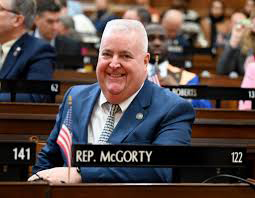
Ben McGorty
Ben McGorty House · District 122
R
Strong +
100% 21
John Kissel
John Kissel Senate · District 7
R
Strong +
89% 43
Roland Lemar
Roland Lemar House · District 96
D
Strong +
88% 20
Christie Carpino
Christie Carpino House · District 32
R
Strong +
88% 21
Craig Fishbein
Craig Fishbein House · District 90
R
Strong −
0% 18
Donna Veach
Donna Veach House · District 30
R
Strong −
12% 21
Karen Reddington-Hughes
Karen Reddington-Hughes House · District 66
R
Strong −
12% 21
John Piscopo
John Piscopo House · District 76
R
Strong −
12% 21
Mark DeCaprio
Mark DeCaprio House · District 48
R
Strong −
12% 21
Showing 51–60 of 94 bills

All labor & employment bills

signed · Connecticut · Senate Jun 4, 2026

SB 346: AN ACT CONCERNING THE MODIFICATIONS TO THE GOVERNOR'S WORKFORCE COUNCIL.

SB 346 modifies Connecticut's Governor's Workforce Council membership to align with federal law. The bill specifies that the council must include 30 business representatives (with at least one representing small businesses and one an expert in residential construction), four labor organization representatives, and members from education, community organizations, vocational schools, local government, and workforce training programs. It requires all appointments to reflect state diversity (geographic, gender, racial, and ethnic) and mandates quarterly meetings. The changes aim to comply with the federal Workforce Innovation and Opportunity Act of 2014.
in committee · Connecticut · Senate Feb 4, 2026

SB 61: AN ACT ESTABLISHING A VOLUNTARY EMPLOYER PAYROLL TAX AND A PERSONAL INCOME TAX CREDIT FOR CERTAIN EMPLOYEES.

SB 61 creates a voluntary payroll tax that employers may choose to pay, paired with a personal income tax credit for eligible employees. Employers who opt to participate in this program would pay the tax, and their qualifying employees would receive a corresponding tax credit on their state income tax returns. The bill specifically targets certain employees of participating employers, though it does not detail eligibility criteria in the provided text. This establishes a direct financial benefit for employees through the tax credit mechanism, contingent on employer participation.
in committee · Connecticut · Senate Feb 4, 2026

SB 66: AN ACT ESTABLISHING A TEMPORARY PERSONAL INCOME TAX DEDUCTION FOR TIPS OR GRATUITIES.

SB 66 would create a temporary tax deduction for workers who declare tips or gratuities on their income tax returns. It allows a deduction of up to $25,000 per year for tips earned during 2026-2028, reducing taxable income for affected workers. The deduction phases out for single filers with incomes over $150,000 and married couples filing jointly over $300,000. This policy directly impacts service industry workers who report tip income, lowering their tax burden for the specified period.
signed · Connecticut · House May 11, 2026

HB 5003: AN ACT CONCERNING WORKFORCE DEVELOPMENT AND WORKING CONDITIONS IN THE STATE.

This bill requires healthcare facilities and schools to cover medical costs and pay full salary for staff injured during work-related assaults or aggressive incidents. It creates a system for reporting patient violence in digital health records (with patient appeal options) and ensures absences due to such incidents don’t count against paid leave. Directly affects healthcare workers, teachers, and school staff who face workplace violence while performing job duties.
in committee · Connecticut · House Apr 7, 2026

HB 5227: AN ACT CONCERNING COMMERCIAL MOLD REMEDIATION AND FIRE AND CATASTROPHIC RESTORATION BUSINESSES.

HB 5227 requires anyone performing paid mold remediation in Connecticut to hold a state-issued certification starting January 1, 2027. Certification must be obtained from approved organizations like the Institute of Inspection, Cleaning and Restoration Certification (IICRC) or the National Organization of Remediators and Microbial Inspectors (NORM), with existing licensed contractors exempt from this requirement. The law also mandates a public awareness campaign about mold health risks and annual reports from the Department of Consumer Protection on mold science, remediation standards, and recommended policy changes. These provisions directly affect mold remediation service providers, aiming to standardize practices and improve public safety information.
in committee · Connecticut · House Mar 23, 2026

HB 5280: AN ACT CONCERNING A NONCHARGE FOR EMPLOYEES PAID BENEFITS THROUGH THE SHARED WORK PROGRAM DURING PERIODS OF HIGH UNEMPLOYMENT.

HB 5280 prevents employers from being charged for unemployment benefits paid to employees participating in the state's voluntary shared work program during periods of high unemployment or extended benefit periods. It directly affects employers using the shared work program and employees receiving benefits through it during designated high-unemployment periods. The key mechanism requires that no employer experience account be charged for such benefits starting January 1, 2027, until the federal government ends the high-unemployment designation. This change shifts the cost of these benefits from employers to the state unemployment fund during qualifying periods.
Sub-Topics Unemployment
in committee · Connecticut · House Feb 6, 2026

HB 5051: AN ACT ESTABLISHING A PERSONAL INCOME TAX DEDUCTION FOR TIPS OR GRATUITIES AND OVERTIME PAY.

HB 5051 would allow Connecticut taxpayers to deduct tips or gratuities and overtime pay from their state personal income tax, but only for amounts already deductible on federal income tax returns. This directly affects service industry workers (like servers or hospitality staff) and employees who regularly earn overtime, potentially reducing their state tax burden. The bill’s key mechanism is aligning Connecticut’s tax deduction with federal tax rules, meaning the state would mirror the federal treatment of these income types. It does not create new deductions but expands existing federal-eligible deductions to state tax filings. The bill is sponsored by Representatives Carney, Pavalock-D’Amato, Polletta, and Vail.
in committee · Connecticut · Senate Feb 11, 2026

SB 128: AN ACT CONCERNING FUNDING FOR COMMUNITY ACTION AGENCIES.

SB 128 appropriates $30 million from the General Fund to the Department of Social Services for fiscal year 2027, specifically for grants to community action agencies. This funding directly supports local community action agencies that provide essential services like housing assistance, job training, and food programs to low-income residents. The bill’s key mechanism is a dedicated state funding allocation to ensure these agencies can continue serving vulnerable populations, as stated in its purpose to "protect the people the agencies serve." The legislation does not alter eligibility rules or create new programs, but provides critical financial support for existing agency operations.
in committee · Connecticut · House Feb 11, 2026

HB 5173: AN ACT INCREASING FUNDING FOR YOUTH SUMMER EMPLOYMENT PROGRAMS.

HB 5173 allocates additional state funding to the Department of Education for youth summer employment programs. The bill directs a specified sum from the General Fund to support these programs during the 2026-2027 fiscal year. This funding would directly support summer job opportunities for young people through existing state-run initiatives.
in committee · Connecticut · Senate Feb 4, 2026

SB 11: AN ACT CONCERNING FUNDING FOR THE PREAPPRENTICESHIP GRANT PROGRAM.

SB 11 allocates $800,000 from the General Fund to the Department of Education for the fiscal year ending June 30, 2027, specifically to fund the high school preapprenticeship grant program established under Connecticut law. This funding directly supports high school students participating in preapprenticeship programs that prepare them for skilled trades careers. The bill provides concrete financial resources to expand access to these career pathways through state-supported grants. It does not create new eligibility rules or alter program requirements, but ensures dedicated funding for the existing program structure.
Showing 51 to 60 of 94 bills
Previous 1 5 6 7 10 Next