

In committee Sep 24, 2026
1 co-sponsor
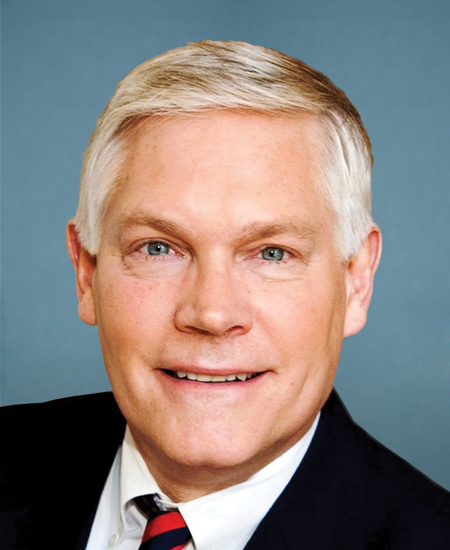
Rep. Pete Sessions
Total votes
2,837
all sessions
Attendance
97%
77 missed
Higher than 89% of chamber peers
With party
95%
of cast votes
Higher than 83% of chamber peers
Bipartisan score
3%
crosses aisle rarely
Lower than 84% of chamber peers
Sponsored
924
bills & resolutions
Near the chamber average
Committees
6
assignments
924 bills and resolutions
Sponsored bills
Total
924
Primary
45
Co-sponsor
879
This page
924
matching current filters
American Procurement Improvement Act of 2026
Maddy summaryThe American Procurement Improvement Act of 2026 modernizes the AbilityOne Program by renaming it the Commission for the Employment of Individuals Who Are Blind or Have Significant Disabilities and updating its statutory framework to better support employment opportunities for people with disabilities. The bill expands the definition of eligible workers to include those with significant disabilities beyond blindness, while requiring qualified nonprofit agencies to maintain a workforce where at least 51 percent of direct labor hours are performed by these participating employees. Key provisions mandate that agencies provide professional development and pay participating employees rates consistent with their nondisabled peers, and they establish new rules for adding or removing products from the federal procurement list, including time-limited additions for pilot projects. Additionally, the legislation introduces mechanisms to monitor involuntary terminations of workers, allows for governmentwide contract vehicles to improve procurement efficiency, and ensures that intergovernmental support agreements cannot be used to bypass these federal hiring requirements.
In committee Sep 16, 2026
1 co-sponsor
Consumer Financial Protection Accountability and Reform Act of 2026
Maddy summaryThe Consumer Financial Protection Accountability and Reform Act of 2026 significantly restructures the Bureau of Consumer Financial Protection by subjecting it to the regular federal appropriations process and establishing an independent Inspector General appointed by the President. The bill restricts the Bureau's supervisory authority over banks and credit unions with assets under $30 billion, allowing these institutions to elect to remain under their existing prudential regulators instead. It also introduces a safe harbor for small-dollar loans of $3,500 or less that meet specific structural requirements, shielding compliant lenders from civil money penalties and private damages. Additionally, the legislation creates federal standards for earned wage access services, requiring providers to offer a no-cost option for early wage access and prohibiting them from treating these services as credit or debt under federal law.
In committee Sep 16, 2026
1 co-sponsor
TRAPS Act
Maddy summaryThe TRAPS Act establishes a federal Task Force on Payment Scams, chaired by the Treasury Secretary, to coordinate efforts across agencies like the FTC, Federal Reserve, and consumer groups. The Task Force will study current scam tactics (such as fake text messages or fraudulent payment platforms), evaluate prevention strategies, and develop recommendations to help consumers avoid and report scams. It must submit an initial report within one year and annual updates, focusing on improving federal-state coordination and education programs. This bill directly affects government agencies and stakeholders participating in the Task Force, with the goal of protecting consumers from evolving payment scams.
In committee Sep 16, 2026
1 co-sponsor
AM Radio for Every Vehicle Act of 2025
Maddy summaryThis bill requires all new passenger vehicles manufactured for sale in the U.S. to include AM radio as standard equipment (not an optional add-on) by 2027-2028, depending on manufacturer size. It mandates that AM radio receivers must be easily accessible to drivers and allows compliance through digital AM broadcast technology. During a transition period, manufacturers must clearly label vehicles without AM radio but cannot charge extra for this feature. The bill also mandates a GAO study on AM radio's role in emergency alerts and includes a 10-year sunset provision for the rule. It preempts state laws regarding AM radio access in vehicles.
Passed Sep 16, 2026
1 co-sponsor
Title IX Clarification Act of 2026
Maddy summaryThe Title IX Clarification Act of 2026 amends federal education law to explicitly define the terms "sex," "female," and "male" based on biological characteristics. Specifically, it states that "sex" refers to an individual's biologically determined status as male or female, while "female" and "male" are defined by the presence of specific reproductive systems capable of producing ova or sperm, respectively. These definitions apply to all education programs and activities that receive federal financial assistance starting on the date the bill becomes law. The legislation aims to clarify existing statutes by removing ambiguity around biological sex definitions in the context of Title IX protections.
In committee Sep 8, 2026
1 co-sponsor
American Franchise Act
Maddy summaryHR 5267, the American Franchise Act, clarifies when franchisors can be considered joint employers of franchisee employees under federal labor laws. It defines "substantial direct and immediate control" over essential employment terms like wages, benefits, hours, hiring, and discipline - requiring franchisors to actively set these terms to be deemed joint employers. The bill explicitly excludes routine brand standards, training, or minimal safety requirements from constituting such control. This directly affects franchisors and franchisees by limiting joint employer liability to cases where franchisors exert significant, ongoing influence over core employment decisions. The law applies prospectively to new cases after enactment, not past disputes.
In committee Sep 8, 2026
1 co-sponsor
I–47 Future Interstate Act of 2026
Maddy summaryThe I-47 Future Interstate Act of 2026 designates a specific stretch of United States Route 287 as a high-priority transportation corridor. This route runs from State Highway 87 in Port Arthur, Texas, to United States Route 89 in Choteau, Montana. The bill formally assigns the number I-47 to this designated path within the national interstate highway system.
In committee Sep 3, 2026
1 co-sponsor
SEC Reform and Restructuring Act
Maddy summaryThis bill aims to reform the Securities and Exchange Commission by requiring the agency to analyze the costs and benefits of new regulations before issuing them and to conduct regular reviews of their impact. It mandates that the SEC Chairman testify to Congress every six months on the Commission's activities and requires an independent audit of the agency's cybersecurity and information technology systems. Additionally, the legislation transfers the Public Company Accounting Oversight Board to the SEC, establishes a minimum 60-day public comment period for new rules, and clarifies how penalties are calculated for multiple violations. The bill also directs the SEC to streamline its internal organization and consolidate regional offices to improve efficiency.
In committee Sep 3, 2026
1 co-sponsor
No HUD Funding for Sanctuary Cities Act
Maddy summaryThis bill would prohibit any state or local government designated as a "sanctuary jurisdiction" from receiving grant funds distributed by the Department of Housing and Urban Development (HUD). A jurisdiction is defined as a sanctuary if it has laws, policies, or practices that restrict officials from sharing information about an individual's immigration status or from complying with federal requests to detain or notify about the release of individuals. The funding restriction would apply to grants distributed 180 days after the bill's enactment. To determine which jurisdictions qualify for this ineligibility, the HUD Secretary is required to consult with the Secretary of Homeland Security.
HousingOpposes HousingBill prohibits HUD grant funds for sanctuary jurisdictions, directly restricting housing development and assistance funding based on immigration policy.
ImmigrationOpposes ImmigrationBill penalizes sanctuary jurisdictions by cutting HUD funds, restricting local protections for immigrants and limiting their access to housing services.
In committee Sep 2, 2026
1 co-sponsor
Ask Maddy
·
AI policy assistant
Ask Maddy about Pete Sessions
Scope: colorado
Hi! I can help you understand Pete Sessions's legislative record. What would you like to know?
Try one of these
i
Maddy answers using official bill text and legislative records. Always verify before sharing.
Sources cited inline