Maddy summaryThis resolution (SJR 25-009) expresses Colorado's support for federal management of national public lands, including parks, forests, and monuments. It formally opposes efforts to sell, transfer, or dispose of these lands and urges Colorado's governor, attorney general, and congressional delegation to take action against such proposals. The resolution is non-binding but directs state officials to advocate for continued public stewardship by federal agencies like the National Park Service and Bureau of Land Management. It was passed by the Colorado Senate and referred to the House for consideration.
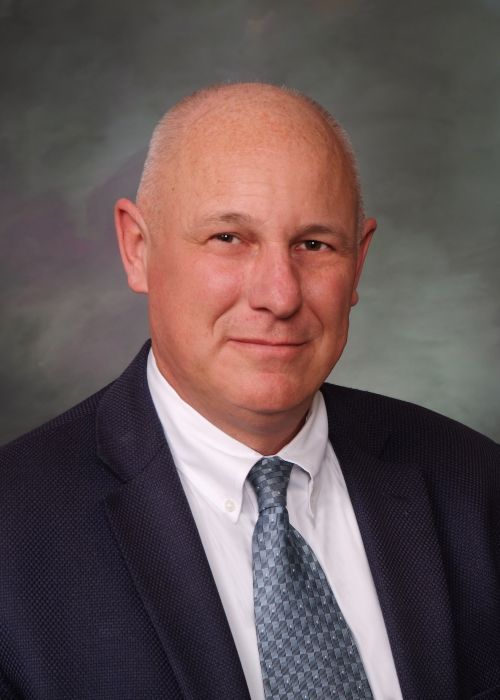
Rep. Bob Marshall
Sponsored bills
The act provides immunity from civil liability for damage or injury to persons or property, other than that which arises from gross negligence or willful and wanton misconduct, to a landowner who, in good faith and without compensation, allows access to the landowner's property for entry and exit in connection with an emergency. An emergency is a fire, a rescue call, a hazardous materials incident, a natural or human-caused disaster, or an incident reasonably determined to be an emergency by a first responder. (Note: This summary applies to this bill as enacted.)
The act clarifies that the health benefits coverage for the prevention of, screening for, and treatment of behavioral, mental health, and substance use disorders must be no less extensive than the coverage provided for any physical illness. The act requires that every health benefit plan provide coverage for medically necessary treatment of covered behavioral, mental health, and substance use disorder benefits, consistent with specified criteria. The act also specifies criteria to be used for conducting utilization review, service intensity, and the level of care for covered persons. In addition, the act prohibits: A health benefit plan from limiting coverage for chronic behavioral, mental health, or substance use disorders to short-term symptom reduction; and A health insurance carrier from reversing or altering a determination of medical necessity except in the case of fraud. The act requires carriers that provide benefits for mental health conditions or substance use disorders to offer meaningful benefits for mental health conditions and substance use disorders. The act describes how to determine whether the benefits provided are meaningful benefits. The commissioner of insurance is authorized to adopt rules to: Establish carrier utilization review compliance; Specify data testing requirements for plan design and application of parity compliance; Set standard definition for coverage requirements; Establish timelines for carriers to provide comparative analysis information to the division of insurance; and Establish time periods for visits with a provider for treatment of a behavioral, mental health, or substance use disorder after an initial visit with a provider.(Note: This summary applies to this bill as enacted.)
Maddy summaryThis is a ceremonial resolution designating March 17, 2025, as "Colorado FFA Day." It recognizes the Future Farmers of America (FFA) organization's role in supporting agricultural education and youth development in Colorado. The resolution directly affects Colorado FFA members, educators, and supporters by formally honoring their contributions through this annual recognition. It does not create new laws or policy changes, as it is a symbolic gesture celebrating the organization's work.
Current law requires each county with a population of 2,000 or more to maintain a county jail. The act exempts a county from the requirement to maintain a county jail if the county has entered into an intergovernmental agreement with another county to operate a multijurisdictional county jail. (Note: This summary applies to this bill as enacted.)
Current law allows the use of the Colorado coordinate system of 1927 and the Colorado coordinate system of 1983 established by the national geodetic survey to state the geographic positions or locations of points on the surface of the earth within the state. The act allows the use of the most recent or a prior version of the state plane coordinate system for the same purpose. (Note: This summary applies to this bill as enacted.)
The act requires third-party payers to reimburse the department of health care policy and financing (state department) for health-care items and services rendered to a medicaid member regardless of whether prior authorization was obtained. The act requires third-party payers to respond to an inquiry from the state department regarding a claim for payment no later than 60 days after receiving the state department's inquiry. The third party must respond either by paying the claim or issuing a written denial of the claim to the state department. (Note: Italicized words indicate new material added to the original summary; dashes through words indicate deletions from the original summary.) (Note: This summary applies to this bill as enacted.)
The bill designates a category of peace officers as covered peace officers. A covered peace officer is an individual who is both: A public official or employed by a political subdivision of the state; and Required to be certified by the P.O.S.T. board. The bill prohibits a covered peace officer from: Using or authorizing the use of public resources for the purpose of campaigning for or against the nomination or election of a candidate; and Engaging in partisan political activity while wearing a uniform required by a political subdivision of the state. The bill includes a penalty for violating these prohibitions of up to $1,000 and potential dismissal from employment as a covered peace officer. (Note: This summary applies to this bill as introduced.)
Currently, in a county with a population of 70,000 or more, the board of county commissioners (board) may consist of 3 commissioners from 3 districts, with one commissioner elected from each district by voters of the whole county. Alternatively, the board may consist of 5 commissioners, in which case the county may be divided into 3 or 5 districts, and the commissioners may be elected pursuant to numerous methods, including by district or at large or by some combination of both methods. The bill modifies this discretionary system for any county with a population of 250,000 or more by requiring each such county to have 5 commissioners and 5 districts and to choose one of the following 3 methods for their election: 5 commissioners resident in 5 districts elected only by voters resident in those districts; 3 commissioners resident in 3 districts elected only by voters resident in those districts and 2 commissioners elected at large; or 5 commissioners elected at large using the proportional ranked voting method known as the single transferable vote method. The bill makes conforming amendments to statutory provisions concerning commissioner district and election petition statutes. (Note: This summary applies to this bill as introduced.)
Maddy summaryHJR 25-1004 is a procedural resolution approving specific additions to Colorado's Drinking Water Project Eligibility List and Water Pollution Control Project Eligibility List. It directly affects water providers like Allenspark Water and Sanitation District, East Boulder County Water District, and Grizzly Peak Water Sales and Distribution LLC, enabling them to qualify for funding from the state's Drinking Water Revolving Fund (DWRF) and Water Pollution Control Revolving Fund (WPCRF). The resolution formally adopts the Water Quality Control Commission's approved project additions, modifications, and deletions for these lists. This allows eligible water and wastewater infrastructure projects to access state financial assistance for facilities such as treatment plants, distribution systems, and storage.