






Issue · Housing

Housing (Homelessness)

Every housing bill, vote, and legislator stance in Colorado, automatically classified by Maddy, our AI policy reader.

Total bills
4
2026 Regular Session
Top supporter
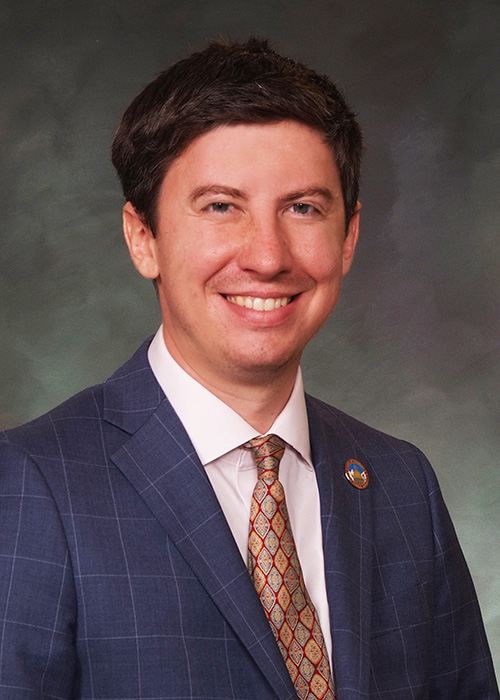
William Lindstedt
100% support rate
Top opponent
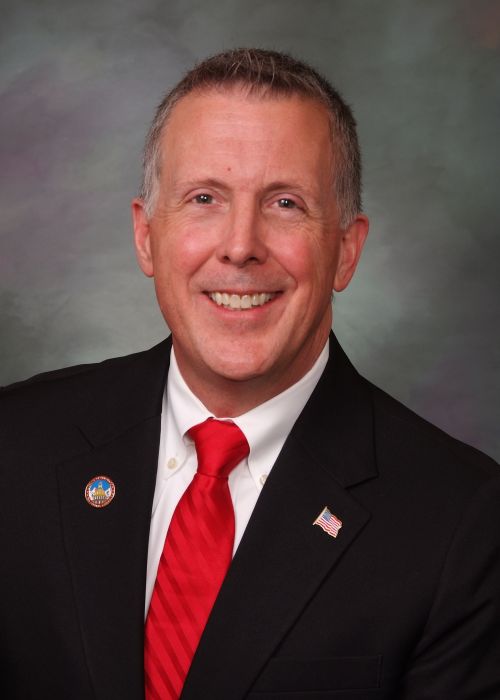
Ron Weinberg
17% support rate
Ranked legislators
9
5 support · 4 oppose
Key legislators

Who's moving homelessness in Colorado

Legislators moving homelessness in Colorado
Legislator Party Stance Support rate Votes
William Lindstedt
William Lindstedt Senate · District 25
D
Strong +
100% 3
Amy Paschal
Amy Paschal House · District 18
D
Strong +
83% 6
Andy Boesenecker
Andy Boesenecker House · District 53
D
Strong +
83% 6
Elizabeth Velasco
Elizabeth Velasco House · District 57
D
Strong +
83% 6
Jacque Phillips
Jacque Phillips House · District 31
D
Strong +
83% 6
Ron Weinberg
Ron Weinberg House · District 51
R
Strong −
17% 6
Chris Richardson
Chris Richardson House · District 56
R
Oppose
33% 6
Larry Suckla
Larry Suckla House · District 58
R
Oppose
33% 6
Max Brooks
Max Brooks House · District 45
R
Oppose
33% 6
Showing 4 of 4 bills

All housing bills

signed · Colorado · House May 26, 2026

HB 1313: Adjust Requirements Statewide Affordable Housing Fund

Current law requires a local government or a tribal government desiring to receive funding from the statewide affordable housing fund to have filed with the division of housing of the department of local affairs (division) a commitment specifying how, within a 3-year cycle, affordable housing units within the local or tribal government's territorial boundaries will be increased by 3% each year over the baseline number of affordable housing units (baseline number). The baseline number resets every 3 years for the next cycle. To be eligible for funding from the statewide affordable housing fund, a local or tribal government is required to file a commitment with the division and achieve the 3% increase over the baseline number each year during the 3-year cycle.     The act changes the requirements for the 3-year cycle beginning on January 1, 2027, and each 3-year cycle thereafter. A local government desiring to receive funding from the statewide affordable housing fund is no longer required to increase affordable housing units by 3% above the baseline each year, but is instead required to meet the target increase number of affordable housing units (target increase number). The target increase number equals the average annual number of permits for new housing units or functional equivalents of permits for new housing units that have been issued over the past 3 years within the jurisdiction of the local government, multiplied by the number of years of the upcoming 3-year cycle to which the local government is committing, multiplied by:0.10 if the average annual job growth rate in the county in which the local government is located is significantly lower than the statewide median annual job growth rate over the past 3 years, as determined by the division;0.15 if the average annual job growth rate in the county in which the local government is located is close to the statewide median annual job growth rate over the past 3 years, as determined by the division; or0.20 if the average annual job growth rate in the county in which the local government is located is significantly higher than the statewide median annual job growth rate over the past 3 years, as determined by the division.     The act requires the division to establish specific numerical ranges for the job growth rate thresholds.     The act permits a local government that desires to be eligible for funding from the statewide affordable housing fund but is unable to achieve the 3% annual increase in affordable housing units for the 3-year cycle beginning on January 1, 2024, to file a good faith effort waiver with the division. To be eligible, the local government must have achieved at least 65% of the targeted annual increase. The division may, in its discretion, grant a good faith effort waiver to a local government that filed for a waiver on or after June 15, 2026, but before November 1, 2026, and complied with other requirements of the act.     The act permits a government that desires to be eligible for funding from the statewide affordable housing fund but is unable to meet the target increase number in affordable housing units for the 3-year cycle beginning on January 1, 2027, to file an adjustment waiver with the division. The adjustment waiver must be supported by verifiable data and propose a revised annual increase of at least one unit per year. The division may, in its discretion, grant an adjustment waiver to a government that filed for a waiver and complied with other requirements of the act.     To determine whether a local government has achieved the target increase number for the 3-year cycle beginning on January 1, 2027, and for each 3-year cycle thereafter, an affordable housing unit that satisfies the following criteria counts for one affordable housing unit plus the following corresponding additional unit amount:Unless local governments have a written agreement otherwise, a unit developed with money from multiple local governments may be counted by each local government as a percentage of one unit proportional to the percentage of funding it provided;A unit that is developed on land donated by the local government qualifies for an additional 0.10 of a unit. The 0.10 of a unit qualifies for the local government that donated the land.An affordable housing unit that is developed with money provided by multiple local governments qualifies for an additional 0.10 of a unit for each local government that provided money;A unit that is developed to be for-sale housing and that meets certain affordability requirements qualifies for an additional 0.20 of a unit; andA unit that is restricted to be rented or sold to a household with an annual income of at or below 40% of the area median income, including a supportive housing unit, qualifies for an additional 0.20 of a unit.     If affordable housing is developed and qualifies for a property tax exemption, thereby reducing property tax revenue to the county in which the affordable housing is located, and the county did not provide any money to develop the affordable housing, the division may, in its discretion, allow each such affordable housing unit to count as up to 1.15 affordable housing units for the county at the time of vertical construction.     Beginning in 2027, to be eligible for direct funding, or for affordable housing projects within a tribal government's territorial boundaries to be eligible for funding, tribal governments are required to implement a system to expedite the development approval process for affordable housing projects and required to submit evidence of such satisfaction to the division.(Note: This summary applies to this bill as enacted.)
signed · Colorado · House Jun 2, 2026

HB 1202: Strategy to Reduce & Prevent Homelessness

The act requires the department of local affairs, as part of its SMART Act hearing in January of 2027, to submit and present a proposal for the development of a statewide strategy on homelessness prevention and resolution. The proposal must include a plan that sets forth a timeline, an estimated budget, and a process for developing and implementing a statewide strategy on homelessness prevention and resolution. The proposal must set forth the following components that must be included in the statewide strategy on homelessness prevention and resolution:Identification of gaps and barriers that impede access to operational services for individuals experiencing homelessness;Identification of state agency-provided housing resources, including utilization rates;Recommendations for collaboration between state and local partners to facilitate homelessness response;Recommendations for funding and policies that could be implemented at the state level to support homelessness prevention and resolution;Recommendations proposed in coordination with continuum of care organizations to improve the implementation of the homeless management information system, data reporting, and coordinated entry systems; and Updates on regional navigation campuses.     When developing the proposal, the department shall seek and incorporate feedback from a diverse array of stakeholders.     The act creates a new type of special district, a multijurisdictional homelessness response authority (authority), which may be created when any combination of local governments enter into an intergovernmental agreement with one another to establish an authority. An authority must:Be used by the contracting local governments to reduce and prevent homelessness; andHave boundaries that contain the entirety of all the contracting local governments, but nothing more.     An authority has several discretionary powers that relate to its ability to coordinate and plan with departments and organizations to reduce and prevent homelessness, including the power to provide for the levy of sales or sales and use taxes by the contracting local governments. If the intergovernmental agreement that creates an authority provides for the levy of a sales or sales and use tax by the contracting local governments within the boundaries of the authority:Each contracting local government shall submit to its registered electors a ballot question that relates to the tax and that requires any new tax revenue approved through the ballot question to be used solely for the planning, coordination, and implementation of regional strategies to reduce and prevent homelessness;The intergovernmental agreement must provide for a case in which the electors in some but not all of the contracting local governments approve the collection of the sales or sales and use tax at the general election; andThe intergovernmental agreement must provide that all or part of the taxes levied are distributed to the authority.     An authority may seek, accept, and expend gifts, grants, or donations from private or public sources for the purposes of planning, coordinating, and implementing regional strategies to reduce and prevent homelessness, may issue revenue or general obligation bonds, and may pledge its revenue and revenue-raising powers for the payment of such bonds.     The act allows a county to designate a portion of documentary filing fees, which are collected for filing documents associated with the grant or conveyance of real property, to be transferred to the county government or a housing authority for the purpose of developing, preserving, or acquiring affordable housing that:Is within the jurisdiction of the county government or housing authority;Is aligned with demonstrated community needs; andWill be available to individuals experiencing homelessness.(Note: This summary applies to this bill as enacted.)
signed · Colorado · House Apr 13, 2026

HB 1192: Homeless Prevention Activities Program Restructure

The act eliminates the homeless prevention activities program advisory committee and gives the division of housing within the department of local affairs the power to administer the homeless prevention activities program, to establish and enforce standards for all homeless prevention activities covered by the program, and to establish standards that assure program funds are properly allocated.(Note: This summary applies to this bill as enacted.)
Sub-Topics Homelessness
signed · Colorado · House Jun 2, 2026

HB 1015: Colorado Homeless Contribution Tax Credit Extension

Under current law, the Colorado homeless contribution tax credit (credit) may only be claimed through state income tax year 2026. The act amends the credit to allow taxpayers to claim the credit through state income tax year 2030.(Note: This summary applies to this bill as enacted.)