Issue · Environment

Environment

Every environment bill, vote, and legislator stance in Colorado, automatically classified by Maddy, our AI policy reader.

Total bills
40
2026 Regular Session
Top supporter
Jessie Danielson
100% support rate
Top opponent
Scott Bottoms
8% support rate
Ranked legislators
10
5 support · 5 oppose
Key legislators

Who's moving environment in Colorado

Legislators moving environment in Colorado
Legislator Party Stance Support rate Votes
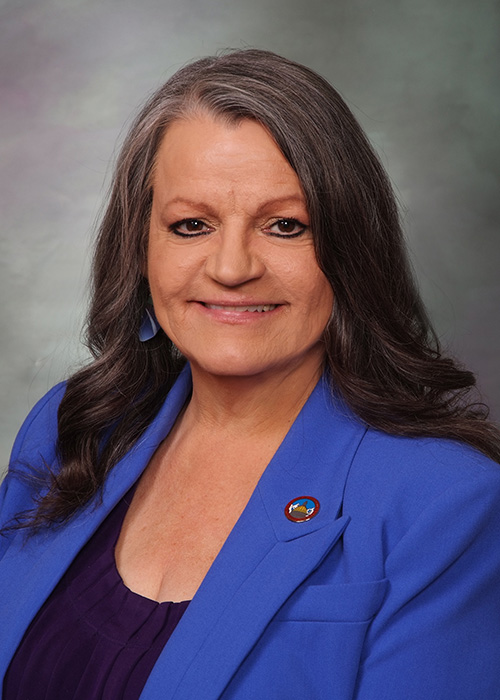
Jessie Danielson
Jessie Danielson Senate · District 22
D
Strong +
100% 10
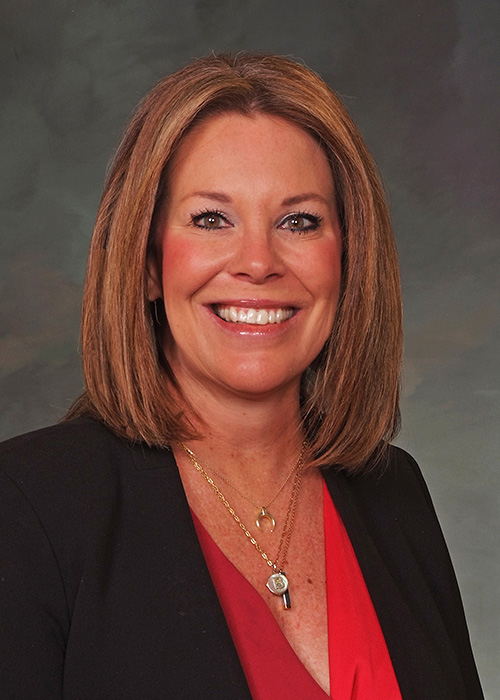
Sheila Lieder
Sheila Lieder House · District 28
D
Strong +
100% 37
Eliza Hamrick
Eliza Hamrick House · District 61
D
Strong +
95% 41
Regina English
Regina English House · District 17
D
Strong +
95% 41
Gretchen Rydin
Gretchen Rydin House · District 38
D
Strong +
95% 39
Scott Bottoms
Scott Bottoms House · District 15
R
Strong −
8% 50
Stephanie Luck
Stephanie Luck House · District 60
R
Strong −
9% 46
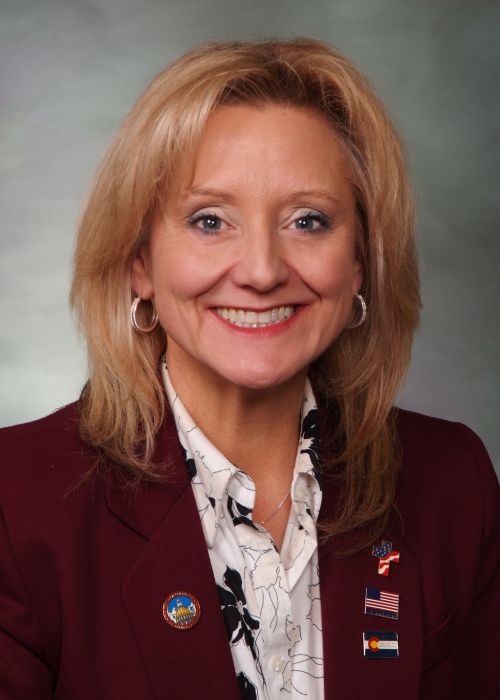
Brandi Bradley
Brandi Bradley House · District 39
R
Strong −
9% 46
Rebecca Keltie
Rebecca Keltie House · District 16
R
Strong −
14% 41
Byron Pelton
Byron Pelton Senate · District 1
R
Strong −
16% 40
Showing 1–10 of 40 bills

All environment bills

passed · Colorado · Senate May 12, 2026

SB 192: Producer Responsibility Dues Appeals Process

The producer responsibility program for statewide recycling (program) provides recycling services to covered entities in the state and is financed through annual dues assessed against producers of products that use packaging materials and paper products (producers).     The bill reaffirms the authority of the solid and hazardous waste commission in the department of public health and environment (department) to direct an appeals process whereby producers may contest the program dues assessed against them by requesting a hearing before the producer responsibility program for statewide recycling advisory board (advisory board). If a producer requests a hearing before the advisory board, the advisory board is required to hold the hearing and issue written recommendations to the department as to whether the dues assessed against the producer should be adjusted. The department is required to make a determination whether to approve or reject the advisory board's recommendations regarding the assessed dues within 45 days after receiving the advisory board's recommendations on the matter. The department's determination is a final agency action subject to judicial review.(Note: This summary applies to the reengrossed version of this bill as introduced in the second house.)
passed · Colorado · Senate May 20, 2026

SJR 22: Plastic Pollution Awareness

Senate Joint Resolution 22 officially designates the week of July 12 through 18, 2026, as Plastic Pollution Awareness Week in Colorado. This symbolic measure aims to educate the public about the health and environmental risks of plastic pollution, including the dangers of microplastics and their impact on communities near production facilities. The resolution encourages consumers to make informed choices and calls on businesses to reduce plastic use, while also recognizing the benefits plastics provide in healthcare and food safety. Copies of the resolution are to be sent to various environmental and community organizations to support awareness efforts.
Sub-Topics Recycling
signed · Colorado · Senate May 21, 2026

SB 182: Updated Clean Energy Plan Municipally Owned Utility

Current law requires certain entities to file, or allows certain entities to voluntarily file, a clean energy plan to achieve an 80% reduction in greenhouse gas emissions caused by the entity's electricity sales in Colorado by 2030, relative to 2005 levels (2030 emission reductions).     The act repeals current law stating that clean energy plans submitted by a cooperative electric association or a municipally owned utility under certain circumstances are deemed approved by the public utilities commission (commission) and requiring the division of administration in the department of public health and environment (division) to consult with the commission in verifying a clean energy plan submitted by a cooperative electric association or a municipally owned utility. The act also repeals current law stating that voluntary submission of a clean energy plan by a cooperative electric association or a municipally owned utility does not alter the entity's regulatory status with respect to the commission.     A municipally owned utility that has encountered challenges in achieving the 2030 emission reductions may submit to the division, no later than December 31, 2026, an updated clean energy plan that demonstrates achievement of the 2030 emission reductions by the earliest date possible on or after December 31, 2029, but no later than December 31, 2032.     A municipally owned utility that submits an updated clean energy plan to the division must:Provide a detailed generation and transmission plan to the division with the updated clean energy plan;Provide an annual report to the division beginning January 1, 2028, and continuing each year until December 31, 2033, that contains certain information related to the updated clean energy plan;Cease burning coal by December 31, 2032; andSeek to achieve certain additional reductions in greenhouse gas emissions without impairing the municipally owned utility's ability to maintain certain electric reliability standards.     The updated clean energy plan must be verified by the division.(Note: This summary applies to this bill as enacted.)
signed · Colorado · Senate May 29, 2026

SB 171: Disposal of Preproduction Plastic Materials

Senate Bill 26-016, enacted in 2026, prohibits a person from disposing of preproduction plastic materials at a location that does not have federal interim status, a federal permit granted pursuant to the federal 'Solid Waste Disposal Act', or a state permit for the treatment, storage, or disposal of hazardous waste at a hazardous waste site.     The act removes this prohibition and instead prohibits the disposal of preproduction plastic materials at a location that is not a solid wastes disposal site and facility with a certificate of designation.(Note: This summary applies to this bill as enacted.)
signed · Colorado · Senate May 29, 2026

SB 165: Species Conservation Measures

For state fiscal year 2026-27, the act appropriates $5,000,000 from the species conservation trust fund (trust fund) in the state treasury for various wildlife conservation programs directed at conserving candidate species or species that are likely to become candidate species, as determined by the United States fish and wildlife service. The executive director of the Colorado department of natural resources, after consulting with the Colorado water conservation board, the parks and wildlife commission, and the director of the division of parks and wildlife, has submitted to the general assembly a list of programs and associated costs that are eligible to receive funding from the trust fund as follows:$2,380,000 for the upper Colorado river endangered fish recovery program and San Juan river basin recovery implementation program;$60,000 for Rio Grande native fish protection and habitat improvements;$60,000 for selenium management, research, monitoring, evaluation, and control;$1,250,000 for native terrestrial wildlife conservation; and$1,250,000 for native aquatic wildlife conservation.     Trust fund money made available for native terrestrial wildlife conservation is not available for purposes of importing new wolves for reintroduction into the state for state fiscal year 2026-27.(Note: This summary applies to this bill as enacted.)
Sub-Topics Conservation Wildlife
signed · Colorado · House May 29, 2026

HB 1387: Severance Tax Fund Expenditures

The act directs the state treasurer to annually transfer no more than $3 million from the severance tax perpetual base fund to the species conservation trust fund.     The act also directs the state treasurer to, beginning on June 30, 2027, annually transfer from the severance tax operational fund to the general fund the lesser of $14.2 million or the difference between the amount of severance tax revenue projected to be deposited in the operational fund in the current fiscal year and the amount appropriated from the operational fund for certain programs in the same fiscal year.     The cash funds appropriation from the severance tax operational fund for the 2026-27 state fiscal year to the department of natural resources for use by the executive director's office for the species conservation trust fund is decreased by $3,000,000.(Note: This summary applies to this bill as enacted.)
in committee · Colorado · House Mar 23, 2026

HB 1323: Wildfire Resiliency Prohibiting Taking of Beavers

The bill prohibits the taking of beavers on public land for a recreational purpose or commerce in beaver fur, parts, or products. The parks and wildlife commission may adopt rules to implement the prohibition and, if the commission adopts rules, the rules must ensure that the role of beavers in the wildfire resiliency of public land is protected. A violation of the prohibition carries certain penalties.(Note: This summary applies to this bill as introduced.)
signed · Colorado · Senate May 27, 2026

SB 141: Wildlife Collision Prevention

Beginning on January 1, 2027, the act authorizes an optional collision prevention fee (fee), which is collected at the time of registration of a passenger motor vehicle, light-weight truck, motorcycle, or recreational vehicle (motor vehicle). An individual may decline to pay the fee when registering a motor vehicle, and nonpayment of the fee does not affect the individual's ability to register the motor vehicle. In connection with imposing the fee, the statewide bridge and tunnel enterprise (enterprise) within the department of transportation (department) is required to collaborate with:The department of revenue and county clerks to develop language to notify individuals about the fee, including explicit language regarding the ability to decline to pay the fee and the fact that nonpayment of the fee will not affect an individual's ability to register a motor vehicle; andThe department of revenue, the department, county clerks, the division of parks and wildlife, and other impacted stakeholders to conduct a public outreach campaign to educate the public about the fee and what benefits the fee will provide. The enterprise is required to initiate the public outreach campaign as soon as practicable and must develop and deliver customer-facing educational materials to county clerks on or before December 1, 2026.The fee amount is set at $5 and, beginning in state fiscal year 2028-29, the enterprise is allowed to adjust this fee amount upward for inflation.     75% of the revenue from the fee is credited to the newly created collision prevention fund (fund), which is continuously appropriated to the enterprise for use in the following ways:To fund wildlife safe passage projects, defined as one or more projects that reduce wildlife-vehicle collisions and improve habitat connectivity by providing wildlife road crossings;To provide matching money as required by federal grant programs relating to wildlife safe passage projects; To expend for administrative and personnel expenses related to those purposes; andTo promote the fee and fund to maximize participation in the optional fee, in collaboration with the department of revenue, impacted stakeholders, and interested organizations.In determining which wildlife safe passage projects the enterprise will undertake, the enterprise is required to:Consult with the division of parks and wildlife (division) and the Colorado wildlife and transportation alliance;Consult with the tribal government if the project is on or adjacent to tribal land;Consult with relevant local governments with jurisdiction over the area of the proposed project and any relevant local organizations engaging in work to reduce vehicle collisions;Consider studies concerning the prioritization of wildlife within the state;Consider whether the wildlife safe passage project is related to a bridge or tunnel project undertaken by the enterprise; andIn consultation with the division, consider opportunities for landowner agreements or additional conservation efforts that may be necessary to ensure the continued functionality of infrastructure associated with a proposed wildlife safe passage project.     25% of the revenue from the fee is credited to the wildlife cash fund and continuously appropriated to the division to provide services related to wildlife connectivity and wildlife crossing-related conservation efforts.     The act also modifies the process for the keep Colorado wild pass fee, which is an existing optional fee paid at the time an individual registers a motor vehicle, to align with the process for the collision prevention fee by removing the presumption that an individual who declines to pay the keep Colorado wild pass fee is presumed to decline to pay that fee in subsequent years with respect to registration of the same motor vehicle. With this change, an individual must affirmatively opt out of the payment of both the keep Colorado wild pass fee and the collision prevention fee each year that the individual registers the motor vehicle.     For the 2026-27 state fiscal year:$53,516 is appropriated from the DRIVES cash fund to the department of revenue for use by the division of motor vehicles; Of funds appropriated from the parks and outdoor recreation cash fund to the department of natural resources for use by the division, $778 is reappropriated to the department of revenue for use by the division of motor vehicles; and$19,940 is appropriated from the legal services cash fund, from revenue received from the department from the collision prevention fund, to the department of law to provide legal services for the department.(Note: This summary applies to this bill as enacted.)
in committee · Colorado · House Mar 23, 2026

HB 1310: Wildfire Resiliency Grant Money

The bill requires the general assembly, starting in state fiscal year 2027-28, to appropriate certain amounts to the wildfire resilient homes grant program cash fund, which amounts must be based on the amount of money in the wildfire mitigation capacity development fund that is used to fund grants in the prior state fiscal year. In awarding home hardening grants through the wildfire resilient homes grant program, the division of fire prevention and control in the department of public safety is required to prioritize homeowners who are income qualified or who lack the ability to perform the home hardening work because of age, disability, or illness.(Note: This summary applies to this bill as introduced.)
failed · Colorado · House May 14, 2026

HB 1337: Facilitating Nuclear Energy Development

The bill requires the Colorado energy office (office) to serve as the state's permitting coordinator for nuclear energy projects. The office is required to:Coordinate with developers of nuclear energy projects (developers), stakeholders, and state and local permitting agencies throughout the permitting process and assist developers in navigating local, state, and federal regulations;Build administrative and coordination capacity to prepare for federal funding opportunities; andOn or before December 1, 2027, recommend to the public utilities commission (commission) factors for the commission to consider when approving the acquisition of a nuclear energy project or other clean firm resources and cost-recovery mechanisms for the development of nuclear energy projects.     The bill requires an investor-owned electric utility with more than 500,000 customers to:On or before August 1, 2027, solicit requests for information from communities and local governments interested in hosting a nuclear energy project and from potential development partners; andIdentify, in collaboration with other public utilities, local governments, and developers, potential sites for a nuclear energy project.     The bill states that an investor-owned electric utility may submit to the commission, and the commission is required to approve, an application to expend and recover up to $20 million to finance studies regarding potential sites, facility designs, and other activities related to the development of nuclear energy projects in the state. The bill requires the commission to issue an approval or denial of a petition from an investor-owned electric utility regarding a cost-recovery mechanism for a nuclear energy project no later than 6 months after receiving the petition.     The bill establishes a statewide goal of identifying at least one nuclear energy project site by 2035 and beginning construction of at least one nuclear energy project by 2040.(Note: This summary applies to this bill as introduced.)
Sub-Topics Nuclear
Showing 1 to 10 of 40 bills
1 2 3 4 Next