Issue · Criminal Justice

Criminal Justice

Every criminal justice bill, vote, and legislator stance in Colorado, automatically classified by Maddy, our AI policy reader.

Total bills
12
2026 Regular Session
Top supporter
Julie Gonzales
100% support rate
Top opponent
Larry Liston
0% support rate
Ranked legislators
10
5 support · 5 oppose
Key legislators

Who's moving criminal justice in Colorado

Legislators moving criminal justice in Colorado
Legislator Party Stance Support rate Votes
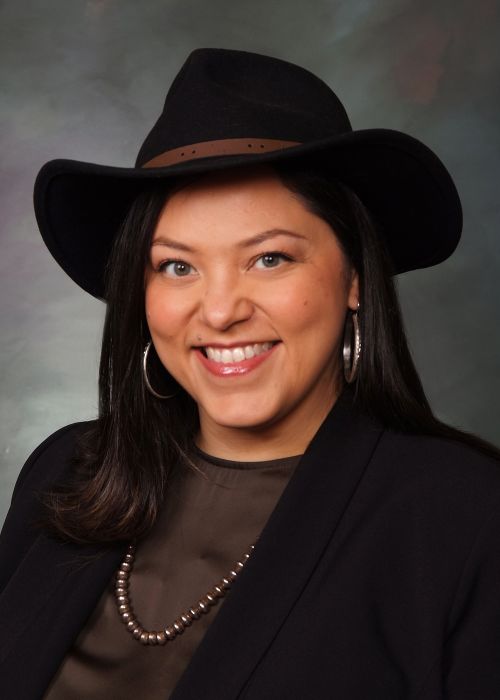
Julie Gonzales
Julie Gonzales Senate · District 34
D
Strong +
100% 37
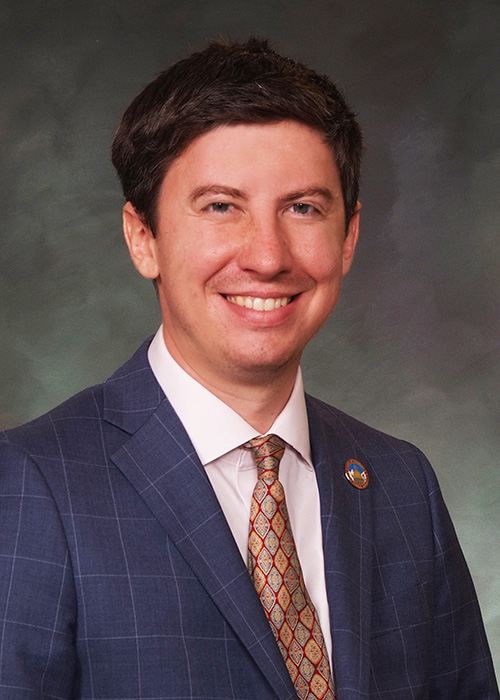
William Lindstedt
William Lindstedt Senate · District 25
D
Strong +
100% 30
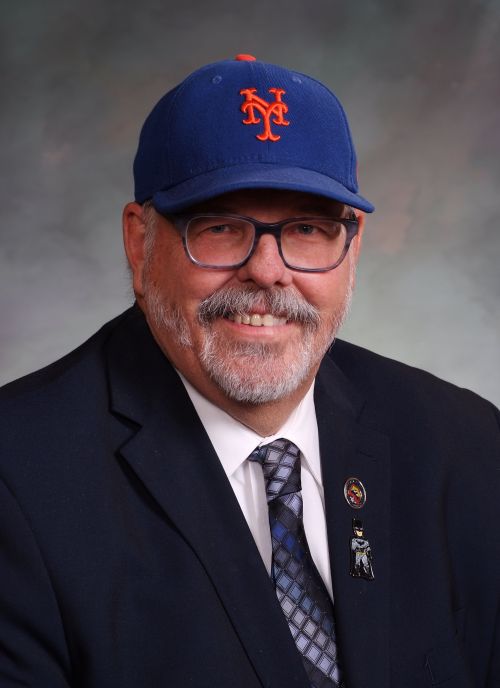
Tom Sullivan
Tom Sullivan Senate · District 27
D
Strong +
100% 20
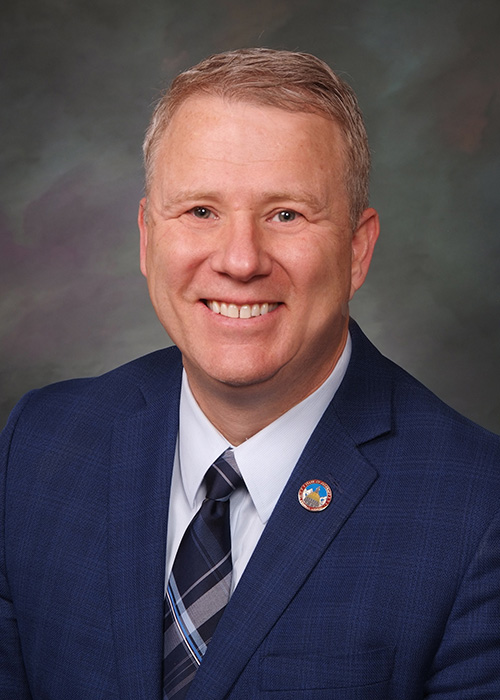
Chris Kolker
Chris Kolker Senate · District 16
D
Strong +
92% 45
Judy Amabile
Judy Amabile Senate · District 18
D
Strong +
90% 31
Larry Liston
Larry Liston Senate · District 10
R
Strong −
0% 39
Barbara Kirkmeyer
Barbara Kirkmeyer Senate · District 23
R
Strong −
10% 31
Byron Pelton
Byron Pelton Senate · District 1
R
Oppose
23% 36
Lynda Zamora Wilson
Lynda Zamora Wilson Senate · District 9
R
Oppose
25% 55
Ken DeGraaf
Ken DeGraaf House · District 22
R
Oppose
29% 102
Showing 1–10 of 12 bills

All criminal justice bills

in committee · Colorado · House Apr 13, 2026

HCR 1002: Require Age Verification for Pornographic Material

The concurrent resolution amends the Colorado constitution to mandate that the general assembly require, by law, a person who distributes pornographic material to verify that each person who receives the material is 18 years old or older.(Note: This summary applies to this concurrent resolution as introduced.)
signed · Colorado · House Jun 4, 2026

HB 1380: Repeal Office of Judicial Discipline Ombudsman

The act repeals the office of the judicial discipline ombudsman, effective July 1, 2027, which was established in 2023 to act as an independent and confidential advisor on judicial discipline procedures and workplace culture.(Note: This summary applies to this bill as enacted.)
signed · Colorado · House May 27, 2026

HB 1290: Criminal Offense of Assault

The act requires a court to sentence a defendant convicted of second degree assault by strangulation in an enhanced range as a crime of violence subject to mandatory incarceration if the defendant has previously been convicted of second degree assault by strangulation. A previous conviction must be set forth in the complaint, indictment, or information for the present act.(Note: This summary applies to this bill as enacted.)
in committee · Colorado · Senate Mar 18, 2026

SB 111: Protections Against Child Rape

Current law permits a court to sentence a sex offender to probation for an indeterminate period that can range from 10 years for a class 4 felony and 20 years for a class 3 felony to a maximum of the sex offender's natural life.The bill prohibits a court from sentencing to probation a sex offender convicted of:Class 4 felony sexual assault on a child;Class 4 felony sexual assault on a child by one in a position of trust; orClass 3 felony sexual assault on a child by one in a position of trust when the child is under 15 years old.(Note: This summary applies to this bill as introduced.)
in committee · Colorado · House Mar 2, 2026

HB 1072: Right to Firearm Possession & Elimination of Extreme Risk Protection Orders

The bill codifies an individual's right to own, possess, and use a firearm to the maximum extent permissible by the state and federal constitutions.     Extreme risk protection orders and temporary extreme risk protection orders are repealed.(Note: This summary applies to this bill as introduced.)
Sub-Topics Drug Policy Firearms
signed · Colorado · House May 7, 2026

HB 1101: Criminal Offenses Related to Critical Infrastructure Metals

The act defines critical infrastructure material as any component or part used in covered infrastructure that is made of or contains a commodity metal, the theft of which poses an imminent threat to life or the physical safety of a person, including through serious harm to the basic supply of covered infrastructure to the population or to the exercise of a core function of covered infrastructure. The act adds critical infrastructure materials to regulations in existing law on the sale and possession of commodity metals.     The act prohibits an owner, keeper, or proprietor (owner) of a junk shop, junk store, salvage yard, or junk cart or other vehicle, and every collector of or dealer in junk, salvage, or other secondhand property who buys a critical infrastructure material (buyer) from paying cash for the critical infrastructure material unless the seller is paid by means of any process in which a picture of the seller is taken or the transaction is worth less than $300.     The act prohibits a buyer from possessing critical infrastructure material without an affidavit from the seller or donator of the commodity metal. Unlawful possession of critical infrastructure materials is a class 2 misdemeanor if the amount is less than $1,000, a class 2 misdemeanor if the amount is $1,000 to $2,000, and a class 6 felony if the amount is $2,000 or more.     A buyer who unknowingly takes possession of critical infrastructure material as part of a load of otherwise noncritical infrastructure materials with an affidavit stating they can transfer the noncritical infrastructure material has a duty to notify the appropriate law enforcement agency or municipal code enforcement agency. Failure to report stolen critical infrastructure materials is a class 2 misdemeanor if the amount is less than $1,000, a class 2 misdemeanor if the amount is $1,000 to $2,000, and a class 6 felony if the amount is $2,000 or more.     An owner of a junk shop, junk store, salvage yard, or junk cart must make their book or register available to a law enforcement agency or municipal code enforcement agency upon request.     The act modifies existing criminal penalties related to the theft of commodity metals so that it is a class 6 felony for any amount that is $2,000 or more.(Note: This summary applies to this bill as enacted.)
passed · Colorado · House May 12, 2026

HB 1281: Homicide Criminal Offenses

Under current law, if a person engages in conduct that creates a grave risk to human life with an extreme indifference to the value of human life and causes the death of another person, the person commits first degree murder. The bill requires that the person:Cause the death of more than one person;Cause the death of one person and cause serious bodily injury to 2 or more persons by means of a deadly weapon;Cause the death of a child who is under 12 years old; orCause the death of a peace officer, emergency medical service provider, emergency medical care provider, or firefighter engaged in the performance of their duties.     The bill creates a new charge of murder in the second degree if a person engages in conduct that creates a grave risk to human life with an extreme indifference to the value of human life and causes the death of only one other person.      The bill expands the conduct by which a person can commit criminally negligent homicide to include proximately causing the death of another person while operating or driving a motor vehicle with criminal negligence.     The bill creates the offense of aggravated vehicular homicide by operating a motor vehicle in a reckless manner or while under the influence of or impaired by alcohol or other drugs and causing the death of another person when the person also:Has been convicted twice of driving under the influence or driving while ability impaired;Has been convicted of vehicular homicide or vehicular assault;Commits the offense while eluding or attempting to elude law enforcement;Commits the offense while in flight from the commission of another felony offense, not including a traffic offense; orCommits the offense while driving at a high rate of speed, creating an imminent risk of death or serious bodily injury to another person.      The bill creates the new offense of negligent vehicular homicide if a person drives a motor vehicle with criminal negligence and causes the death of another person. Negligent vehicular homicide is a class 5 felony.(Note: Italicized words indicate new material added to the original summary; dashes through words indicate deletions from the original summary.)(Note: This summary applies to the reengrossed version of this bill as introduced in the second house.)
in committee · Colorado · Senate Mar 25, 2026

SB 99: Governor Temporary Classify Controlled Substance Analog

Under current law, any material, compound, mixture, or preparation that is a controlled substance analog that is substantially similar to the chemical structure of a controlled substance in schedule II (analog to a schedule II controlled substance) is treated as a controlled substance in schedule II.The bill authorizes the governor to temporarily classify a material, compound, mixture, or preparation as an analog to a schedule II controlled substance, subject to conditions.(Note: This summary applies to this bill as introduced.)
Sub-Topics Drug Policy
in committee · Colorado · House Feb 10, 2026

HB 1082: Children Are Not for Sale Act

The bill adds trading anything of monetary value to buy or sell sexual activity with a minor who the person knows is being trafficked for sexual servitude as an act of human trafficking of a minor for sexual servitude. The bill changes the penalty of human trafficking of a minor for sexual servitude from a class 2 felony to a class 1 felony and requires the court to sentence a person convicted of the felony to life imprisonment without the possibility of parole.(Note: This summary applies to this bill as introduced.)
in committee · Colorado · House Feb 17, 2026

HB 1021: Second Amendment Protection Act

The bill repeals various state laws related to firearms and other weapons. Specifically, the bill repeals provisions concerning:Unlawfully carrying a firearm at a polling location or drop box offense;The presumption that an individual engages in election-related intimidation if the individual carries a visible firearm, imitation firearm, or toy firearm while interacting with or observing specified election activities;Firearm industry standards of responsible conduct enacted in Senate Bill 23-168, enacted in 2023, and the bill restores the firearms product liability provisions that existed prior to the enactment of Senate Bill 23-168;Payment processing for retail sales of firearms;Designating as peace officers the following personnel of the firearms dealer division within the department of revenue: The director, deputy directors, agents in charge, criminal investigator supervisors, and criminal investigators;Including in a mandatory criminal protection order a requirement for a defendant to relinquish firearms and ammunition;The classification of a rapid-fire device as a dangerous weapon;Prohibitions on knowingly carrying a firearm in specified government buildings and licensed child care centers;Unlawfully carrying a concealed weapon;Unlawfully possessing explosive, incendiary, or other dangerous devices in certain legislative buildings;Unlawfully carrying a firearm at a licensed child care center; a public or private elementary, middle, junior high, high, or vocational school; or a public or private college or university;Requirements to store a firearm, including in a vehicle;The requirement for the department of public health and environment to conduct a firearms safe storage education campaign;Prohibitions on certain conduct involving an unserialized firearm, frame, or receiver;The requirement to conduct a background check on the transferee in a private firearm transfer;Setting the minimum age to buy a firearm at 21 years old;The 3-day waiting period for firearm sales;Certain prohibited activity involving semiautomatic firearms, including the prohibition on purchasing a firearm without having completed certain educational requirements, and the associated firearms training and safety course record system;Ammunition sales;Permitting local entities to prohibit carrying a concealed handgun in certain areas;Prohibiting the possession of certain ammunition magazines, and marking requirements on certain ammunition magazines manufactured in Colorado on or after July 1, 2013;The requirement to have a state permit to deal firearms in Colorado and the requirements for dealers and dealers' employees;Gun show regulations;Providing materials about gun violence prevention to parents with students in K-12 schools;The authority of the Colorado bureau of investigation to investigate particular illegal activity involving firearms statewide;The voluntary waiver of the right to purchase a firearm; andThe authority of a local government to enact an ordinance, regulation, or other law governing or prohibiting the sale, purchase, transfer, or possession of a firearm, ammunition, or firearm component or accessory.The bill repeals the office of gun violence prevention.As part of the repeals described above, the firearms training and safety course cash fund is repealed and the voluntary waiver of the right to purchase a firearm program, which is funded by gifts, grants, and donations, is repealed. The bill directs the state treasurer to return the money in the firearms training and safety course cash fund to the persons who paid fees into the fund and to return to the grantors and donors the balance of the gifts, grants, and donations made in support of the voluntary waiver of the right to purchase a firearm program.(Note: This summary applies to this bill as introduced.)
Showing 1 to 10 of 12 bills
1 2 Next