Issue · Labor & Employment

Labor & Employment

Every labor & employment bill, vote, and legislator stance in California, automatically classified by Maddy, our AI policy reader.

Total bills
19
119th Congress
Top supporter
Adam Gray
77% support rate
Top opponent
Tom McClintock
31% support rate
Ranked legislators
10
5 support · 5 oppose
Key legislators

Who's moving labor & employment in California

Legislators moving labor & employment in California
Legislator Party Stance Support rate Votes
Adam Gray
Adam Gray House · District 13
D
Support
77% 189
Jimmy Panetta
Jimmy Panetta House · District 19
D
Support
77% 198
Adam B. Schiff
Adam B. Schiff Senate
D
Support
75% 210
J. Luis Correa
J. Luis Correa House · District 46
D
Support
75% 186
George Whitesides
George Whitesides House · District 27
D
Support
69% 192
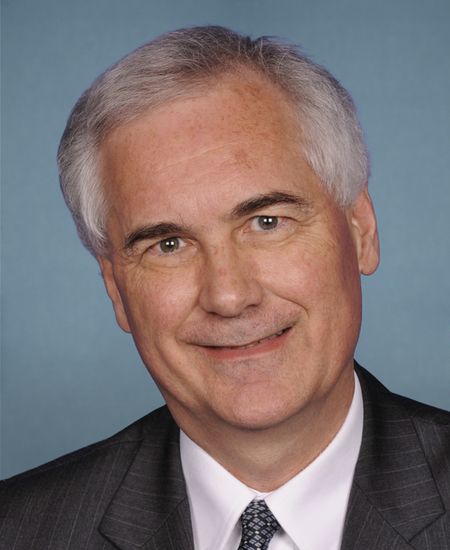
Tom McClintock
Tom McClintock House · District 5
R
Oppose
31% 190
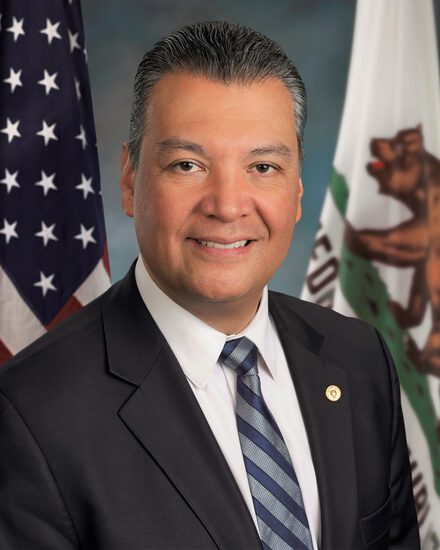
Alex Padilla
Alex Padilla Senate
D
Oppose
38% 207
Young Kim
Young Kim House · District 40
R
Oppose
38% 196
Kevin Kiley
Kevin Kiley House · District 3
I
Oppose
38% 198
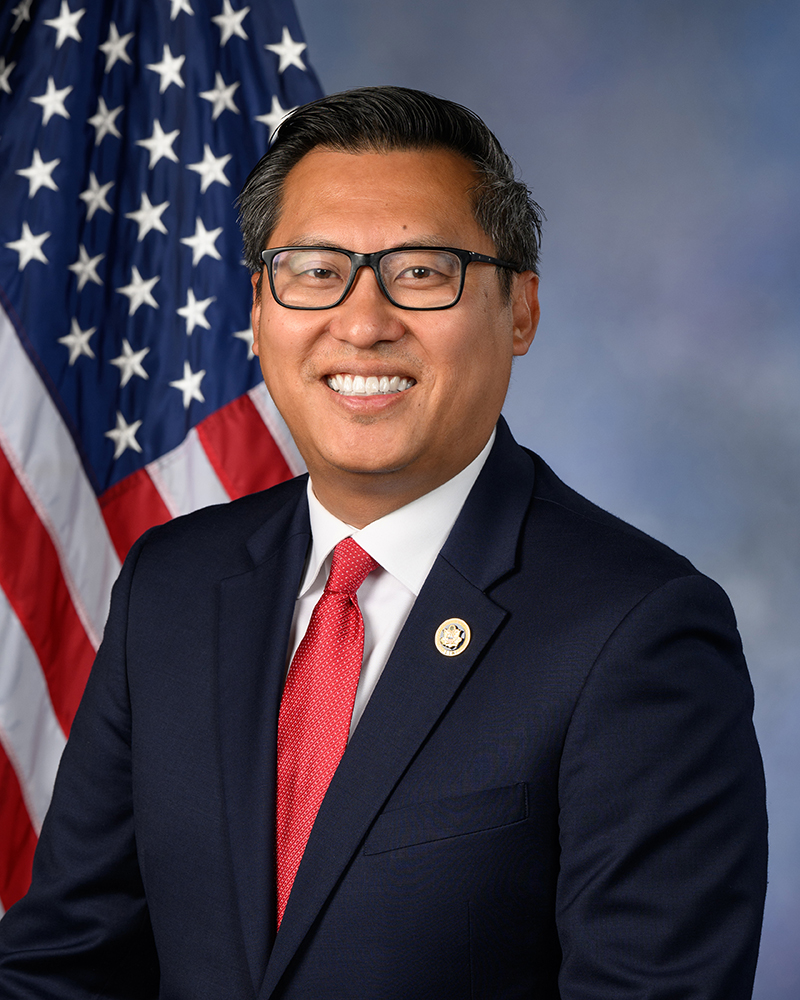
Vince Fong
Vince Fong House · District 20
R
Oppose
38% 197
Showing 1–10 of 19 bills

All labor & employment bills

in committee · United States · House May 19, 2026

HR 8901: Securing Innovation and Research from Adversaries Act

HR 8901, the Securing Innovation and Research from Adversaries Act, prohibits federally funded researchers and institutions from collaborating with entities on specific U.S. government restricted lists, such as those related to national security risks or forced labor. The bill defines research collaboration broadly to include joint projects, data sharing, co-authorship, and personnel exchanges, and it requires agencies to issue guidance for standardized compliance. While the law generally bans these partnerships, it allows federal agency heads to grant case-by-case waivers if the collaboration is essential for national security or critical scientific purposes, provided they report the decision and justification to Congress within 30 days.
in committee · United States · Senate Mar 26, 2026

SJRES 152: A joint resolution providing for congressional disapproval under chapter 8 of title 5, United States Code, of the rule submitted by the Department of Labor relating to the Adverse Effect Wage Rate Methodology.

This bill seeks to overturn a Department of Labor rule that changes how the Adverse Effect Wage Rate is calculated for H-2A temporary agricultural workers. If passed, it would cancel the new methodology, restoring the previous approach used to determine minimum wage requirements for these temporary workers. The measure directly affects the Employment and Training Administration, which administers the H-2A visa program, and employers who hire foreign agricultural labor. It is a procedural action that requires approval from both the House and Senate to take effect.
in committee · United States · House Mar 25, 2025

HR 2315: Fairness for High-Skilled Americans Act of 2025

Fairness for High-Skilled Americans Act of 2025 This bill eliminates the Optional Practical Training Program or any successor program, unless Congress expressly authorizes such a program. (The program provides an F-1 student visa holder temporary employment authorization before or after completion of the student's studies, or both.)
Sub-Topics Work Authorization
in committee · United States · House Jul 18, 2025

HR 4500: HELP Act

HR 4500, the HELP Act, exempts certain commercial vehicles transporting livestock, insects, or aquatic animals from federal hours-of-service rules and electronic logging device (ELD) requirements. This directly affects livestock haulers who operate covered vehicles, including when driving empty to pick up or return from deliveries. The bill removes two specific regulatory burdens: the mandatory rest periods under 49 U.S.C. § 311 and ELD tracking under 49 U.S.C. § 31137. It applies only to vehicles defined as "covered livestock hauling vehicles" under the law, which includes all commercial livestock transport for commercial purposes. The exemption aims to provide operational flexibility for this specific segment of the transportation industry.
Sub-Topics Freight
in committee · United States · House Jan 7, 2025

HR 236: Federal Employee Return to Work Act

This bill requires federal employees who telework at least one day weekly (or 20% of their time under alternative schedules) to be paid at the "Rest of U.S." locality pay rate without future adjustments. It excludes employees who telework daily, those with disabilities receiving accommodations, Foreign Service members, law enforcement officers, and military personnel on active duty. Covered employees will no longer receive annual pay adjustments under standard federal pay schedules. The policy takes effect at the start of the first full fiscal year after the bill becomes law. It directly affects federal workers meeting the telework threshold, altering their pay structure based on location.
in committee · United States · House Feb 10, 2025

HR 1172: No Social Security for Illegal Aliens Act of 2025

HR 1172 would amend the Social Security Act to prevent undocumented immigrants from earning Social Security credits for work performed in the U.S. without authorization. It specifically excludes wages earned and self-employment income derived during periods when an individual lacked work authorization from counting toward Social Security benefits. This change applies retroactively to all wages earned before, on, or after the law's enactment, affecting future benefit calculations for undocumented workers. The bill directly impacts individuals working without legal status, ensuring such work does not contribute to their Social Security eligibility or future benefits.
Sub-Topics Work Authorization
in committee · United States · House Apr 10, 2025

HR 2819: DRIVE Act

HR 2819, the DRIVE Act, prohibits the Federal Motor Carrier Safety Administration from requiring speed limiting devices on trucks weighing over 26,000 pounds operating in interstate commerce. This directly affects commercial truck drivers and carriers that operate large vehicles across state lines. The bill blocks the agency from implementing any rule mandating speed limiters that would cap these trucks' maximum speed. It prevents a potential new federal requirement for trucking companies without altering existing safety standards.
in committee · United States · House Jun 3, 2026

HR 5437: Protection of Lawful Commerce in Stone Slab Products Act

HR 5437, the *Protection of Lawful Commerce in Stone Slab Products Act*, prohibits lawsuits against manufacturers and sellers of stone slab products (like countertops) for injuries caused by silica dust exposure during third-party fabrication (e.g., cutting or grinding by fabricators). It directly affects stone slab manufacturers and sellers by shielding them from civil liability when injuries result from fabricators violating workplace safety laws. The bill’s key provision bans such lawsuits in federal or state courts and requires dismissal of pending cases. It aims to protect this industry, which employs thousands, from claims they cannot control, emphasizing that safety regulations apply to fabricators - not the original sellers.
Sub-Topics Workplace Safety
in committee · United States · House Mar 5, 2025

HR 1870: SPEED for BEAD Act

The SPEED for BEAD Act (HR 1870) amends the federal broadband deployment program (BEAD) to accelerate network expansion. It defines "gigabit-level broadband" as 1,000 Mbps download speeds, requires unused funds to be returned to the Treasury instead of reallocated, and allows states to remove high-cost locations from project areas. The bill prohibits grant conditions related to labor practices (e.g., union requirements), diversity initiatives, climate policies, or network management rules, while ensuring all broadband technologies meeting speed standards are eligible. It also explicitly bans government regulation of broadband pricing, directly affecting states administering BEAD funds and the internet providers they fund.
in committee · United States · House Dec 12, 2025

HR 6685: To amend the Internal Revenue Code of 1986 to establish an exception for multiemployer plan participants to the requirements for automatic enrollment.

This bill exempts multiemployer pension plans from automatic enrollment requirements under the Internal Revenue Code. Specifically, it amends Section 414A(c)(3) to explicitly exclude multiemployer plans (defined under Section 414(f)) from rules requiring automatic enrollment in retirement plans. This change directly affects workers enrolled in union-sponsored multiemployer pension plans, allowing these plans to avoid automatic enrollment obligations. The amendment applies to taxable years beginning after December 31, 2024.
Showing 1 to 10 of 19 bills
1 2 Next