Issue · Environment

Environment

Every environment bill, vote, and legislator stance in California, automatically classified by Maddy, our AI policy reader.

Total bills
434
2025-2026 Regular Session
Top supporter
Diane Papan
98% support rate
Top opponent
Natasha Johnson
4% support rate
Ranked legislators
10
5 support · 5 oppose
Key legislators

Who's moving environment in California

Legislators moving environment in California
Legislator Party Stance Support rate Votes
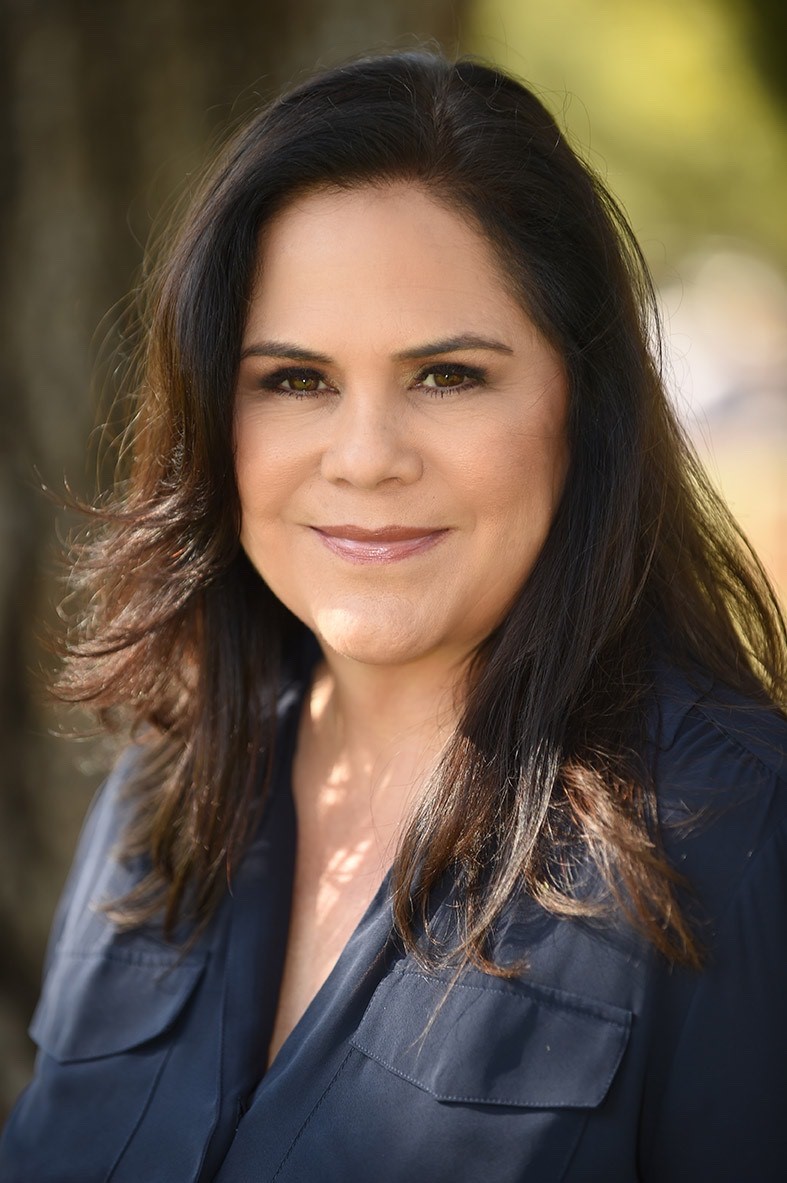
Diane Papan
Diane Papan House · District 21
D
Strong +
98% 153
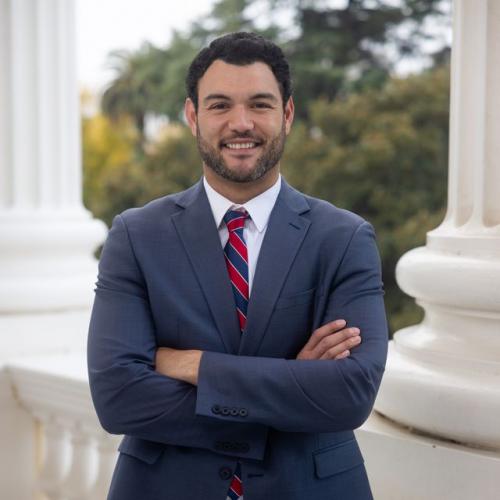
Lisa Calderon
Lisa Calderon House · District 56
D
Strong +
96% 167
Patrick Ahrens
Patrick Ahrens House · District 26
D
Strong +
96% 117
Joaquin Arambula
Joaquin Arambula House · District 31
D
Strong +
96% 184
Lori Wilson
Lori Wilson House · District 11
D
Strong +
96% 160
Natasha Johnson
Natasha Johnson House · District 63
R
Strong −
4% 84
David Tangipa
David Tangipa House · District 8
R
Strong −
5% 217
Carl DeMaio
Carl DeMaio House · District 75
R
Strong −
6% 153
Kate Sanchez
Kate Sanchez House · District 71
R
Strong −
6% 166
Roger Niello
Roger Niello Senate · District 6
R
Strong −
6% 174
Showing 11–20 of 434 bills

All environment bills

in committee · California · Assembly Feb 21, 2026

AB 2696: Coastal protection: findings and declarations.

Existing law, the California Coastal Act of 1976, provides for the protection of California's coast and requires any person wishing to perform or undertake any development in the coastal zone, as defined, to obtain a coastal development permit, except as specified. The act makes various findings and declarations regarding the need to preserve the state's natural and scenic resources along the coast and ensure that development in the coastal zone is carefully planned and developed. This bill would make nonsubstantive changes to those findings and declarations.
in committee · California · Assembly Feb 4, 2026

AB 1692: Energy.

The Warren-Alquist State Energy Resources Conservation and Development Act establishes the State Energy Resources Conservation and Development Commission and vests the commission with the authority to, among other things, adopt building design and construction standards and energy and water conservation standards for new residential and nonresidential buildings to reduce the wasteful, uneconomic, inefficient, or unnecessary consumption of energy, including energy associated with the use of water. This bill would make nonsubstantive changes to the provision naming the act.
in committee · California · Assembly May 14, 2026

AB 2566: Huron Hawk Conservancy.

Existing law authorizes various conservancies to acquire, manage, direct the management of, and conserve lands in the state. This bill, upon appropriation by the Legislature or approval of a general obligation bond, as provided, would establish the Huron Hawk Conservancy within the Natural Resources Agency for specified purposes related to the Huron Hawk area, as defined, including to acquire and manage public lands within the Huron Hawk area and to provide recreational, open space, wildlife habitat restoration and protection, and lands for educational uses within the area. The bill would require the conservancy to be governed by a board of directors composed of designated membership, including certain members appointed by certain local agencies. The bill would set forth the powers, duties, and limitations of the board of directors and the conservancy, as provided. The bill would create the Huron Hawk Conservancy Fund and would make moneys in the fund available for expenditure by the conservancy, upon appropriation by the Legislature, for the purposes of these provisions. The bill would authorize the conservancy to accept revenue generated and contributed to the conservancy by member agencies, as defined, which the bill would require to be deposited into the fund. The bill would also authorize the conservancy to accept revenue, money, grants, goods, and services contributed to the conservancy by a public agency, private entity, or person, and would require the revenue, money, and grants to be deposited into the fund. By imposing new duties on local agencies, this bill would create a state-mandated local program. The California Constitution requires the state to reimburse local agencies and school districts for certain costs mandated by the state. Statutory provisions establish procedures for making that reimbursement. This bill would provide that, if the Commission on State Mandates determines that the bill contains costs mandated by the state, reimbursement for those costs shall be made pursuant to the statutory provisions noted above.
passed · California · Senate Aug 30, 2026

SB 195: Income taxes: exclusions: wildfire loss mitigation payments.

SB 195 is a procedural bill that merely expresses the Legislature's intent to later enact statutory changes related to the upcoming Budget Act of 2025. It does not make any concrete budget changes or affect specific groups or programs. The bill serves as a formal step to signal future legislative action on budget processes, without detailing any specific provisions or funding allocations. This is a standard procedural measure to guide future budget discussions, not a substantive policy change.
passed · California · Assembly Aug 28, 2026

AB 193: Public resources: Greenhouse Gas Reduction Fund: programs.

The provided context does not include sufficient details about AB 193's specific provisions, mechanisms, or policy changes. The official abstract only states the bill expresses legislative intent to enact statutory changes related to a "Budget Act of 2025," without describing what those changes are. No concrete policy effects, affected parties, or key mechanisms are specified in the given information. A factual summary cannot be created without additional details about the bill's content.
introduced · California · Assembly Aug 7, 2026

ACR 235: Relative to Sentinel Landscapes Partnership.

This measure would express the Legislature's support for the Sentinel Landscapes Partnership, designated areas like the Mojave Desert, and the pursuit of additional sentinel landscape designations throughout the state, would request the relevant state agencies to coordinate and support sentinel landscapes, and would encourage the development and passage of future legislation to create dedicated statutory frameworks that support military readiness, unlock federal funding, and promote landscape-scale conservation.
Sub-Topics Conservation
in committee · California · Assembly May 14, 2026

AB 2334: Solid waste: methane reduction: working group.

Existing law establishes the Department of Resources Recycling and Recovery, which is administered under the control of an executive officer known as the Director of Resources Recycling and Recovery. This bill would require the Director of Resources Recycling and Recovery to establish a working group to study the need for and value of alternative methods of methane reduction, as specified. The bill would require the working group to submit its findings and recommendations to the director on or before January 1, 2029.
in committee · California · Assembly Feb 20, 2026

AB 2177: Planning and Zoning law: open-space zoning.

Existing law requires every city and county, by December 31, 1973, to prepare and adopt an open-space zoning ordinance consistent with the local open-space plan adopted pursuant to specified law. Existing law makes legislative findings that the provisions relating to open-space zoning are not intended, and shall not be construed, as authorizing the city or the county to exercise its power to adopt, amend or repeal an open-space zoning ordinance in a manner that will take or damage private property for public use without the payment of just compensation therefor. This bill would make a nonsubstantive change to this provision.
Sub-Topics Conservation
passed · California · Assembly Aug 24, 2026

HR 140: Relative to Children's Get Offline and Get Outdoors Month.

California Assembly Resolution 140 designates August 2026 as Children's Get Offline and Get Outdoors Month to promote awareness of the benefits of screen-free play for child development. The resolution cites research linking excessive social media use and reduced free play time to increased rates of anxiety, depression, and other behavioral issues among teenagers. It encourages families and communities to support unstructured outdoor activities and highlights ongoing federal efforts to protect children's mental health through technology guardrails.
in committee · California · Assembly Mar 9, 2026

AB 2102: Wildfire: vegetation management: fuel reduction activities.

(1) Existing law establishes in the Natural Resources Agency the Department of Forestry and Fire Protection, and requires the department to be responsible for, among other things, fire protection and prevention, as provided. Existing law describes state responsibility areas as areas of the state in which the financial responsibility of preventing and suppressing fires has been determined by the State Board of Forestry and Fire Protection to be primarily the responsibility of the state. Existing law requires the State Fire Marshal to classify lands within state responsibility areas into fire hazard severity zones and, by regulation, designate fire hazard severity zones and assign to each zone a rating reflecting the degree of severity of fire hazard that is expected to prevail in the zone, as provided. Existing law also requires the State Fire Marshal to identify areas of the state as moderate, high, and very high fire hazard severity zones based on specified criteria. Existing law requires, within 120 days of receiving a recommendation from the State Fire Marshal that identifies fire hazard severity zones, described above, a local agency to designate, by ordinance, fire hazard severity zones in its jurisdiction, as provided. This bill would, on or before January 1, 2028, and every 2 years thereafter, require the department or a local entity to conduct an assessment, as provided, of all undeveloped public lands for which it is primarily responsible for preventing and suppressing fires to ensure that the public land is not a severe fire hazard. The bill would require this assessment to be posted on the department's and local entity's internet website and would require a local entity conducting the assessment to submit its assessment to the department. The bill would require all public lands, on or before January 1, 2028, to have 200-foot firebreaks on all borders with private property. This bill would, when the department or local entity acquires private undeveloped land, require the department or a local entity that is primarily responsible for preventing and suppressing fires on that land to create a plan on how the land will be managed with regard to fire prevention, and to report the cost of keeping the land managed. The bill would require the department and the local entity to post this information on its respective internet website and would require a local entity preparing this information to submit it to the department. To the extent that this bill would impose new duties on local government agencies, the bill would create a state-mandated local program. (2) The California Environmental Quality Act (CEQA) requires a lead agency, as defined, to prepare, or cause to be prepared, and certify the completion of an environmental impact report on a project that it proposes to carry out or approve that may have a significant effect on the environment or to adopt a negative declaration if the lead agency finds that the project will not have that effect. CEQA also requires a lead agency to prepare a mitigated negative declaration for a project that may have a significant effect on the environment if revisions in the project would avoid or mitigate that effect and there is no substantial evidence that the project, as revised, would have a significant effect on the environment. This bill would authorize property owners to conduct wildfire fuel reduction activities, as described, on their own private property if the activities comply with specified guidelines. The bill would require fire chiefs of a county with jurisdiction over that private property in which the activities are conducted to establish these guidelines, as provided. The bill would exempt from CEQA these activities regardless of the acreage involved, if the activity is conducted solely for wildfire fuel reduction and not for development purposes. The bill would prohibit state agencies from imposing additional requirements on these activities, as provided. By imposing new duties on county fire chiefs, and because a lead agency would be required to determine whether a project qualifies for this exemption, the bill would create a state-mandated local program. (3) The California Constitution requires the state to reimburse local agencies and school districts for certain costs mandated by the state. Statutory provisions establish procedures for making that reimbursement. This bill would provide that with regard to certain mandates no reimbursement is required by this act for a specified reason. With regard to any other mandates, this bill would provide that, if the Commission on State Mandates determines that the bill contains costs so mandated by the state, reimbursement for those costs shall be made pursuant to the statutory provisions noted above.
Sub-Topics Forestry Public Lands
Showing 11 to 20 of 434 bills