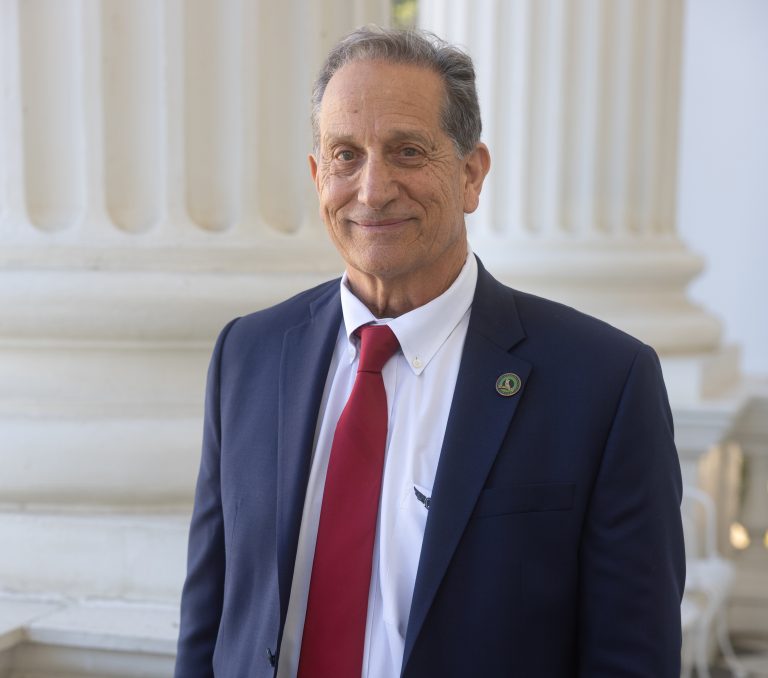
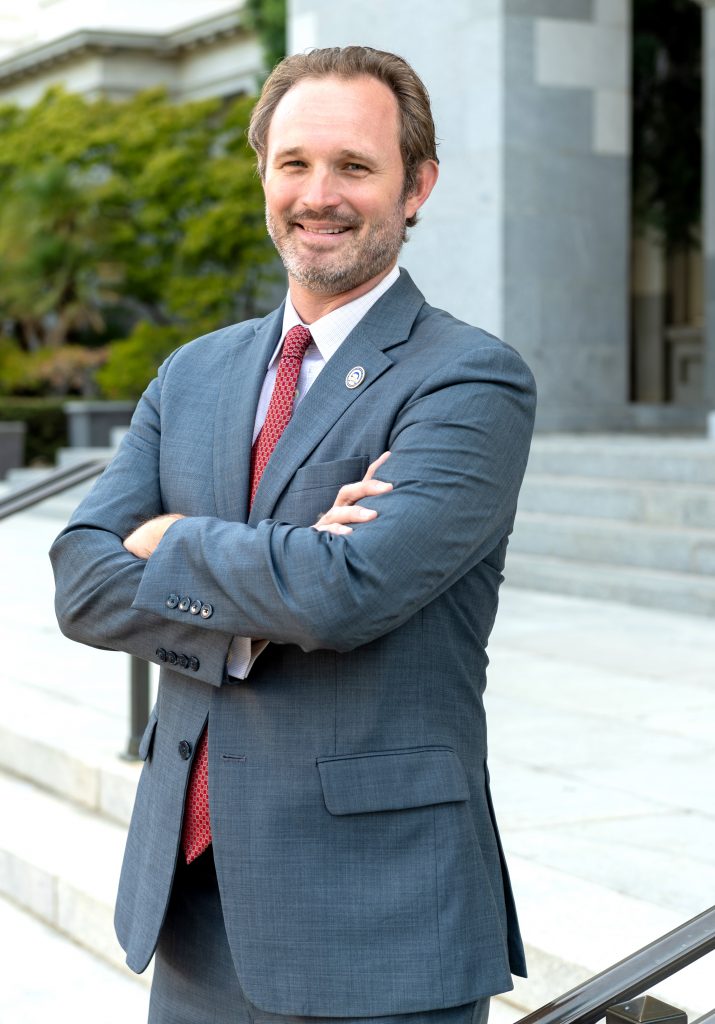
This measure would recognize May 2025 as Head Start Month and call on the Congress and the President of the United States to protect and increase funding for Head Start.
This measure would urge the administration of President Donald J. Trump and the Congress of the United States to rescind the National Institutes of Health funding cuts. This measure also affirms the Legislature's commitment to postsecondary educational institutions.
Existing law makes legislative findings and declarations that set forth the principles for public postsecondary institutions and budgetary control agencies to observe in providing postsecondary programs and services for students with disabilities, including the principle that state-funded activity is directly related to the functional limitations of the verifiable disabilities of the students to be served. Existing law states the intent of the Legislature that, as appropriate for each postsecondary segment, funds for disabled student programs and services be based on 3 categories of costs, including a continuing variable costs category for services that vary in frequency depending on the needs of students, such as, among other services, diagnostic assessment, including both individual and group assessment not otherwise provided by the institution to determine functional, educational, or employment levels or to certify specific disabilities. Existing law requires the Board of Governors of the California Community Colleges to adopt rules and regulations for the administration and funding of educational programs and support services to be provided to disabled students by community college districts. Existing law requires those regulations to provide for the apportionment of funds to each community college district to offset the direct excess cost of providing specialized support services or instruction, or both, to disabled students enrolled in state-supported disabled student services programs or courses. Existing law describes those direct excess costs as those actual fixed, variable, and one-time costs, including those described above, that exceed the combined total of specified costs, revenues, and funds. Existing law establishes the Student Aid Commission as the primary state agency for the administration of state-authorized student financial aid programs available to students attending all segments of postsecondary education. This bill would revise the intent of the Legislature relating to diagnostic assessments by including costs for continuing assessments, required documentation, and individual and group assessments provided by the institution or by an outside entity, as provided. The bill would also expand the purpose of the assessments to include defining specific disabilities of the student and as proof for academic or institutional accommodations. This bill, commencing July 1, 2027, and upon appropriation by the Legislature in the annual Budget Act, would require the Trustees of the California State University, and would request the Regents of the University of California, to cover the costs of diagnostic assessments for learning disabilities as proof for academic accommodations for any student who receives student financial aid or who is eligible for financial assistance from the institution's health or disability center, unless those diagnostic assessments are covered by the student's health insurance plan, as provided. The bill would require state funds to be provided annually for the cost of these services on an actual-cost basis and would require each institution to be responsible for documenting its costs to the Student Aid Commission. The bill would require the commission to oversee reimbursements to institutions for their documented costs. The bill would require each educational institution to post on its internet website that the educational institution will cover the costs of the diagnostic assessments for such students.
(1) Existing federal law, known as Title IX, prohibits a person, on the basis of sex, from being excluded from participation in, being denied the benefits of, or being subject to discrimination under, any education program or activity receiving federal financial assistance. Existing state law, the Sex Equity in Education Act, requires public schools, private schools that receive federal funds and are subject to the requirements of Title IX, school districts, county offices of education, and charter schools to post in a prominent and conspicuous location on their internet websites specified information relating to Title IX. This bill would require the State Department of Education to, on or before January 1, 2028, review the existing California School Climate, Health, and Learning Surveys system to identify areas of the surveys where age-appropriate questions related to sexual harassment, sexual assault, and sexual abuse safety can be incorporated, as provided. The bill would declare the second full week in September as "Sexual Harassment Safety Week," during which time the bill would require all public schools, including charter schools, to focus on fostering a safe and secure environment for all members of the school community and place an emphasis on preventing sexual harassment, sexual assault, and sexual abuse, as provided. By imposing new duties on schools, the bill would impose a state-mandated local program. The bill would encourage public schools to host interactive activities that cover school policies related to preventing sexual harassment, sexual assault, and sexual abuse, and prominently post specified resources and information about preventing those acts on the school's digital platform, as provided. The bill would encourage school districts, county offices of education, and charter schools to, in coordination with specified personnel, send a written notice to the school community highlighting the Sexual Harassment Safety Week. (2) Existing law establishes the Instructional Quality Commission and requires the commission to, among other things, recommend curriculum frameworks to the State Board of Education. Existing law, the California Healthy Youth Act, requires school districts, charter schools, county boards of education, county superintendents of schools, the California School for the Deaf, and the California School for the Blind to ensure that all pupils in grades 7 to 12, inclusive, receive comprehensive sexual health education and human immunodeficiency virus (HIV) prevention education, as specified. The act requires that instruction to include, among other things, information about sexual assault, sexual harassment, sexual abuse, and human trafficking, as provided. This bill would require the commission, when the Health Education Framework for California Public Schools, Kindergarten Through Grade Twelve is next revised on or after January 1, 2026, to consider including in that curriculum framework information related to, among other things, the Uniform Complaint Procedures, Title IX, and what a pupil should do if they believe another pupil has been subjected to sexual abuse, sexual assault, sexual harassment, or retaliation, as provided. The bill would encourage the same information to also be provided as part of the instruction required under the comprehensive sexual health education and HIV prevention education provisions. (3) The California Constitution requires the state to reimburse local agencies and school districts for certain costs mandated by the state. Statutory provisions establish procedures for making that reimbursement. This bill would provide that, if the Commission on State Mandates determines that the bill contains costs mandated by the state, reimbursement for those costs shall be made pursuant to the statutory provisions noted above.
(1) Existing law requires a pupil to complete designated coursework while in grades 9 to 12, inclusive, in order to receive a diploma of graduation from high school. These graduation requirements include, among others, the completion of 3 courses in social studies, including a one-semester course in American government and civics. Existing law establishes the Instructional Quality Commission and requires the commission to, among other things, recommend curriculum frameworks to the State Board of Education. This bill, subject to appropriation by the Legislature for this purpose, would require the State Department of Education, in collaboration with, and subject to the approval of, the executive director of the state board, to enter into a contract with a county office of education or a consortium of county offices of education for the purpose of developing a curriculum guide for a one-year course in American government and civics, as provided. The bill would require the curriculum guide to include, among other things, fundamentals on federal, state, and local government, as provided, and specified information relating to voting. (2) Existing law requires the Superintendent of Public Instruction, on or before January 1, 2020, to recommend to the state board criteria for awarding a State Seal of Civic Engagement to pupils who have demonstrated excellence in civics education and participation and have demonstrated an understanding of the United States Constitution, the California Constitution, and the democratic system of government. Existing law requires the state board, on or before January 31, 2021, to adopt, reject, or modify the criteria recommended by the Superintendent. This bill would provide that a pupil's successful completion of a one-year course in American government and civics satisfies specified criteria adopted by the state board related to the State Seal of Civic Engagement. The bill would require a pupil who has successfully completed a one-year course in American government and civics, in order to receive the State Seal of Civic Engagement, to still satisfy all other criteria adopted by the state board.
Existing law provides that it is the intent of the Legislature that all public schools, in kindergarten, and grades 1 to 12, inclusive, operated by school districts, in cooperation with specified entities and individuals, develop a comprehensive school safety plan, as provided. Existing law provides that school districts and county offices of education are responsible for the overall development of a comprehensive school safety plan for each of its schools, as provided. Existing law, the Charter Schools Act of 1992, provides for the establishment and operation of charter schools, including countywide charter schools, and requires a petition for the establishment of a charter school to contain comprehensive descriptions of various matters and procedures, including procedures that the charter school will follow to ensure the health and safety of pupils and staff. The act requires those procedures to also require the development of a school safety plan, as provided. Existing law encourages, on or before July 1, 2030, each public school, including charter schools, with an enrollment of 100 pupils or more to implement a web-based or app-based school safety program that includes certain program parameters. If a school implements a web-based or app-based school safety program, existing law requires the school to ensure that the program developers ensure that best practices are implemented to protect the security and data of all pupils and staff listed within the program, as provided. This bill, upon appropriation by the Legislature, would establish the School Mapping Data Grant Program under the administration of the Office of Emergency Services to provide one-time grants to participating school districts, county offices of education, and charter schools to enter into contracts with qualified vendors providing school mapping data, as provided, for purposes of assisting public safety agencies in efficiently responding to on-campus emergencies at schools. The bill would require a school mapping data program, to be eligible to receive funding under the grant program, to include the same program parameters as, and to have the program developers implement the same best practices to protect the security and data of all pupils and staff as, a web-based or app-based school safety program, as described above. Existing constitutional provisions require that a statute that limits the right of access to the meetings of public bodies or the writings of public officials and agencies be adopted with findings demonstrating the interest protected by the limitation and the need for protecting that interest. This bill would make legislative findings to that effect.
Existing law establishes the Instructional Quality Commission and requires the commission to, among other things, recommend curriculum frameworks to the State Board of Education. Existing law requires the commission, when the history-social science curriculum framework is next revised, on or after January 1, 2025, to consider providing for inclusion, in that curriculum framework, related evaluation criteria, and accompanying instructional materials, of instruction on the treatment and perspectives of Native Americans during the Spanish colonization of California and the Gold Rush Era. This bill would require the commission, when the state board next revises the history-social science curriculum framework or adopts new instructional materials, on or after January 1, 2026, to consider including content on the historical, social, economic, and political contributions of African Americans during the Spanish colonization of California, the Gold Rush Era, and Antebellum, as provided.
(1) Existing law requires the Commission on Teacher Credentialing to, among other duties, establish standards for the issuance and renewal of credentials, certificates, and permits. Existing law requires the holder of a single subject teaching credential or a standard secondary credential or a special secondary teaching credential who either (A) has completed specified coursework approved by the commission at a regionally accredited institution of higher education in any subject commonly taught in grades 7 to 12, inclusive, other than the subject for which the credentialholder is already certificated to teach, or (B) has been verified as having subject matter competence, as specified, for any subject commonly taught in grades 7 to 12, inclusive, other than the subject for which the credentialholder is already certificated to teach, to be eligible to have that subject appear on their credential as an authorization to teach that subject. This bill would revise the above-described eligibility requirements for a credentialholder to have a subject appear on their credential as an authorized subject for the credentialholder teach by removing the qualification that the subject be one that the credentialholder is not already credentialed to teach. (2) Existing law requires both the adopted course of study for grades 1 to 6, inclusive, to include physical education for a total period of time of not less of than 200 minutes each 10 schooldays, as specified, and the adopted course of study for grades 7 to 12, inclusive, to require all pupils to attend upon the courses of physical education for a total period of time of not less than 400 minutes each 10 schooldays, unless an alternate term schedule described below has been adopted or the pupil has been excused or exempted, as provided. Existing law authorizes the governing board of a school district maintaining any of grades 6 to 12, inclusive, to adopt a policy providing for an alternate term schedule for physical education courses if certain conditions are met, including, among others, that pupils in grade 6 receive no less than 400 minutes of instruction every 10 days for a semester of not fewer than 18 weeks during the regular school year, for a total of 3,600 instructional minutes for the school year, and that pupils in grades 7 to 12, inclusive, receive no less than 800 minutes of instruction every 10 days for a semester of not fewer than 18 weeks during the regular school year, for a total of 7,200 instructional minutes for the school year. This bill would clarify that the alternative term schedule minimum minute requirements are required to be calculated instead by schooldays. (3) This bill would correct cross references and references to entities.
Existing law authorizes the governing board of a school district or county office of education to establish a catastrophic leave program to permit employees of that school district or county office of education, if specified conditions are met, to donate eligible leave credits to an employee when that employee or a member of their family suffers from a catastrophic illness or injury, as provided. This bill would extend the above-described authorization to the governing body of a charter school and would authorize the governing board or body of a school district, county office of education, or charter school to also permit employees to donate eligible leave credits to an employee impacted by a state of emergency that has been proclaimed by the Governor, as provided. This bill would declare that it is to take effect immediately as an urgency statute.
(1) A part of the Donahoe Higher Education Act, known as the Student Transfer Achievement Reform Act, requires a student who earns an associate degree for transfer to be deemed eligible for transfer into a California State University baccalaureate program when the student meets certain requirements, including the completion of specified number of units that are eligible for transfer to the California State University, including the Intersegmental General Education Transfer Curriculum (IGETC) or the California State University General Education-Breadth Requirements. Existing law requires the Intersegmental Committee of the Academic Senates of the University of California, the California State University, and the California Community Colleges to establish a singular lower division general education pathway that meets the academic requirements necessary for transfer admission to both the California State University and the University of California. Existing law, commencing with the fall term of the 2025–26 academic year, requires that singular lower division general education pathway to be the only lower division general education pathway used to determine academic eligibility and sufficient academic preparation for transfer into the California State University and the University of California, as specified. Provisions of the Donahoe Higher Education Act apply to the University of California only to the extent that the Regents of the University of California act, by resolution, to make them applicable. This bill would require, for purposes of the above-described eligibility requirement for transfer to a California State University baccalaureate program, a student to complete the California General Education Transfer Curriculum, established pursuant to the above requirements, commencing in the fall term of the 2025–26 academic year, instead of the IGETC or the California State University General Education-Breadth Requirements. The bill would deem a student who is placed on the IGETC or the California State University General Education-Breadth Requirements before the fall term of the 2025–26 academic year and completes the pattern with appropriate certification to have met that requirement. The bill would also make conforming changes by replacing references to the IGETC or the California State University General Education-Breadth Requirements with a reference to the California General Education Transfer Curriculum. (2) Existing law requires funds appropriated to the Board of Governors of the California Community Colleges for the Foster Care Education Program to be used for foster parent and relative/kinship care provider education, as specified. This bill would rename the program the Foster and Kinship Care Education Program and would instead require funds appropriated for the program to be used for education for resource families, as defined.