Issue · Criminal Justice

Criminal Justice (Firearms)

Every criminal justice bill, vote, and legislator stance in California, automatically classified by Maddy, our AI policy reader.

Total bills
26
2025-2026 Regular Session
Top supporter
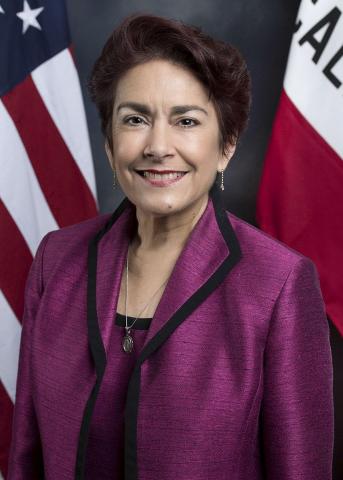
Anna Caballero
100% support rate
Top opponent
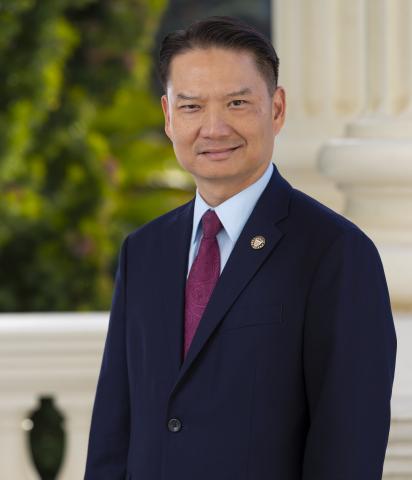
David Tangipa
0% support rate
Ranked legislators
10
5 support · 5 oppose
Key legislators

Who's moving firearms in California

Legislators moving firearms in California
Legislator Party Stance Support rate Votes
Anna Caballero
Anna Caballero Senate · District 14
D
Strong +
100% 20
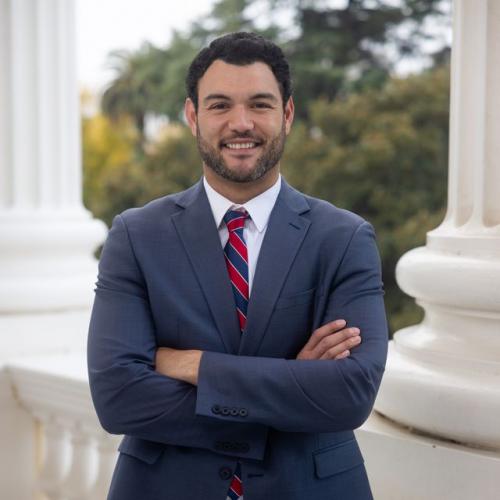
Blanca Pacheco
Blanca Pacheco House · District 64
D
Strong +
100% 18
MG
Mark González House · District 54
D
Strong +
100% 18
Aisha Wahab
Aisha Wahab Senate · District 10
D
Strong +
100% 17
JA
Jesse Arreguín Senate · District 7
D
Strong +
100% 17
David Tangipa
David Tangipa House · District 8
R
Strong −
0% 15
Diane Dixon
Diane Dixon House · District 72
R
Strong −
0% 14
Tri Ta
Tri Ta House · District 70
R
Strong −
0% 12
Kate Sanchez
Kate Sanchez House · District 71
R
Strong −
0% 11
Ali Macedo
Ali Macedo House · District 33
R
Strong −
0% 10
Showing 21–26 of 26 bills

All criminal justice bills

failed · California · Senate Feb 2, 2026

SB 649: Firearms: silencers.

Existing law generally regulates deadly weapons, including assault weapons. Existing law defines an assault weapon, including, among others, as a semiautomatic centrefire firearm, as specified, that has a threaded barrel capable of accepting a silencer. Existing law defines a silencer, among others, as any device or attachment intended to muffle the sound of a firearm. Existing law makes it a felony for any person, firm, or corporation to possess a silencer for a firearm. Existing law exempts specified actions from those provisions, including the manufacture, possession, transportation, or sale or other transfer of a silencer to specified law enforcement agencies and military or naval forces by dealers or manufacturers registered under federal law. Existing law authorizes a court to sentence an eligible person convicted of a felony to probation. Existing law prohibits granting probation in specified circumstances, including if the person possesses a silencer. Existing law requires any weapon, including a firearm and any attachments, that was carried unlawfully for specified crimes to be surrendered to specified law enforcement entities. Existing law requires weapons surrendered pursuant to these provisions to be destroyed by the law enforcement entity. This bill would replace the term "silencer" with the term "suppressor" in the above provisions.
failed · California · Assembly Feb 2, 2026

AB 991: Sentencing: dismissal of enhancements.

Existing law generally authorizes a court to dismiss an action in the furtherance of justice. Existing law requires a court to dismiss an enhancement if it is in the furtherance of justice to do so, except if dismissal of that enhancement is prohibited by any initiative statute. This bill would make the provision relating to the dismissal of enhancements inapplicable to firearms-related enhancements, but would allow the court to dismiss these firearm-related enhancements pursuant to the court's general authority to dismiss an action, as specified.
Sub-Topics Firearms Sentencing
failed · California · Assembly Jan 7, 2026

AB 68: School safety: armed school resource officers.

Existing law authorizes the governing board of a school district to establish a security department under the supervision of a chief of security as designated by, and under the direction of, the superintendent of the school district. Existing law also authorizes the governing board of a school district to establish a school police department under the supervision of a school chief of police and to employ peace officers. This bill would require, commencing with the 2028–29 school year, and each school year thereafter, a rural school district or charter school, as defined, to determine the appropriate number of armed school resource officers, as defined, authorized to carry a loaded firearm for each school of the rural school district or charter school. The bill would require the governing board of the school district or the governing body of the charter school to ensure that at least one armed school resource officer is present during regular school hours at each school of the rural school district or charter school that meets specified criteria, as provided. By imposing an additional requirement on school districts and charter schools, the bill would impose a state-mandated local program. The bill would authorize the governing board or body, if it is unable to comply with these requirements due to the unavailability of funding or personnel who qualify to serve as an armed school resource officer, to claim a good cause exception to these requirements by adopting a resolution, as provided. The California Constitution requires the state to reimburse local agencies and school districts for certain costs mandated by the state. Statutory provisions establish procedures for making that reimbursement. This bill would provide that, if the Commission on State Mandates determines that the bill contains costs mandated by the state, reimbursement for those costs shall be made pursuant to the statutory provisions noted above.
signed · California · Assembly Oct 11, 2025

AB 741: Department of Justice: child abuse reporting.

Existing law requires the Department of Justice to maintain an index of all reports of child abuse and severe neglect submitted by an agency mandated to make those reports. Existing law requires the department to make relevant information contained in the index available to specified law enforcement agencies, county welfare departments, and other agencies that are conducting a child abuse investigation. Existing law authorizes a designated Court Appointed Special Advocate (CASA) program to submit fingerprint images and related information of employment and volunteer candidates to the department for the purpose of obtaining information as to the existence and nature of a record of a child abuse investigation contained in the Child Abuse Central Index, state- or federal-level convictions, or state- or federal-level arrests for which the department establishes that the applicant was released on bail or on their own recognizance pending trial. Existing law requires the department to charge a fee sufficient to cover the cost of processing the requests for federal-level criminal offender record information and prohibits the department from charging a fee for state-level criminal offender record information. This bill would instead require a CASA program to submit fingerprint images and related information of employment and volunteer candidates to the department for the purpose of conducting a state and federal criminal history background check. The bill would require the department to monitor the Child Abuse Central Index and notify the CASA program if a record of a child abuse investigation involving a CASA employee or volunteer is added to that index. The bill would impose notification and review requirements on a CASA program to request that the department remove the notification for an individual who is no longer employed by or volunteering with the CASA program, as specified. The bill would require the department to terminate notification for an individual upon receipt of that request. The bill would authorize the department to increase its fee for a CASA employment and volunteer candidate to cover the cost of processing those subsequent notifications.
Sub-Topics Firearms
passed · California · Senate Aug 20, 2026

SB 337: Prisons.

(1) Existing law establishes the Department of Corrections and Rehabilitation (department) and sets forth its powers and duties regarding the administration of correctional facilities and the care and custody of inmates. Existing law requires law enforcement agencies to consider specified best practices when establishing policies and procedures for downloading and storing data from body-worn cameras, including, among other things, prohibiting the unauthorized use, duplication, or distribution of the data, and establishing storage periods for evidentiary and nonevidentiary data, as defined. This bill would require the department, by July 1, 2027, to establish policies and procedures that include circumstances under which a body-worn camera may be deactivated and would require the department to ensure that those policies and procedures reflect a minimum amount of time per shift that a body-worn camera be activated, and that the camera is activated when interacting with incarcerated persons. The bill would require the department to develop audit protocols to ensure compliance. The bill would require the department's policies and procedures to authorize deactivation of a body-worn camera during specified confidential interactions and would require staff to inform the subject the reason for the deactivation and to document the time of the deactivation, the reason for the deactivation, and the time of reactivation. This bill would require the department to adopt, and update regularly, a Prison Sexual Violence Elimination policy that would outline specified principles, including, among others, that the department maintains zero tolerance for sexual violence, staff sexual misconduct, and sexual harassment in its institutions, community correctional facilities, and conservation camps, and for all offenders under its jurisdiction. (2) Under existing law, a person sentenced to imprisonment in a state prison for a felony offense, as specified, may, during that period of confinement, be deprived only of those rights as is reasonably related to legitimate penological interests. Existing law enumerates certain civil rights of these prisoners. This bill would, by January 1, 2028, require the department to develop and implement protocols for when an incarcerated person is subject to a nonroutine search or scan, including, among other things, obtaining approval from a supervising officer of rank sergeant or above before the search or scan, documenting specified information about the search or scan, and providing the incarcerated person with a written receipt or other documentation with this information. The bill would require the department, upon appropriation by the Legislature, to establish a pilot program at 3 institutions to evaluate the effectiveness of replacing unclothed body searches with scanning technology, as specified. (3) Existing law requires members of the department's Office of Internal Affairs to possess certification from the Commission on Peace Officer Standards and Training for investigators, except as specified. Existing law requires the department to conduct a complete and thorough background check prior to training a peace officer who is selected to conduct internal affairs investigations and requires each person to satisfactorily pass the background check. Existing law states that any person who has been the subject of a sustained, serious disciplinary action, as specified, shall not pass the background check. This bill would require an investigator to disclose an actual or potential conflict of interest they may have in an investigation in which they are participating. The bill would require the department to take appropriate action to remedy that conflict. The bill would require an investigator to recuse themselves from participating in an investigation or a decision related to an investigation if they have a conflict of interest involving a staff member with whom they have a personal relationship, as defined. (4) Existing law authorizes the secretary of the department to prescribe and amend rules and regulations for the administration of prisons. Under existing law, the State Civil Service Act, certain acts, including convictions of certain crimes, are cause for discipline of a state employee or of a person whose name appears on an employment list. This bill would prohibit the department from appointing a person to a position that may involve any contact with incarcerated persons, or engaging a contractor for services that may involve contact with incarcerated persons, if the department obtains information that substantiated allegations of sexual abuse in the course of their employment have been reported against them, as specified. The bill would prohibit the department from appointing any person to a position that may involve contact with incarcerated persons, or engaging a contractor for services that may involve contact with incarcerated persons, if the department learns that the person or contractor has been convicted of certain offenses, including felony domestic battery and specified sex offenses, among others. The bill would also prohibit the department from appointing any person to a position that may involve contact with incarcerated persons, or engaging a contractor for any services, if it obtains information that the person or contractor has been civilly or administratively adjudicated to have engaged in that conduct. The bill would require the department to make best efforts to contact all prior institutional employers for information on substantiated allegations of sexual abuse, among other things. The bill would require the department to conduct criminal background checks every 5 years of existing employees or implement a system to otherwise capture that information. (5) Existing law makes it a misdemeanor for an employee or officer of a public entity health facility, or an employee, officer, or agent of a private person or entity that provides a health facility or staff for a health facility under contract with a public entity, to engage in sexual activity with a consenting adult who is confined in a health facility. Existing law additionally makes it a misdemeanor for specified individuals, including an employee or officer of a public entity detention facility or an employee with a department, board, or authority under the department, to engage in sexual activity with a consenting adult who is confined in a detention facility or who is an inmate, ward, or parolee, as specified. Existing law makes it a felony for any subsequent violations for a person who was previously convicted of these violations. Existing law requires a person convicted of a felony violation of the above-described provisions who is employed by a department, board, or authority within the department to be terminated, as specified, and prohibits that person from being eligible to be hired or reinstated by the department. Existing law requires administrators to report criminal sexual abuse by staff to law enforcement authorities. This bill would instead require that a person convicted of any violation of these provisions be terminated and prohibited from being reinstated by the department. The bill would also require that a person convicted of any violation of these provisions who is employed by a public entity health facility be terminated and made ineligible to be hired or reinstated by a public entity health facility. This bill would require administrators to report any known or suspected sexual abuse by staff to a local law enforcement agency. (6) Existing law establishes the Office of the Inspector General that is responsible for, among other things, contemporaneous public oversight of internal affairs investigations and staff grievance inquiries conducted by the department's Office of Internal Affairs. Existing law requires the Office of the Inspector General to have investigatory authority over all staff misconduct cases that involve sexual misconduct with an incarcerated person, as specified. This bill would authorize an incarcerated person to file an anonymous grievance relating to an allegation of sexual misconduct directly to the Office of the Inspector General, and would authorize the Inspector General to review any grievance filed from an incarcerated person, whether or not that grievance had been previously filed with the institution or hiring authority where the grievance occurred. (7) Existing regulations establish a grievance procedure for individuals in the custody of, or under the supervision of, the department. Under those regulations, a claimant is required to submit a grievance no later than 60 calendar days after discovering an adverse policy, decision, action, condition, or omission by the department. This bill would extend that time period to 120 calendar days.
signed · California · Assembly Oct 13, 2025

AB 451: Law enforcement policies: restraining orders.

Existing law requires law enforcement agencies to maintain policies on specified subjects, including, among others, the use of force, gun violence restraining orders, and responding to domestic violence calls. This bill would require each municipal police department and county sheriff's department, the Department of the California Highway Patrol, and the University of California and California State University Police Departments to, on or before January 1, 2027, develop, adopt, and implement written policies and standards to promote safe, consistent, and effective service, implementation, and enforcement of court protection and restraining orders that include firearm access restrictions. The bill would require these policies and standards to, among other things, provide a standard agency process for law enforcement to serve an order against a restrained person in a timely manner and ensure the agency consistently complies with specified requirements under California law governing service of protection and restraining orders. By expanding the duties of local law enforcement, this bill would impose a state-mandated local program. The California Constitution requires the state to reimburse local agencies and school districts for certain costs mandated by the state. Statutory provisions establish procedures for making that reimbursement. This bill would provide that, if the Commission on State Mandates determines that the bill contains costs mandated by the state, reimbursement for those costs shall be made pursuant to the statutory provisions noted above.
Showing 21 to 26 of 26 bills