

Maddy summaryThis bill would amend federal law to strengthen penalties for organized retail crime by expanding definitions of theft to include digital goods, gift cards, and setting a $5,000 aggregate value threshold for charges over a 12-month period. It would establish a new "Organized Retail and Supply Chain Crime Coordination Center" under Homeland Security to coordinate Federal, State, local, and Tribal law enforcement efforts against cross-jurisdictional theft groups. The Center would share information with retailers, transportation companies, and law enforcement agencies, track crime trends, and produce annual reports on organized retail crime. This legislation directly affects retailers, supply chain businesses, and law enforcement agencies, while targeting organized crime groups responsible for a 93% increase in larceny incidents and rising safety concerns for retail employees. The bill aims to address significant financial losses and supply chain disruptions noted in the National Retail Federation's 2023 data.
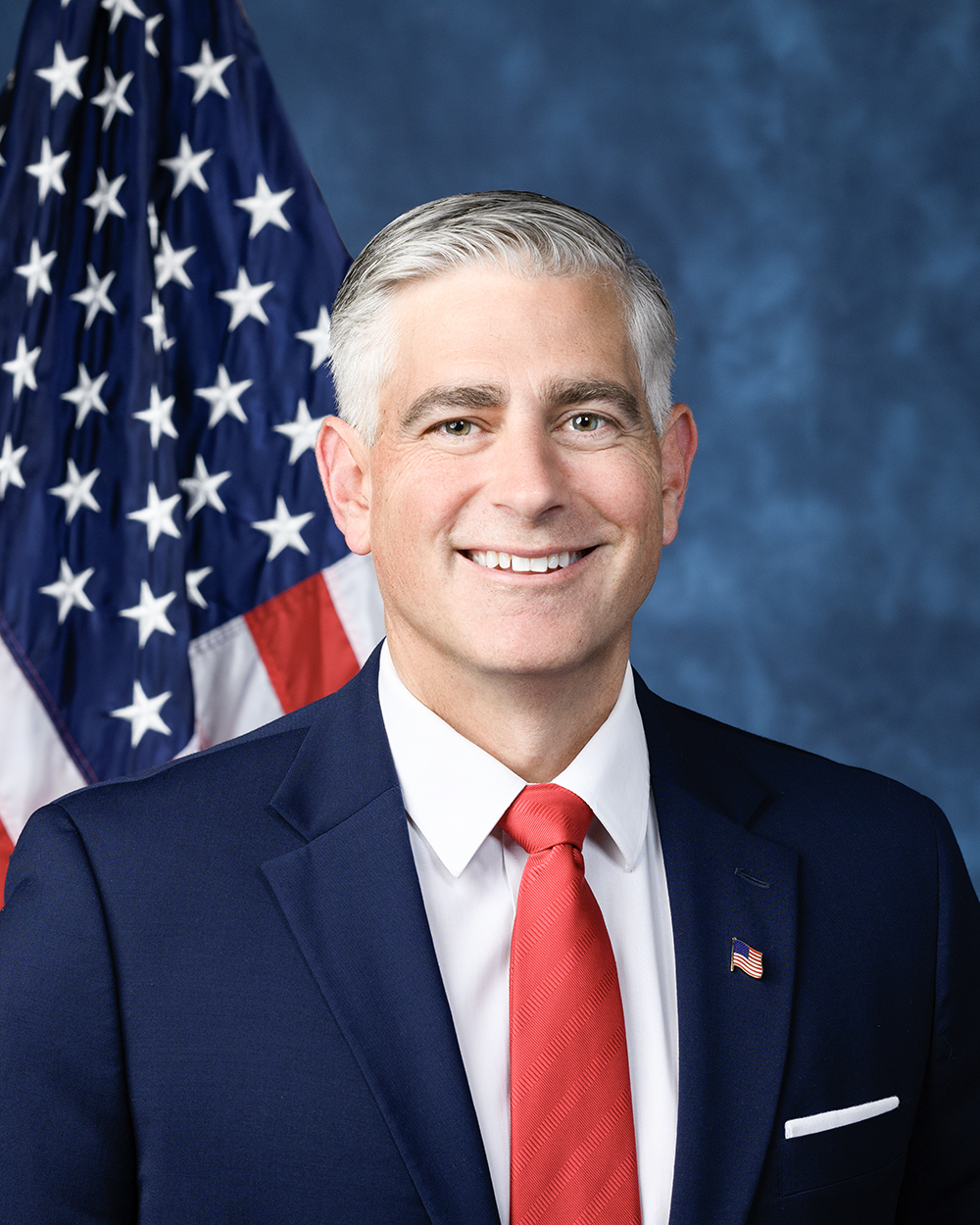
Rep. Michael Baumgartner
Sponsored bills
Maddy summaryThe Guard the Skies Act allows the National Guard to protect specific facilities and assets from unmanned aircraft when requested by a state's chief executive officer. This law authorizes the Secretary of Defense to deploy National Guard members to take actions normally reserved for federal agencies, such as the Department of Transportation and the Federal Aviation Administration, during these security missions. The bill also adjusts existing rules to ensure that selected Reserve and Individual Ready Reserve members can be ordered to active duty specifically for these protection efforts. By clarifying the roles of the Department of Defense and other agencies, the legislation aims to streamline coordination for safeguarding critical infrastructure against drone threats.
Maddy summaryThe MATCH Act requires U.S. agencies to align export controls on semiconductor manufacturing equipment with allied nations to prevent adversaries from accessing critical technology. It mandates a 150-day period for diplomatic efforts to secure countrywide denial policies from allied suppliers, after which U.S. jurisdiction would extend to equipment exported from countries not complying with these controls. The bill specifically targets semiconductor manufacturing equipment that the U.S. cannot currently produce in high volume and includes a list of Chinese companies deemed to warrant comprehensive restrictions. If allies fail to implement matching controls, the Act would allow the U.S. to regulate equipment exported from non-compliant allied countries and restrict servicing of restricted items at facilities in adversary nations. The legislation includes a sunset provision that expires five years after enactment, with annual reporting requirements to Congress on progress and compliance.
Equal Representation Act This bill requires that the statement sent by the President to Congress after the decennial census indicating the number of persons in each state exclude noncitizens. (This statement is the basis for reapportionment of U.S. Representatives.) The bill also requires any questionnaire used in the decennial census to include a checkbox or other similar option for respondents to indicate whether the respondent and each household member is (1) a U.S. citizen, (2) a U.S. national but not a citizen, (3) a non-U.S. national ( alien under federal law) lawfully residing in the United States, or (4) a non-U.S. national unlawfully residing in the United States. The Department of Commerce must make public the number of persons in each state, disaggregated by each of these four categories.
Maddy summaryHR 1071, the "No Censors on our Shores Act," amends U.S. immigration law to make certain foreign government officials inadmissible or deportable if they censor U.S. citizens within the United States. Specifically, it targets officials who directly carried out censorship against U.S. citizens in the U.S. that would violate the First Amendment if done by a U.S. official. The bill adds new grounds for inadmissibility (under Section 212(a)(2)(J)) and deportability (under Section 237(a)(2)(G)) based on this censorship. It directly affects foreign government officials whose actions meet this standard, not the general public or U.S. citizens. The law focuses on immigration consequences for foreign officials engaging in speech suppression that would breach First Amendment protections domestically.
Maddy summaryThe Workforce Data Quality Initiative Act of 2026 directs the Secretary of Labor to allocate between 5 and 10 percent of available funds to state agencies for creating workforce data systems. These grants are intended to help states build better tools for tracking employment outcomes, standardizing data across programs, and collecting real-time information on emerging skills and job roles. To receive funding, states must submit applications detailing their proposed activities, privacy protections, and plans for sustaining the systems after the grant ends. Priority funding is given to states that have not previously received such grants or to multi-state partnerships that can improve cross-border data sharing. The act also allows funds to support research, expand interoperable records for individuals, and improve staff capacity to use data for decision-making.
Maddy summaryThe Expeditionary Diplomacy Act directs the Secretary of State to define "expeditionary diplomacy" and establish a specialized team to improve how U.S. diplomats operate in high-risk environments. The bill requires the State Department to submit detailed reports on challenges faced by diplomats and to amend existing laws to encourage risk management practices that allow for more frequent engagement with local populations. A newly created "Tiger Team" will be formed to assess current obstacles, develop policy recommendations, and oversee the implementation of changes aimed at increasing the willingness of diplomats to work in dangerous areas. These efforts include consulting with external organizations and reviewing personnel policies to better support Foreign Service members in completing longer assignments in elevated security risk zones.
Maddy summaryThe Diplomatic Reserve Corps Act of 2026 creates a new reserve force within the Department of State to provide trained personnel for active service when needed. This independent system is not part of the regular Foreign Service and includes four groups: a senior reserve for current high-level staff, a senior retiree reserve for retired senior staff, a general diplomatic reserve, and a retiree reserve for other former employees. The law establishes specific rules for recruiting members, setting their salaries and benefits similar to active diplomats, and managing their annual training requirements. It also defines how the Secretary of State can call these reservists to active duty during emergencies or to support specific missions, while providing protections for their retirement benefits and employment rights.
Maddy summaryThis bill requires the U.S. State Department to produce annual reports assessing national security risks posed by foreign adversaries using generative AI for malicious purposes. Within 180 days of enactment (and annually for three years), the Secretary of State must submit unclassified reports to Congress detailing specific incidents - such as disinformation campaigns, weapons development support, cyber attacks, or surveillance enhancements - and emerging trends. The reports must include recommendations to counter these threats and will be posted publicly online. This directly affects the State Department’s reporting obligations and informs congressional oversight on international AI security risks.
Maddy summaryThis bill establishes a new National and Nuclear Risk Reduction Center within the U.S. Department of State to improve communication and coordination on arms control and international security matters. The center would operate a 24-hour government-to-government communications hub to handle notifications related to arms control agreements and confidence-building measures between the United States and foreign governments. Key provisions include translating urgent messages between agencies, advising on technical communication issues, and providing technical assistance to foreign partners on maintaining communication systems for security agreements. The center must maintain at least one linguist fluent in Mandarin Chinese and Russian who understands arms control technical matters to facilitate critical communications. The center will report directly to the Under Secretary for Arms Control and International Security and will coordinate with other federal agencies through established liaison roles.