

Protecting Consumer Access to Generic Drugs Act of 2021 This bill prohibits the manufacturer of a brand-name, generic, or biosimilar drug from entering into certain agreements to resolve or settle a patent infringement claim in connection with the sale of a drug or biological product. Specifically, such an agreement shall, with some exceptions, be a violation of the bill if the filer of a subsequent application to market a drug or biological product receives anything of value and agrees to limit or forego research, development, manufacturing, marketing, or sales of the subsequent drug or biological product. (Typically, a subsequent application seeks to market a generic or biosimilar version of a patented drug or biological product.) Penalties for violations of the bill include civil penalties and loss of the 180-day exclusivity period for a generic drug. The Federal Trade Commission (FTC) shall have exclusive authority to litigate to enforce the bill. When a generic or biosimilar drug manufacturer enters into an agreement with another drug manufacturer related to the manufacturing, marketing or sale of a drug, the manufacturers shall certify that the material they have given the FTC concerning the agreement contains (1) the complete agreement; and (2) any agreements related to the main agreement, including descriptions of any oral agreements or representations.
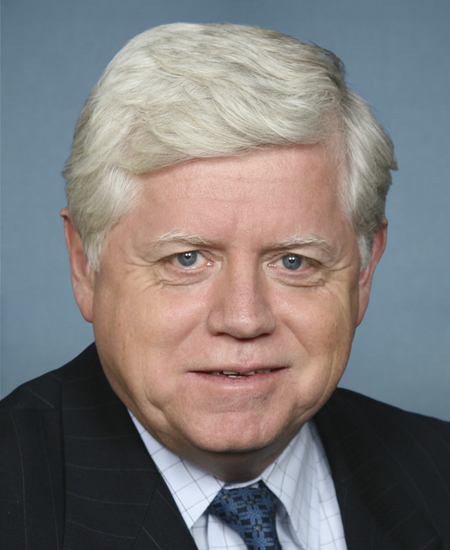
Rep. John B. Larson
Sponsored bills
Build America's Libraries Act This bill establishes and provides funds through FY2024 for the Build America's Libraries Fund, from which the Institute of Museum and Library Services (IMLS) must allocate funding to states and, through them, need-based grants to libraries to make long-term improvements to library facilities. The IMLS must also award grants to Indian tribes and organizations that primarily serve and represent Native Hawaiians. Specifically, the bill requires each state that receives an allocation, and each library that receives a grant, to carry out certain activities to improve library facilities. These activities include constructing and renovating library facilities, investing in infrastructure projects to improve internet access and connectivity, improving indoor air quality, and making facilities accessible to individuals with disabilities. The bill also outlines administrative and oversight provisions, including by requiring library projects to use iron and steel products that are produced in the United States.
Alzheimer's Caregiver Support Act This bill authorizes grants to expand training and support services for families and caregivers of individuals living with Alzheimer's disease or a related dementia. The Department of Health and Human Services may award these grants to community organizations and health care and social service providers.
This resolution expresses support for the designation of COVID-19 Victims and Survivors Memorial Day to memorialize the lives lost to COVID-19 (i.e., coronavirus disease 2019).
Arctic Refuge Protection Act This bill repeals the Arctic National Wildlife Refuge oil and gas program. The bill designates approximately 1,559,538 acres of land within Alaska in the Arctic National Wildlife Refuge as a component of the National Wilderness Preservation System.
Public Buildings Renewal Act of 2021 This bill allows tax-exempt financing of certain government-owned buildings by expanding the definition of exempt facility bond to include bonds used for qualified government buildings. A qualified government building is a government-owned building or facility that consists of one or more of the following an elementary or secondary school; facilities of a state college or university used for educational purposes; a public library; a court; hospital, health care, laboratory, or research facilities; public safety facilities; or offices for government employees. The bill excludes buildings or facilities that include specified recreational equipment or are used for the primary purpose of providing retail food and beverage services, recreation, or entertainment. The bill establishes (1) a $5 billion limit on the amount of tax-exempt financing which may be provided for government buildings, and (2) procedures for allocating and applying for the financing of a building, including a certification that the project owner will use reasonable efforts to ensure against job losses. The bill also allows an exemption from the volume cap for private activity bonds used to finance government buildings.
Coronavirus Medicaid Response Act This bill increases the Medicaid federal matching rate, also known as the Federal Medical Assistance Percentage (FMAP), for states and U.S. territories that experience economic downturns (i.e., high unemployment) beginning on or after January 1, 2020, in accordance with specified requirements and limitations. The bill's increase is in addition to previously enacted FMAP increases relating to COVID-19 (i.e., coronavirus disease 2019) but may not result in an FMAP greater than 95%.
Juneteenth National Independence Day Act This bill establishes Juneteenth Independence Day as a federal holiday.
New Markets Tax Credit Extension Act of 2021 This bill makes the new markets tax credit permanent. It also modifies the credit to (1) provide for an inflation adjustment to the limitation amount for the credit after 2021, and (2) allow an offset against the alternative minimum tax for the credit (determined with respect to qualified equity investments initially made after 2020).
Hospitality and Commerce Job Recovery Act of 2021 This bill extends existing and establishes new tax credits that assist the hospitality and restaurant industry. Specifically, it allows a conventionand trade show restart tax credit; extends the employee retention tax credit through 2021; suspends for taxable years 2021 through 2022, the limitation on entertainment expenses related to a trade or business, allows a restaurant and dining restart credit for businesses closed or forced to reduce services due to COVID-19 (i.e., coronavirus disease 2019); allows a 50% tax credit for travel expenditures; and allows a tax credit for unmerchantable inventory for the period between December 31, 2019, and before April 1, 2021.