Maddy summaryThis bill mandates that the Air National Guard maintain at least 25 fighter squadrons, with each squadron having a minimum of 18 aircraft, to preserve its combat readiness. It requires the Air Force Secretary to create a detailed plan by 2024 for fully replacing all Air National Guard fighter aircraft by 2034 and integrating new Next Generation Air Dominance systems. The plan must ensure "one-for-one" replacement of aging aircraft while allowing limited waivers for extraordinary circumstances, subject to congressional review. The policy directly affects the Air National Guard's aircraft inventory, modernization schedule, and funding priorities.
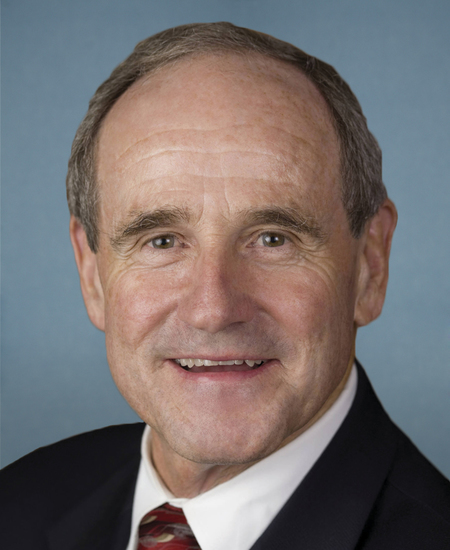
Sen. James E. Risch
Sponsored bills
Maddy summaryThe Ensuring Sound Guidance Act requires investment advisors and retirement plan fiduciaries to prioritize financial factors (like risk and return) in investment decisions, unless clients or participants provide written consent to consider non-financial goals such as environmental or social objectives. If non-financial factors are used, advisors must disclose expected and actual financial impacts over a three-year period. The bill also mandates three studies: one on state/local pension plans potentially subordinating financial interests to non-financial goals, one on climate change disclosures in municipal bonds, and one on rules preventing payments to officials for municipal securities business. These studies aim to assess financial risks and regulatory effectiveness without advocating for specific outcomes.
Maddy summaryThis bill requires the Department of Veterans Affairs (VA) to certify improvements to its electronic health record system (EHR) before expanding its implementation. Specifically, the VA cannot start new EHR program activities or implement the system at new facilities until it provides written certification to Congress that: (1) the system meets minimum uptime/stability standards, and (2) workflow customization issues are resolved. The VA must also certify that staff and infrastructure at each facility are ready for the EHR, with this requirement ending once certification is achieved across all facility complexity levels. Additionally, the VA must submit detailed reports to Congress within 30 days and quarterly thereafter on system stability, readiness standards, and deviations from national workflow guidelines.
Maddy summarySRES 284 is a Senate resolution expressing support for designating June 2023 as "National Dairy Month." It recognizes the dairy industry's role in providing essential nutrients like calcium and vitamin D for a healthy diet, its economic impact (supporting $793 billion in U.S. economic activity and 3.2 million jobs), and dairy producers' environmental stewardship. The resolution does not create new laws or policies but serves as a symbolic acknowledgment of the industry's contributions. It was introduced by multiple senators and refers to nutritional guidelines emphasizing dairy's health benefits.
Maddy summaryThe Nuclear Fuel Security Act of 2023 establishes programs to increase domestic production of nuclear fuel, specifically low-enriched uranium (LEU) and high-assay low-enriched uranium (HALEU), to support advanced nuclear reactor development. It requires the Department of Energy to acquire specific quantities of HALEU by 2026 (3 metric tons by 2024, 8 more by 2025, and 10 more by 2026) while prioritizing domestic production but allowing partnerships with U.S. allies when domestic options are insufficient. The legislation authorizes $3.5 billion for these programs, to be used through 2032, and includes provisions to ensure reasonable compensation for fuel supplied under these programs. The bill directly affects U.S. nuclear energy companies, advanced nuclear reactor developers, and the Department of Energy's operations.
Maddy summaryThis joint resolution (SJRES 36) seeks congressional disapproval of a Department of Labor rule (88 Fed. Reg. 12842, March 1, 2023) that would have removed religious exemption provisions from the Equal Opportunity Clause requirements for federal contractors. If approved, it would prevent the rule from taking effect, meaning federal contractors would continue to be required to comply with the Equal Opportunity Clause without the religious exemption previously allowed. The bill directly affects federal contractors subject to the Office of Federal Contract Compliance Programs' (OFCCP) regulations. It is a procedural disapproval measure under Title 5, U.S. Code, not a new policy change.
Maddy summarySJRES 11 is a joint resolution seeking to cancel an Environmental Protection Agency (EPA) rule that set new emissions standards for heavy-duty vehicles, including trucks and buses. The rule, published in the Federal Register on January 24, 2023, would have required manufacturers to meet specific pollution control measures for new vehicles. This resolution uses a congressional disapproval process under the Congressional Review Act to nullify the EPA rule, meaning it would have no legal effect if enacted. If passed, the EPA's emissions standards for heavy-duty vehicles would be voided, removing requirements for manufacturers to comply with those specific pollution controls.
Maddy summaryThis ceremonial Senate resolution (SRES 283) recognizes June 28, 2023, as the 125th anniversary of the American Association of Colleges of Osteopathic Medicine (AACOM) and commends AACOM for its work in overseeing osteopathic medical education. It highlights AACOM’s role in representing 40 osteopathic medical colleges educating over 35,000 students annually (25% of U.S. medical students), with a focus on rural and underserved communities. As a non-binding resolution, it has no policy impact but formally honors AACOM’s contributions to medical education and public health.
Maddy summaryThis resolution (SRES 272) commemorates the one-year anniversary of the U.S. Supreme Court's June 24, 2022, *Dobbs v. Jackson Women's Health Organization* decision, which overturned *Roe v. Wade*. It expresses the Senate's support for the Court's ruling that the Constitution does not guarantee a right to abortion and affirms the return of abortion regulation authority to state legislatures. The resolution celebrates the decision as a step toward protecting "unborn life" and commits to supporting families and "proclaiming the humanity of the unborn." As a non-binding resolution, it does not create new laws or affect any individuals directly.
Maddy summaryThe PLUS Act of 2023 amends federal labor law to address disruptions at U.S. ports. It defines "labor slowdown" as any intentional reduction in productivity by maritime workers (excluding safety-related actions) and prohibits unions from engaging in slowdowns or blocking port modernization efforts that interfere with supply chains. The bill adds new unfair labor practices under the National Labor Relations Act, with penalties including doubled damages plus attorney fees for violations. It directly affects labor organizations representing maritime workers at ports, making it unlawful to impede port upgrades or interfere with uncrewed vessel operations. The law aims to prevent economic disruptions by targeting specific union activities at ports.