

Maddy summaryHR 2555, the Freedom of Association in Higher Education Act of 2025, protects students who join or form single-sex social organizations (like fraternities or sororities) at colleges. It prohibits colleges receiving federal funds from taking negative actions against these students or organizations solely because they limit membership to one sex - such as denying housing, financial aid, leadership roles, or recognition. The bill ensures students can join such groups without coercion and stops colleges from imposing unfair recruitment rules on single-sex organizations compared to others. It does not require colleges to recognize single-sex groups, allow organizations to set their own membership rules, or override Title IX protections.
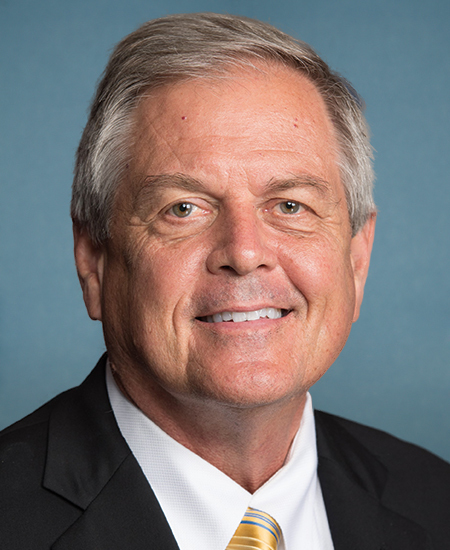
Rep. Ralph Norman
Sponsored bills
Maddy summaryThis resolution expresses the sense of the House of Representatives that Charleston, South Carolina, should proceed with hosting the 2027 annual meeting of the Organization for Security and Cooperation in Europe Parliamentary Assembly. The bill cites Charleston's existing facilities as suitable for the event and notes that hosting the convention in South Carolina honors the legacy of late Senator Lindsey Olin Graham. It also highlights that the United States has not hosted this specific assembly since 2005. The measure does not change any laws or allocate funding but serves as a formal statement of support for the planned event.
Maddy summaryThe Main Street Capital Access Act reduces regulatory burdens for smaller banks, particularly those with less than $10 billion in assets. Key provisions include a 3-year phase-in period for new banks to meet capital requirements, lower leverage ratio requirements for rural banks (7.5% for the first 2 years), and a 30-day review process for business plan deviations. The bill also establishes an Office of Independent Examination Review, sets specific timelines for examinations (270 days) and reports (90 days), and creates a "least cost exception" for bank resolutions to prevent excessive concentration of the banking system. These changes aim to promote new bank formation, improve regulatory efficiency, and support community banking while maintaining financial stability.
Maddy summaryThis bill proposes to end automatic U.S. citizenship for people born in Puerto Rico, the Virgin Islands, Guam, and the Northern Mariana Islands starting January 1, 2027. It achieves this by amending existing immigration laws to add a specific date cutoff, meaning anyone born in these territories after that date would not be granted citizenship at birth. The legislation explicitly states that children born before the cutoff date and children born to U.S. citizens or legal permanent residents in these areas will retain their current citizenship status.
Maddy summaryThe Essential Caregivers Act of 2026 requires nursing homes, long-term care hospitals, rehabilitation facilities, and intermediate care facilities to allow two chosen family members or friends to visit residents during times when regular visitation is suspended. These essential caregivers must agree to follow the facility's existing safety and infection control rules, which are no more restrictive than those applied to staff. While facilities can limit access for the first seven days of a suspension or deny entry if a caregiver shows symptoms of a serious infectious disease, they cannot block visits for end-of-life care. Additionally, the bill mandates that complaints about denied access to essential caregivers be investigated and resolved within three days.
Maddy summaryHR 7651, the Chloe Cole Act of 2026, prohibits healthcare providers from performing certain medical interventions on minors under 18 aimed at altering physical development to align with gender identity. These "covered interventions" include puberty blockers, hormone treatments, and specific surgeries, but exclude medically necessary care for conditions like disorders of sexual development or traumatic injuries. The bill creates a federal civil lawsuit right for affected minors or their parents against providers who perform such interventions, allowing claims for damages including emotional distress and punitive awards, with strict liability for providers after the law's enactment. It explicitly allows exceptions for legitimate medical treatments and requires providers to prove such exceptions apply if challenged.
Maddy summaryThis bill, known as the Birthright CLAIM Act of 2026, modifies existing laws to restrict automatic citizenship for children born in the United States to parents who are not U.S. citizens or nationals. Under the new rules, a child born to two non-citizen parents would not be considered a citizen at birth if at least one parent is unlawfully present in the country or lacks lawful permanent residency. Additionally, the legislation extends the residency requirements for children born abroad to U.S. citizens, requiring a longer period of continuous residence before the child can claim citizenship. The bill also introduces a paternity verification process where DNA testing is mandatory to confirm a father's identity before the government issues citizenship documents like passports or Social Security numbers. If paternity cannot be verified through this testing, the child would not receive these documents until the verification is complete.
Maddy summaryThis bill, titled the Permanent Trump Secure Border Act, aims to strengthen border security and reform immigration enforcement by directing the Department of Homeland Security to resume and complete the construction of a physical border wall, expand the use of surveillance technology, and increase staffing levels for Border Patrol agents. It also imposes stricter rules on asylum eligibility and employment authorization for applicants, mandates the reopening of specific immigration detention facilities, and requires the return of individuals arriving from contiguous foreign countries to those nations while their claims are processed. Additionally, the legislation expands penalties for visa overstays, limits the use of certain digital tools like the CBP One app, and includes provisions to reduce funding for organizations that facilitate illegal entry or provide services to inadmissible aliens.
Maddy summaryThis bill prohibits federal funding under the Elementary and Secondary Education Act for any program, activity, literature, or material provided to children under 18 that includes "sexually oriented material," defined as depictions of explicit conduct or content involving gender dysphoria or transgenderism. It exempts standard science courses (like biology and anatomy), religious texts, and specific "classic" works of literature and art listed in designated references (e.g., *Great Books of the Western World* and Smarthistory guides). The law directly affects federally funded K-12 educational programs, restricting how school districts can use federal dollars for curriculum materials. It does not ban teaching about human anatomy, art history, or literature, as those are explicitly excluded from the definition of prohibited material.
Maddy summaryThis bill, titled the Ban Abortion by Mail Act, aims to restrict how abortion medications like mifepristone are prescribed by requiring an in-person visit between the patient and the doctor. It directly affects health care providers who are currently certified by the FDA to dispense these drugs, threatening their certification status if they prescribe them without a physical examination or to patients living in states where the provider lacks a medical license. The legislation mandates that the FDA report annually to Congress on any providers who lose this certification due to violations or unsafe prescribing practices. By enforcing these specific conditions, the bill seeks to ensure that all prescriptions for abortion drugs are administered under strict supervision and within the legal boundaries of the patient's state.