This resolution expresses the sense of the Senate that the President should work with Congress to develop and execute a strategy to counter the rise in violent crime across the country by reinforcing strong criminal justice policies, by laying blame on the perpetrators of violent acts, and by securing the southern border.
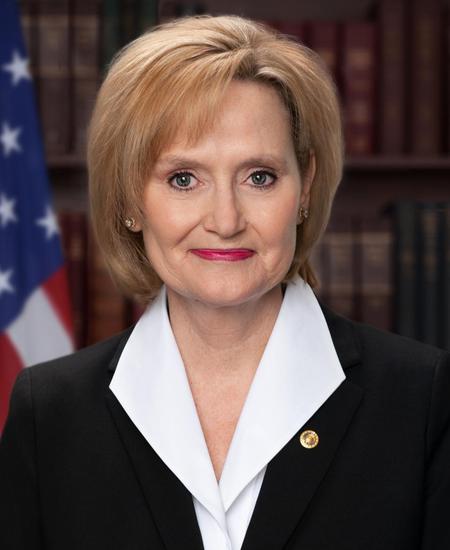
Sen. Cindy Hyde-Smith
Sponsored bills
Alzheimer's Accountability and Investment Act This bill requires the National Institutes of Health to annually submit, beginning in FY2024, an estimate of its budget and personnel needs for carrying out initiatives pursuant to the National Alzheimer's Project. This project supports coordination of federal planning, research, and other efforts to address Alzheimer's disease and related dementias.
NAPA Reauthorization Act This bill extends through 2035 and makes other changes to the National Alzheimer's Project. This project supports coordination of federal planning, programs, and other efforts to address Alzheimer's disease and related dementias. In particular, the bill incorporates a focus on promoting healthy aging and reducing risk factors associated with cognitive decline. The bill also expands the membership of the Advisory Council on Alzheimer's Research, Care, and Services to include (1) a researcher with experience recruiting and retaining diverse clinical trial participants, (2) an individual diagnosed with Alzheimer's disease, and (3) representatives from additional federal agencies (e.g., the Department of Justice and the Office of Management and Budget).
Independent and Objective Oversight of Ukrainian Assistance Act The bill establishes the Office of the Special Inspector General for Ukrainian Military, Economic, and Humanitarian Aid. The office's duties shall include conducting and coordinating audits and investigations of the handing of funds made available for aid to Ukraine.
Maddy summaryThis is a symbolic Senate resolution (SRES 626), not a policy bill. It supports observing National Nurses Week from May 6-12, 2022, to honor nurses' contributions to healthcare. The resolution recognizes nurses as the largest healthcare profession (over 4 million registered nurses), highlights their roles during crises like the COVID-19 pandemic, and encourages public recognition of their work in patient care, research, and health equity. It does not create new laws, allocate funds, or directly affect policies or individuals.
This resolution congratulates the students, families, teachers, administrators, and staff of public charter schools across the United States for (1) making ongoing contributions to public education, (2) making impressive strides in closing the academic achievement gap in U.S. schools, and (3) improving and strengthening the public school system. The resolution supports the ideals and goals of the 23rd annual National Charter Schools Week.
This resolution expresses that the Senate has heard of the death of the Honorable Orrin G. Hatch, former U.S. Senator for the state of Utah. The resolution also expresses that the Senate honors the life and legacy of the late Senator Hatch for his unwavering dedication to Utah as a Senator and a public servant and accomplishments in legislating with principle and dedication for the good of the people of the United States. The resolution states when the Senate adjourns today, it stands adjourned as a further mark of respect to the memory of Senator Hatch.
This joint resolution nullifies a Department of Health and Human Services rule published on November 30, 2021, concerning vaccine and mask requirements to mitigate the spread of COVID-19 in Head Start programs. These programs provide comprehensive early education and development services to low-income children.
This bill prohibits the use of federal funds to establish or support the activities of a Disinformation Governance Board at the Department of Homeland Security.
Chronic Wasting Disease Research and Management Act of 2022 This bill directs the Department of Agriculture (USDA) to address chronic wasting disease afflicting deer, elk, and moose populations. Specifically, the bill directs USDA to establish a program to research and manage the disease. Under the program, USDA must offer to enter into agreements with state or tribal wildlife agencies and departments of agriculture, institutions of higher education, and research centers to support research on the transmission of, resistance to, and diagnosis of the disease. In addition, USDA must offer to enter into agreements with such agencies and departments to support state and tribal efforts to develop and implement management strategies that address the disease. USDA must also develop and maintain materials to inform the public on chronic wasting disease and techniques to help prevent the spread of the disease. In addition, USDA must solicit public feedback on potential updates and improvements to standards of the chronic wasting disease herd certification program.