Maddy summaryHRES 52 is a non-binding House resolution proposing that the U.S. flag be lowered to half-staff on January 22 each year to memorialize individuals affected by abortion policies since the 1973 Roe v. Wade decision. It specifically references the anniversary of Roe v. Wade (January 22, 1973) and the 2022 overturning of that ruling. The resolution encourages the public to observe this gesture as a memorial and urges lawmakers to support legislation respecting "the sanctity of life." As a symbolic resolution, it does not create new law or directly affect any specific group.
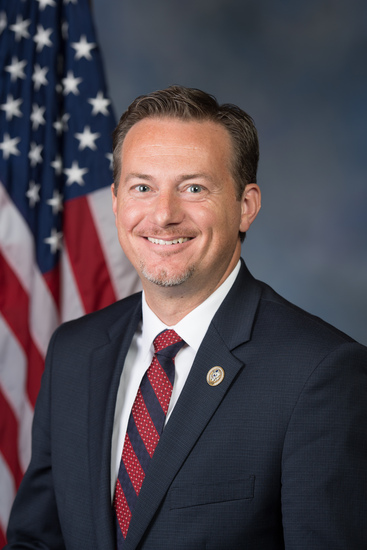
Rep. Michael Cloud
Sponsored bills
Maddy summaryHCONRES 3 is a non-binding congressional resolution expressing support for pro-life facilities, groups, and churches targeted by vandalism and threats following the Supreme Court's Dobbs decision. It condemns specific incidents like graffiti, window-smashing, and arson at pregnancy centers and churches (e.g., in Frederick, MD, and Portland, OR), while recognizing the role of these organizations in supporting pregnant women. The resolution calls on the Biden Administration to use law enforcement to protect these facilities but does not create new laws or policies. As a symbolic measure, it has no legal effect on the incidents described.
This resolution declares that every state within the United States has the sovereign right to exclude any person who does not have the right to be there. It also declares that the states along the southern border (1) are being invaded by terrorists, narco-terrorist cartels, and criminal actors; and (2) have the sovereign and unilateral authority to defend themselves against such an invasion.
Maddy summaryThis bill blocks federal funding for colleges that operate or partner with campus health clinics providing abortion drugs or abortions to students or staff. It requires institutions receiving federal funds to annually certify that no such services are offered at their on-campus clinics. The law specifically excludes hospital-based clinics from coverage and defines "abortion drugs" as medications intended to terminate pregnancy (excluding specific medical exceptions). It directly affects public and private colleges receiving federal aid, as most institutions of higher education qualify for such funding.
No Taxpayer Funding for the U.N. Population Fund This bill prohibits the use of funds to provide contributions directly or indirectly to the United Nations Population Fund (UNFPA). The UNFPA is a United Nations agency that supports access to sexual and reproductive health services, including voluntary family planning, maternal health care, and sexuality education.
Maddy summaryThis bill renames a U.S. Postal Service facility at 620 East Pecan Boulevard in McAllen, Texas, as the "Agent Raul H. Gonzalez Jr. Memorial Post Office." It updates all federal references to the location to reflect this new name. The bill has no policy impact - it is purely a ceremonial designation honoring an individual. No other provisions or affected groups are involved.
Maddy summaryHR 434, the Service Restoration Act, protects military service members and academy cadets/midshipmen who refused a COVID-19 vaccine and were involuntarily separated. It prohibits using federal funds to mandate the vaccine, bans adverse actions (like separation or demotion) for refusal, and requires the military to reinstate affected individuals to their previous rank and grade with back pay. The bill also mandates that any separation for vaccine refusal be retroactively reclassified as an "honorable discharge" and removes all related records from service files. This applies specifically to those separated solely for vaccine refusal between 2021 and the bill's enactment.
Life at Conception Act This bill declares that the right to life guaranteed by the Constitution is vested in each human being at all stages of life, including the moment of fertilization, cloning, or other moment at which an individual comes into being. Nothing in this bill shall be construed to authorize the prosecution of any woman for the death of her unborn child.
Teleabortion Prevention Act of 2023 This bill restricts the use of telehealth for chemical abortions (also known as medication abortions). Specifically, it requires a provider who dispenses or prescribes medication for a chemical abortion to physically examine the patient, be physically present at the location of the chemical abortion, and schedule a follow-up visit for the patient. The bill provides an exception for a chemical abortion that is necessary to save the life of a mother whose life is endangered by a physical disorder, illness, injury, or condition. The bill establishes criminal penalties—a fine, a prison term of up to two years, or both—for a provider who does not comply with the requirements. A patient who undergoes a chemical abortion may not be prosecuted.
Maddy summaryHR 330, the Title X Abortion Provider Prohibition Act, prohibits federal funding under the Title X family planning program for clinics that perform or fund abortions, except in cases of rape, incest, or when a physician certifies a life-threatening condition. It requires clinics receiving Title X funds to certify they do not provide or fund abortions (with the specified exceptions), and hospitals are exempt if they don't fund non-hospital abortion providers. The bill mandates annual reports to Congress listing all funded clinics, the number of abortions performed under exceptions (including rape/incest cases), and the certification dates for each clinic. This directly affects Title X-funded clinics nationwide that provide abortion services or fund such services, altering their eligibility for federal funding. The law aims to restrict federal support for abortion access within the Title X program while maintaining limited exceptions.