Maddy summaryHR 839, the "No FED in West Texas Act," prohibits the U.S. Department of the Interior from finalizing or implementing the Muleshoe National Wildlife Refuge Land Protection Plan. This bill directly affects the U.S. Fish and Wildlife Service and the Secretary of the Interior, blocking action on a specific 2023 plan for the refuge. The key provision bans the federal government from administering or enforcing the refuge's land protection plan as outlined in the February 2023 document. The bill does not create new policy but prevents the implementation of an existing federal land management plan.
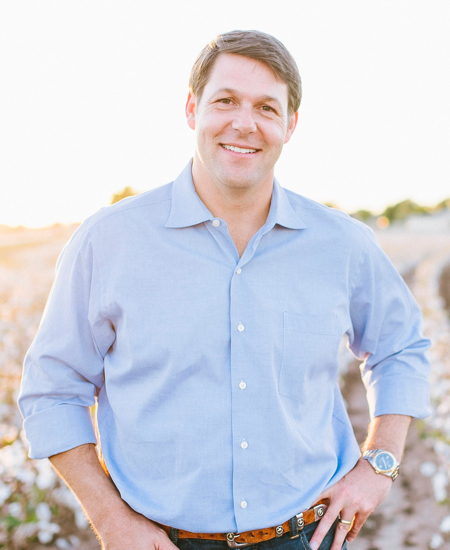
Rep. Jodey C. Arrington
Sponsored bills
This resolution expresses the sense of the House of Representatives that (1) Congress should adopt a fiscal target to reduce the federal budget deficit to 3% of gross domestic product or less as soon as possible and no later than the end of FY2030; and (2) after the target is achieved, Congress should continue to pursue further deficit reduction with the goal of achieving a balanced federal budget.
Maddy summaryThis bill renames the Dallas, Texas Department of Veterans Affairs medical center at 4500 South Lancaster Road as the "Eddie Bernice Johnson VA Medical Center." It directly affects the facility and all official references to it in federal documents, laws, and records. The key provision (Section 2(a)) officially changes the facility's name upon enactment, and Section 2(b) requires all future references to use the new name. The bill is procedural, honoring Congresswoman Johnson's service to veterans.
Maddy summaryHR 6707, the CFIUSMCA Act, directs the U.S. Trade Representative to advocate during USMCA joint reviews for Mexico and Canada to adopt foreign investment review frameworks similar to the U.S. Committee on Foreign Investment (CFIUS) process. It aims to create a coordination mechanism among the U.S., Mexico, and Canada for sharing information and managing national security risks in strategically important sectors like semiconductors, artificial intelligence, critical infrastructure, and cybersecurity. The bill requires U.S. agencies to provide technical assistance to Mexico and Canada to help them establish these aligned frameworks and mandates regular communication to address shared threats from foreign investments. This legislation directly affects U.S. trade and security officials, as well as the foreign investment review processes of Mexico and Canada under the USMCA agreement.
Miracle on Ice Congressional Gold Medal Act This act provides for the award of Congressional Gold Medals to the members of the 1980 U.S. Olympic men's ice hockey team in recognition of the team's achievement at the 1980 Winter Olympic Games.
Maddy summaryThe SHIELD Act of 2025 withholds federal funding from states or local governments that arrest, detain, or prosecute federal officers for lawful immigration enforcement actions. It directly affects jurisdictions (like cities or counties) that interfere with federal immigration enforcement, such as by blocking ICE operations. The law requires the Attorney General and DHS to determine violations, then blocks all federal grants and contracts for the affected jurisdiction during the fiscal year. Funding withheld is reallocated to compliant jurisdictions, and restoration requires written assurances that interference will stop.
Maddy summaryThis bill amends the Natural Gas Act to give the Federal Energy Regulatory Commission (FERC) exclusive authority to approve U.S. LNG export terminal projects, requiring FERC to deem such exports consistent with the public interest. It directly affects natural gas companies seeking to build or expand export facilities and streamlines FERC's review process by removing prior requirements for interagency coordination. The bill clarifies that FERC's decisions won't override existing sanctions laws, including restrictions on trade with countries designated as state sponsors of terrorism under current law. This change aims to accelerate domestic LNG export projects while maintaining legal safeguards for national security and foreign policy.
Maddy summaryHR 5633, the Agriculture Infrastructure Stability Act of 2025, requires the Federal Crop Insurance Corporation to develop and make available a new revenue protection policy for farmers. Specifically, it mandates the Corporation conduct research on "harvest incentive policies" covering revenue loss from harvest issues and make this policy available within two years of the law's enactment, if certain requirements are met. The bill also requires the Corporation to submit a report to congressional committees within one year detailing the research results and the policy details. This directly affects farmers participating in federal crop insurance programs by potentially providing new coverage for revenue losses tied to harvest conditions.
Maddy summaryThis bill requires the Environmental Protection Agency (EPA) to coordinate closely with the U.S. Department of Agriculture (USDA) when making decisions about pesticide safety rules. It mandates that the EPA conduct economic analyses of costs for farmers, state agencies, and businesses affected by pesticide safety measures, and share data on pesticide use and alternatives. The EPA must also coordinate with USDA and other agencies (like Interior and Commerce) on Endangered Species Act protections related to pesticides. These changes directly affect pesticide manufacturers, farmers, state agricultural agencies, and federal agencies involved in pesticide regulation.
Maddy summaryHR 3806, the New World Screwworm Preparedness Act of 2025, requires the U.S. Department of Agriculture to conduct a study on the nation's readiness to prevent and respond to New World screwworm (NWS) infestations. The study must assess current threats, sterile insect production capabilities, surveillance systems, emergency response plans, research needs, and international cooperation, with input from livestock producers, wildlife agencies, and scientists. The Secretary of Agriculture must submit a report to Congress within six months detailing findings and recommendations for improving preparedness. This bill directly affects agricultural stakeholders and wildlife management by mandating a review of existing capabilities, not by changing current policy.