

Maddy summaryHR 5319, the Ban Offshore Abortion Tourism Act, prohibits performing abortions that result in fetal death within U.S. maritime jurisdiction (e.g., international waters under U.S. authority). It targets abortion providers in these zones, with exceptions for life-threatening medical conditions, pregnancies from rape (requiring 48 hours of counseling or treatment first), or pregnancies from rape/incest involving minors (requiring prior reporting to authorities). The bill allows civil lawsuits against providers for violations, awarding triple damages, medical costs, and attorney fees, but explicitly protects women from prosecution or financial liability. It does not restrict abortion access in foreign countries or U.S. territorial waters.
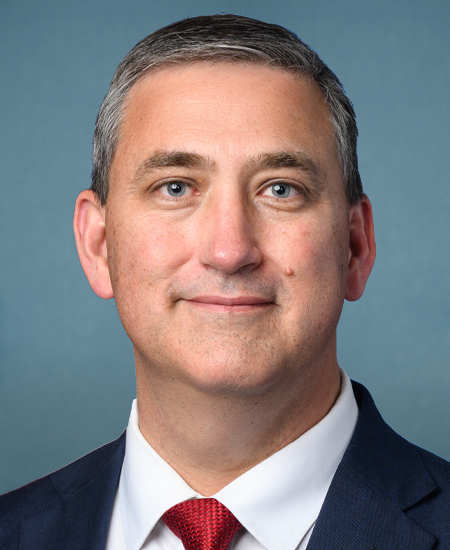
Rep. Nathaniel Moran
Sponsored bills
Maddy summaryHR 5224 reauthorizes the Missing Children's Assistance Act through fiscal year 2028, updating definitions and expanding services to better address child sexual exploitation. It adds specific terms like "sextortion" and "sexting" to clarify key concepts, and requires the Administrator to manage the CyberTipline for reporting missing children and exploitation. The bill mandates new data collection on children missing from state care, including those likely victims of sex trafficking, and increases annual funding authorization from $40 million to $49.3 million. These changes directly affect child welfare agencies, law enforcement, and organizations working with missing or exploited children by improving reporting systems, recovery support, and data transparency.
Maddy summaryHR 5184, the School Security Enhancement Act, amends existing education law to allow schools and school districts to use current funds for specific security upgrades. It directs local educational agencies to spend funds already allocated under the Elementary and Secondary Education Act on evidence-based security measures like controlled access points (e.g., metal detectors), bullet-resistant doors, crisis notification systems for law enforcement, and infrastructure to help first responders during emergencies. The bill directly affects schools seeking to strengthen campus safety using existing resources, without requiring new federal funding. Key provisions include installing technology for remote building control during crises and systems to quickly notify parents during safety incidents. All proposed security measures must align with evidence-based effectiveness where available, as determined by the state.
Maddy summaryHR 5095, the FREEZE Act, imposes a hiring freeze at the U.S. Department of Education (DOE), prohibiting new appointments or positions starting on the bill's enactment date. It permanently cancels any excess funds in the DOE's unobligated budget balance - specifically, sums beyond what's needed to cover current employees' salaries and expenses. The bill also prohibits using federal funds to violate the hiring freeze, ensuring no new positions or salaries are funded. This directly affects the DOE's staffing and budget operations, redirecting unused funds rather than increasing spending.
Maddy summaryHR 5084 designates the U.S. Postal Service facility at 1106 Main Street in Bastrop, Texas, as the "Sergeant Major Billy D. Waugh Post Office." This bill updates all official federal references - including laws, maps, and documents - to use the new name for the location. It directly affects the Bastrop post office and federal records referencing it, without altering postal services or policies. The change is purely ceremonial and procedural, honoring Sergeant Major Billy D. Waugh through the facility's name.
Maddy summaryHCONRES 57 is a non-binding concurrent resolution expressing Congress's support for Israel. It states three key points: (1) that Israel is not a racist or apartheid state, (2) that Congress rejects antisemitism and xenophobia, and (3) that the U.S. will remain a steadfast supporter of Israel. This resolution does not create new laws or alter policies - it simply records the expressed sentiment of Congress. It directly affects the U.S. government's public stance on Israel, with no legal effect on citizens or other entities.
This resolution condemns Iran for the 1988 massacre of political prisoners. It also urges the Biden Administration and U.S. allies to publicly condemn the massacre and to pressure Iran to provide information to the families of the victims.
Maddy summaryThis bill removes an age restriction for expunging certain criminal records. It amends federal law to eliminate the requirement that a nonviolent offender must have been under 21 years old at the time of a simple possession conviction involving controlled substances. As a result, individuals convicted of these offenses who are now 21 or older can now qualify for record expungement, regardless of their age at the time of the offense. The bill directly affects nonviolent offenders with past simple possession convictions who previously could not seek expungement due to their age when convicted. This change expands eligibility for record clearance under federal expungement provisions.
Maddy summaryThe Safer Supervision Act of 2023 requires federal courts to make individualized assessments before imposing supervised release, considering factors like public safety and rehabilitation needs rather than applying blanket rules. It establishes a presumption for early termination of supervised release after 50% of the term (66.6% for certain offenses) if the defendant has good conduct and termination won’t jeopardize public safety. The bill also mandates a GAO study on federal post-release supervision and proposes equal pay for probation officers through law enforcement availability pay. These changes directly affect defendants on supervised release, courts, and probation officers.
Maddy summaryThe Strong Communities Act of 2023 creates a new grant program to fund law enforcement training. It provides competitive grants to local law enforcement agencies, allowing them to send officers and recruits to training programs at eligible entities (like colleges or police departments). To receive training benefits, participants must agree to serve full-time in their local community for four years within a specified distance from their long-term residence (7 miles or 20 miles depending on county size). Failure to complete this service requires repayment of the training benefits received.