Let States Cut Taxes Act This bill removes a prohibition on states and territories using COVID-19 (i.e., coronavirus disease 2019) relief funding under the American Rescue Plan Act of 2021 to offset a reduction in revenue resulting from a reduction in taxes or a delay in the imposition of a tax or tax increase.
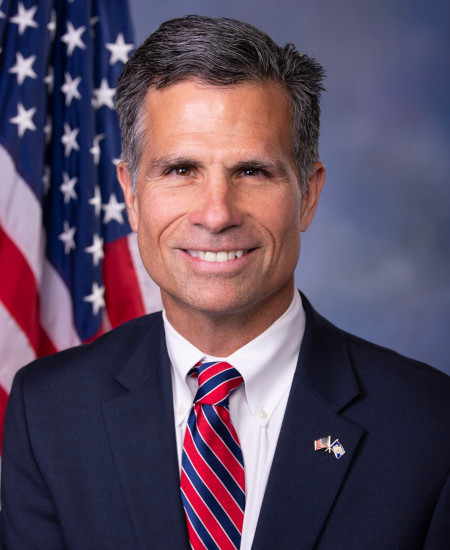
Rep. Daniel Meuser
Sponsored bills
College Transparency Act This bill requires the National Center for Education Statistics to establish a secure and privacy-protected data system that contains information about postsecondary students. Specifically, the data system must evaluate student enrollment patterns, progression, completion, and postcollegiate outcomes, and higher education costs and financial aid; provide complete and customizable information for students and families making decisions about postsecondary education; reduce the requirements for reporting by institutions of higher education; and periodically match with other federal systems of data. The bill also establishes a postsecondary student data system advisory committee.
Protect Seniors and Cut Waste Act This bill prohibits the budgetary effects of the American Rescue Plan Act of 2021 from being counted for the purposes of determining whether a specified sequester occurs under the Statutory Pay-As-You-Go Act of 2010. (The American Rescue Plan Act of 2021 provided funding to address the impact of COVID-19. Sequestration is a process of automatic, usually across-the-board spending reductions under which budgetary resources are permanently cancelled to enforce specific budget policy goals.) The bill also modifies several other provisions related to COVID-19 spending. Among other modifications, the bill provides supplemental appropriations for the Public Health and Social Services Emergency Fund to reimburse certain health care providers for health care related expenses or lost revenues that are attributable to the coronavirus; rescinds certain funds that were provided for payments to states, territories, and tribal governments to mitigate the fiscal effects stemming from the COVID-19 public health emergency; prohibits individuals who are incarcerated or unlawfully present in the United States from receiving 2021 recovery rebates; and rescinds funds that were provided by the American Rescue Plan Act of 2021 for the National Endowment for the Arts, the National Endowment for the Humanities, and the Emergency Federal Employee Leave Fund.
Medicare Orthotics and Prosthetics Patient-Centered Care Act This bill revises payment rules and establishes several requirements relating to coverage of orthotics and prosthetics under Medicare. Specifically, the bill requires suppliers of orthotics and prosthetics to meet certain standards with respect to licensure and accreditation, physical facilities, and liability insurance. Orthotists and prosthetists may also issue written orders for commercial purposes that meet specified standards; such orders must be signed by the treating physician. The bill also prohibits payment under Medicare for certain prosthetics and orthotics that are delivered via drop shipment (i.e., direct shipment to a beneficiary who has not received corresponding patient care from a health care practitioner).
Enhancing Credit Opportunities in Rural America Act of 2021 or the ECORA Act of 2021 This bill modifies the requirements for calculating taxable income to exclude from gross income interest received by a lender from real estate loans secured by agricultural real estate or by a leasehold mortgage (with a status as a lien) on agricultural real estate. Agricultural real estate includes real property that is substantially used for the production of one or more agricultural products. It also includes any single family residence that is (1) the principal residence of its occupant, (2) located in a rural area which is not within a Metropolitan Statistical Area and has a population of 2,500 or less, and (3) is purchased or improved with the proceeds of a loan secured by agricultural real estate or by a household mortgage.
Medicare Multi-Cancer Early Detection Screening Coverage Act of 2021 This bill provides for Medicare coverage and payment for multi-cancer early detection screening tests that are approved by the Food and Drug Administration and that are used to screen for cancer across many cancer types.
This bill directs the Speaker of the House and the President pro tempore of the Senate to arrange for the award of three Congressional Gold Medals to the U.S. Capitol Police (USCP) and other law enforcement agencies that protected the U.S. Capitol on January 6, 2021. Following the award of these medals, one medal shall be given to the USCP, one medal shall be given to the Metropolitan Police Department of the District of Columbia, and one medal shall be given to the Smithsonian Institution and displayed with a plaque listing all law enforcement agencies that participated in protecting the Capitol on January 6, 2021.
Ensuring Survivor Benefits during COVID-19 Act of 2021 This bill requires the Department of Veterans Affairs to get a medical opinion to determine if a service-connected disability was the principal or contributory cause of death in situations where a veteran's death certificate identifies COVID-19 (i.e., coronavirus disease 2019) as the principal or contributory cause of death, the certificate does not clearly identify any of the veteran's service-connected disabilities as the principal or contributory cause of death, and a claim for dependency and indemnity compensation is filed with respect to the veteran.
Youth Mental Health and Suicide Prevention Act of 2021 This bill authorizes the award of matching grants to enhance services in secondary schools for students with mental and behavioral health issues that can lead to failure in school, such as depression and substance abuse. The Substance Abuse and Mental Health Services Administration may award these grants on a competitive basis to state or local educational agencies that serve at least one secondary school.
Developing Responsible Individuals for a Vibrant Economy Act or the DRIVE-SAFE Act This bill directs the Department of Transportation to promulgate regulations to implement an apprenticeship program for licensed commercial motor vehicle drivers under the age of 21. Under the program, an apprentice must complete two probationary periods that total 400 hours of on-duty time, of which at least 240 hours must be driving time in a commercial motor vehicle. Additionally, the apprentice must be accompanied in the cab of the commercial motor vehicle by an experienced driver. Further, the bill requires all commercial motor vehicles used in the program for training to be equipped with safety technology such as active braking collision mitigation systems and video event capturing systems. An employer shall not knowingly allow, require, permit, or authorize a driver under the age of 21 to operate a commercial motor vehicle unless the driver is participating in, or has completed, an apprenticeship program that meets the requirements set forth in this bill.