

Maddy summaryThis bill, known as the Ratepayer Protection Act, modifies federal energy laws to ensure that large industrial customers pay for the specific infrastructure upgrades needed to serve their high electricity demands. It directly affects non-residential facilities with a peak power usage of 100 megawatts or more, requiring utilities to charge these customers the full incremental cost of any necessary generation, transmission, or distribution improvements. Under the new rules, large customers must also provide financial guarantees or contributions before such upgrades are made, ensuring utilities can recover costs even if the customer leaves the contract early. State regulators have two years to implement these standards, though the bill exempts utilities in states that have already enacted similar measures or are actively considering them.
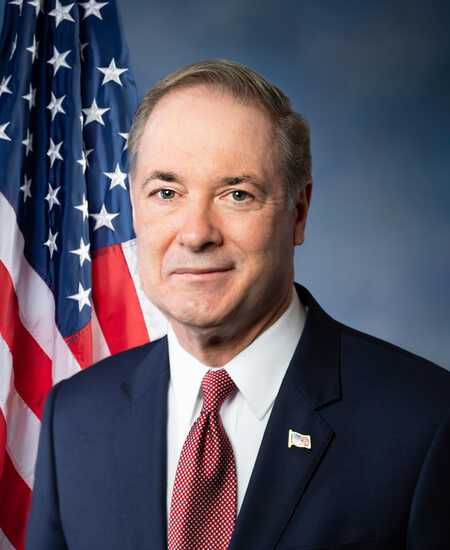
Rep. John Joyce
Sponsored bills
Maddy summaryThe Load Forecasting Enhancement Act requires the Federal Energy Regulatory Commission to create regional joint boards made up of state commission representatives and a commission member to study how electric utilities predict energy demand. These boards will investigate methods to improve the accuracy and transparency of these forecasts to ensure reliable and affordable electricity service, then report their findings to Congress within a year. Once the report is submitted, the law mandates that state regulators incorporate these recommended forecasting standards into their oversight of electric utilities, while exempting nonregulated utilities from certain requirements. Additionally, the bill updates existing energy laws to include procedures for improving the accuracy and transparency of load forecasting in state energy conservation plans.
Maddy summaryHR 6152, the Foreign Robocall Elimination Act, establishes an interagency task force to address foreign robocalls entering the United States. The task force, composed of the FCC, FTC, DOJ, and private sector representatives, will study the origins, impacts, and potential solutions to foreign robocalls and must submit a report to Congress within 360 days. The bill also modifies existing law to require FCC notices about robocall mitigation every three years instead of annually, and introduces a bond requirement for providers using the Robocall Mitigation Database. This legislation affects telecommunications providers, federal agencies, and all U.S. telephone users who receive unwanted calls. The bill aims to improve coordination between U.S. agencies and foreign countries in combating illegal robocalls through concrete policy changes.
Maddy summaryThis bill would require Medicare to cover early detection screening tests for Alzheimer's disease and related dementias starting January 1, 2028. It defines eligible tests as FDA-cleared genomic blood tests, blood product analyses, or equivalent medical imaging methods (like protein expression or whole genome sequencing) that detect pre-symptomatic or early-stage conditions. Medicare beneficiaries would receive this coverage without cost-sharing for these specific screenings. The bill amends Medicare coverage rules to explicitly include these tests under Section 1861(nnn) of the Social Security Act.
Maddy summaryThe Data BRIDGE Act requires the Federal Communications Commission (FCC) to update its national broadband map within 180 days of enactment by adding agricultural areas as a dedicated layer. This change will directly affect the FCC, USDA, state governments, and broadband providers by incorporating agricultural land data into the map used to identify broadband coverage gaps. The bill mandates the FCC to consult with the USDA, Commerce Department, states, and other stakeholders to integrate existing agricultural data into the map. The goal is to improve accuracy in identifying broadband needs in rural farming communities, though it does not directly fund infrastructure.
Maddy summaryHR 1266, the Combating Illicit Xylazine Act, adds xylazine - a veterinary sedative increasingly found in illicit drug mixtures - to Schedule III of the Controlled Substances Act, regulating its use and trafficking. It directly affects veterinarians, animal owners, and manufacturers by allowing xylazine to be legally dispensed for animal use under specific veterinary prescriptions, while prohibiting non-veterinary human use. The bill includes transition periods (60 days for practitioners, 1 year for labeling) to ease compliance for manufacturers and practitioners, and requires the DEA and FDA to expedite necessary applications. It also mandates two congressional reports on xylazine's illicit use and trafficking patterns, and directs the Sentencing Commission to review penalties for offenses involving xylazine.
This bill designates the facility of the United States Postal Service located at 6 Pennsylvania Avenue in Matamoras, Pennsylvania, as the "PFC Edward Kuhn Memorial Post Office".
Maddy summaryThe Foreign Propaganda Disclosure Act amends the Foreign Agents Registration Act to explicitly include social media influencers in its regulatory scope. The bill defines a social media influencer as any individual who maintains a monetized account on a social media platform, using an existing definition from the Trafficking Victims Prevention and Protection Reauthorization Act of 2022. By making this addition, the legislation requires these specific digital content creators to comply with the same registration and disclosure obligations currently applied to other foreign agents.
Maddy summaryHR 7008, the Stop Insider Trading Act, restricts Members of Congress, their spouses, and dependent children from purchasing certain investments like stocks in publicly traded companies. It requires 7-14 days' advance public notice before selling any such investment, including the sale date, description, and number of shares. Exceptions apply for work-related transactions (e.g., employer compensation) and reinvesting dividends. Violations trigger a fee of $2,000 or 10% of the investment’s value (whichever is greater), plus any net gain, paid from personal funds - not congressional allowances or campaign donations. The bill aims to prevent conflicts of interest by increasing transparency around congressional financial dealings.
Maddy summaryThis bill, the Medicare Access to Radiology Care Act of 2026, allows Medicare to pay for services provided by radiologist assistants under the supervision of a radiologist. It defines radiologist assistants as certified professionals who work strictly under a radiologist's direction and clarifies that they cannot independently interpret imaging results. The legislation authorizes Medicare to reimburse these assistants for services performed in hospitals, ambulatory surgical centers, and other specified settings, with the payment directed to the supervising radiologist. These changes take effect on January 1, 2027, aiming to expand access to diagnostic imaging while maintaining existing safety standards.