

Lessening Regulatory Costs and Establishing a Federal Regulatory Budget Act of 2021 This bill establishes procedures and provides statutory authority to reduce the number of federal regulations. Specifically, it requires each agency to establish a regulatory reform task force chaired by a designated regulatory reform officer. Each task force must, among other duties (1) review each existing agency regulation; (2) estimate the potential cost savings of repealing or modifying each regulation; and (3) identify regulations that are appropriate for repeal, replacement, or modification based on cost, effectiveness, and impact on employment. The bill further provides statutory authority for the executive order prohibiting agencies from issuing a new regulation with an economic impact of at least $100 million without identifying two regulations for repeal that will offset the cost of the proposed new regulation. Agencies also must submit a list of all planned regulatory actions for inclusion in the semiannual Unified Agenda of Federal Regulatory and Deregulatory Actions, including (1) the estimated economic effect of each action, and (2) proposed deregulatory actions to offset the cost of each proposed new regulation. Additionally, the Office of Management and Budget must establish an annual regulatory budget for each federal agency that specifies the net allowable increase in regulatory costs for each agency during the next fiscal year.
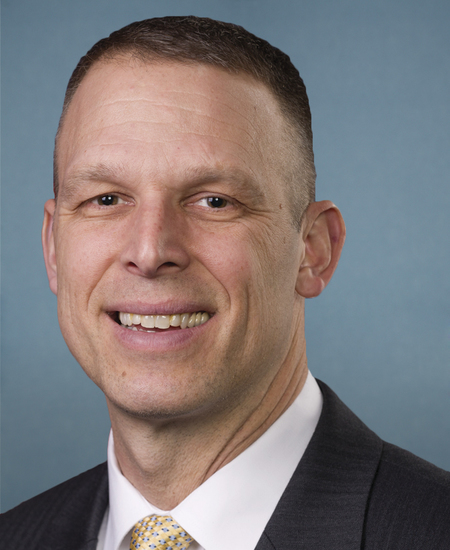
Rep. Scott Perry
Sponsored bills
No taxpayer funding for United Nations Human Rights Council Act This bill prohibits the Department of State from making contributions to the United Nations Human Rights Council, either as a percentage of the U.S. contribution to the regular budget of the United Nations or as a voluntary contribution to the council.
Chinese Research Funds Accounting Act This bill directs the Government Accountability Office (GAO) to conduct a study on federal funding made available to entities located in China or majority owned or controlled by the Chinese Communist Party for research in the five years prior to enactment of this bill. Not later than 120 days after the enactment of this bill, the GAO shall brief Congress on the data that is available with respect to federal funding made available to such entities for research.
You Must Be Alive To Vote Act of 2021 This bill requires each state, in order to receive certain education and transportation funds, to annually certify that the state has an agreement with the Social Security Administration to share death information for the purpose of removing the names of ineligible voters from the official list of eligible voters.
Pre-existing Conditions Protection Act of 2021 This bill reestablishes requirements for private health insurance plans with respect to preexisting conditions, guaranteed enrollment, and discrimination based on health-related factors if they are repealed by another law. In such event, the bill prohibits private health insurance plans from (1) limiting or excluding benefits covering preexisting conditions; (2) denying enrollment to employers or individual applicants, subject to specified limits; (3) establishing rules for eligibility based on an individual's health status; or (4) requiring an individual to a pay higher premium than similarly situated individuals enrolled in the plan based the individual's health status. The bill also prohibits plans from collecting genetic information in connection with issuing health insurance and provides requirements for workplace wellness programs connected to health insurance.
Dr. Li Wenliang Congressional Gold Medal Act This bill directs Congress to make arrangements for the posthumous presentation of a gold medal in commemoration of Dr. Li Wenliang's efforts to save lives by drawing awareness to COVID-19 (i.e., coronavirus disease 2019) and his call for transparency in China.
No Social Security for Illegal Aliens Act of 2021 This bill prohibits an individual from collecting Social Security benefits based on wages and income earned for services illegally performed in the United States while the individual was an alien.
No Tax Breaks for Sanctuary Cities Act This bill denies a tax exclusion for the interest on bonds issued by sanctuary jurisdictions. A sanctuary jurisdiction is a governmental entity that has a statute in effect that restricts cooperation with the federal government regarding the citizenship or immigration status of any individual or that prohibits compliance with a request by the Department of Homeland Security with a detainer for, or notification about the release of, an individual.
Education Freedom Scholarships and Opportunity Act This bill allows individual and corporate taxpayers a tax credit for cash contributions to tax-exempt scholarship-granting organizations for elementary and secondary education expenses. It imposes a cap of $5 billion on the amount of contributions that qualify for a tax credit. The bill directs the Department of Education, in coordination with the Department of the Treasury, to establish, host, and maintain a web portal that (1) lists all eligible scholarship-granting organizations; (2) enables contributions to such organizations; (3) provides information about the benefits of this bill; and (4) enables a state to submit and update information about its programs and scholarship-granting organizations, including information on student eligibility and allowable educational expenses.
Vaccinate Americans, Not Terrorists Act This bill prohibits federal entities from administering COVID-19 (i.e., coronavirus disease 2019) vaccines to prisoners at the United States Naval Station in Guantanamo Bay, Cuba, until certain conditions are met. Specifically, federal entities may not vaccinate any prisoners if there are outstanding requests from states, tribal nations, and territories for vaccines or other COVID-19 relief; or members of the Armed Forces or reserve components who intend to get the COVID-19 vaccine and have yet to receive it.