

Maddy summaryThis bill, known as the Justice for Allie Act, would create a new federal crime for coercing adults with specific disabilities into sending intimate images. It directly affects individuals aged 18 and older who have conditions like autism, intellectual disabilities, cerebral palsy, Down syndrome, dementia, or schizophrenia that may limit their ability to protect themselves from exploitation. The law prohibits anyone from using mail or interstate communications to persuade, induce, entice, or coerce these protected adults to transmit intimate visual depictions with the intent to harm them. Penalties include fines and up to one year in prison for a first offense, or up to two years for repeat offenses. The bill defines harm broadly to include physical, psychological, financial, or reputational damage.
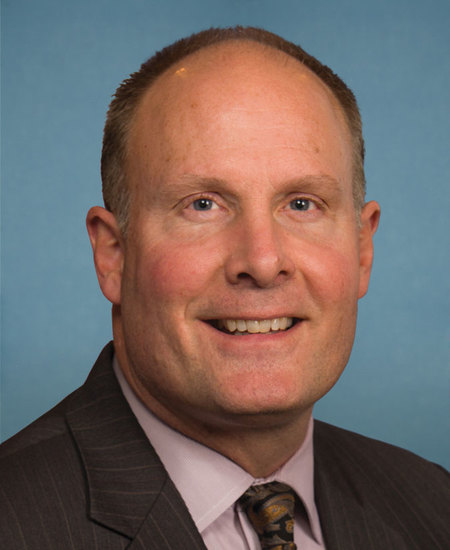
Rep. John R. Moolenaar
Sponsored bills
Maddy summaryThe SECURE Minerals Act of 2026 establishes a Strategic Resilience Reserve Corporation to secure U.S. supply chains for critical minerals and materials essential to defense, energy, technology, and renewable energy sectors. The Reserve will provide financing and acquisition support for domestic and partner country projects focused on producing, recycling, reusing, and repurposing critical minerals, with the goal of reducing U.S. dependence on foreign sources to no more than 75% for each mineral. It authorizes $2.5 billion in funding and establishes a Board of Governors with specific expertise requirements to oversee operations, while requiring regular risk assessments and annual reporting. This legislation directly affects mineral production and processing companies, federal agencies managing mineral resources, and partner countries working with the U.S. on supply chain security.
Maddy summaryHR 2969, the Finding ORE Act, authorizes the U.S. Secretary of the Interior to enter into memorandums of understanding (MOUs) with partner countries that supply critical minerals and rare earth elements. The bill requires these MOUs to include cooperative mapping of mineral reserves, give U.S. or allied foreign country companies the "right of first refusal" for development, and facilitate U.S. private-sector investment through financial institutions like the Development Finance Corporation. It also mandates data protection for mapping information against unauthorized access by non-partner or non-allied countries. This legislation directly affects partner foreign countries (mineral sources), U.S. companies, and the U.S. Geological Survey, focusing on securing supply chains through international scientific collaboration.
Maddy summaryHRES 1073 is a non-binding resolution designating February 21-28, 2026, as "National FFA Week" to recognize the National Future Farmers of America (FFA) Organization’s role in developing agricultural education leaders and to celebrate the 50th anniversary of Alaska’s State FFA Association. It does not create new laws or affect any specific groups or policies; instead, it formally expresses the House’s support for this commemorative week. The resolution highlights FFA’s mission to prepare students for leadership and careers in agriculture, food, and natural resources. As a symbolic gesture, it has no direct legislative or financial impact on constituents.
Maddy summaryHRES 1070 is a non-binding House resolution congratulating Michigan athletes who competed in the 2026 Milano Cortina Olympics and Paralympics. It formally honors 232 U.S. athletes (including 88 Michigan-affiliated competitors) who represented Team USA, highlighting their collegiate backgrounds and achievements. The resolution specifically recognizes Michigan Olympians and Paralympians like Dylan Larkin and Emilea Zingas through symbolic language. It has no policy impact or legal effect, serving solely as a ceremonial expression of support for athletes.
Maddy summaryThis bill directs U.S. agencies to support Iranian people's access to uncensored information and hold Iranian officials accountable for human rights abuses. It requires the State Department and FCC to report on technologies (like satellite networks and mesh systems) that could bypass internet restrictions in Iran, and authorizes $2 million annually to develop such tools. The bill also establishes a new "Iran Kleptocracy Initiative" at FinCEN to track corruption, freeze assets of Iranian regime officials and state-owned businesses, and coordinate with international partners. These measures apply to U.S. policy toward Iran but do not alter Iran's domestic laws; they focus on U.S. sanctions, technology development, and anti-corruption efforts targeting the Iranian regime.
This bill specifies a legal standard for determining whether an individual is considered an independent contractor rather than an employee for the purposes of federal labor laws that address issues such as the federal minimum wage, overtime compensation, and collective bargaining. The rights and protections provided by these laws exclusively apply to employees. Under the bill, an individual is considered an independent contractor if (1) another individual or entity does not exercise significant control over the details of how the individual's work is performed, without regard to any control the other individual or entity may exercise over the final result of the work performed; and (2) while performing such work, the individual has opportunities and risks inherent with entrepreneurship (for example, the discretion to exercise professional judgment). The bill also sets forth factors that may not be used to determine whether an individual is an employee. Specifically, factors such as whether another individual or entity requires the individual to meet certain legal, health and safety, insurance, or performance requirements may not be used to make such a determination.
Maddy summaryThis bill changes tax rules for specific education loan repayments. It allows graduates to exclude from taxable income amounts received through "post-graduation scholarship grants" that repay part of their student loans. These grants must be provided by qualified nonprofits (like private foundations or community trusts) to individuals who agree to live and work in communities with below-average bachelor's degree attainment rates. The grants require direct payments to loan holders, exclude employees of the granting organization, and include reporting requirements for the Treasury Department on program effectiveness within three years.
Maddy summaryThis bill expands existing U.S. sanctions authority to target foreign countries whose chemical or biological programs cause harm to other nations. It requires the President to investigate and sanction foreign officials or entities involved in such harmful activities, with specific focus on programs producing benzylfentanyl, 4-anilinopiperidine, or norfentanyl precursors. The law establishes a three-stage sanctions process: initial restrictions on scientific cooperation and certain exports, intermediate measures that may cut off foreign assistance and additional export controls, and final sanctions that prohibit financial transactions involving the affected country. Sanctions can be lifted if the foreign government addresses the harm, provides information, and takes steps to prevent future incidents, with a five-year limit on presidential waiver authority.
Maddy summaryThis bill establishes the United States-Israel Defense Technology Cooperation Initiative to accelerate joint development and integration of defense technologies between the two countries. It directs the U.S. Secretary of Defense, with Israel’s agreement, to identify Israeli-origin technologies for rapid adoption into U.S. military systems, focusing on areas like counter-drone systems, missile defense (including "Golden Dome for America"), AI, cyber defense, and directed energy. The initiative requires annual congressional reporting on progress, partnerships with industry, and technology transitions, while authorizing $150 million annually for fiscal years 2027-2029. It aims to strengthen bilateral defense innovation and streamline the use of Israeli technologies within U.S. military programs.