

Maddy summaryThis bill strengthens the Voting Rights Act of 1965 by clarifying how to prove voting discrimination and expanding requirements for preclearance of voting changes. It establishes new standards for determining when voting practices dilute minority voting strength or deny/abridge voting rights, requiring plaintiffs to show specific conditions for vote dilution claims and including factors like historical discrimination and racial polarization in court analyses. The bill modifies the criteria for determining which states and political subdivisions must seek preclearance for voting changes, and adds new transparency requirements for jurisdictions to publicly disclose changes to voting qualifications, polling locations, and election districts. It directly affects states and local governments that implement voting policies, particularly those with a history of voting rights violations or that make changes to voting qualifications, procedures, or district boundaries. The bill aims to prevent discriminatory voting practices by providing clearer standards for courts and requiring greater transparency in voting rule changes.
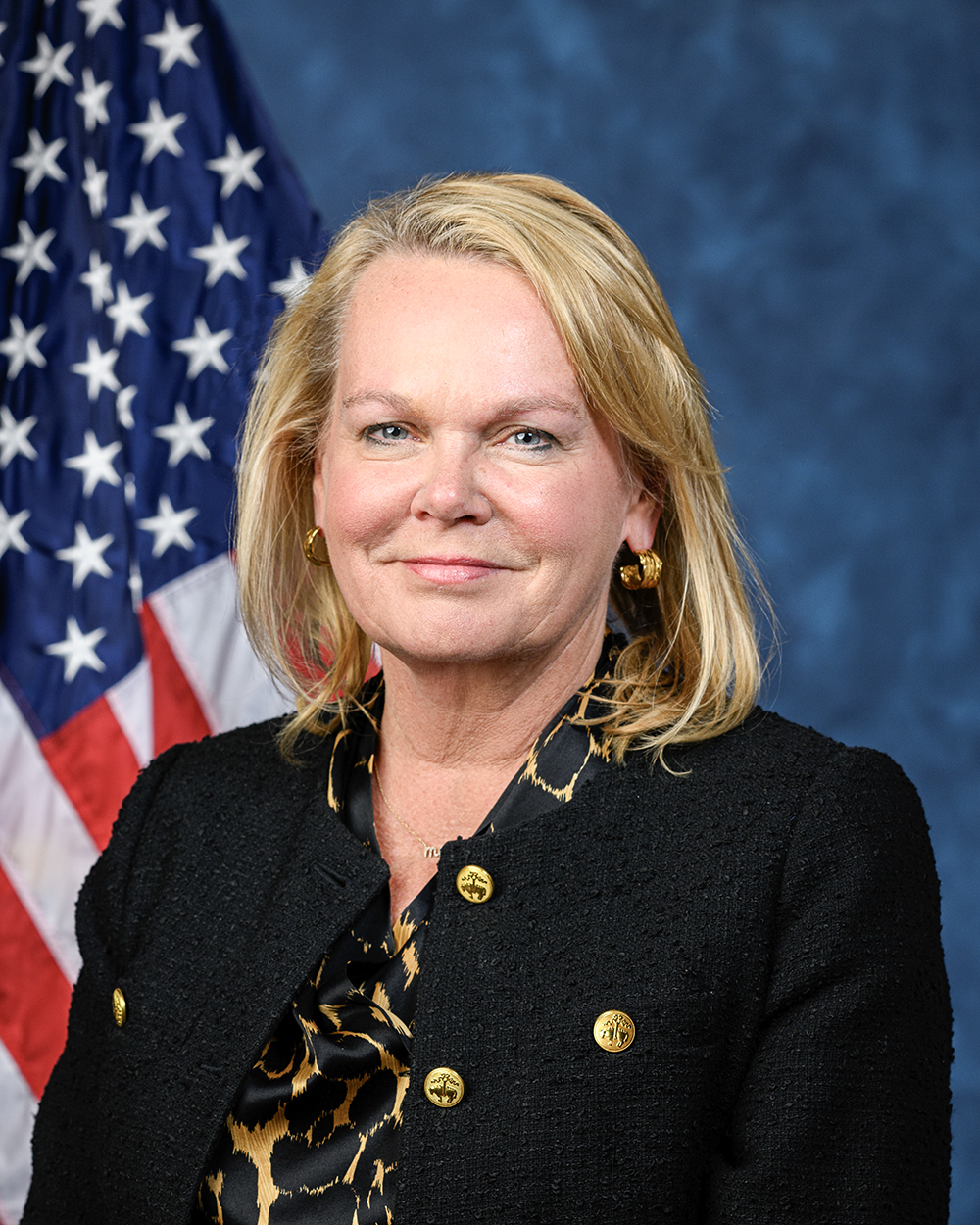
Rep. April McClain Delaney
Sponsored bills
Maddy summaryThe Richard L. Trumka Protecting the Right to Organize Act of 2025 strengthens workers' organizing rights by making it an unfair labor practice for employers to threaten permanent replacement of striking workers, discriminate against workers who support unions, or require employees to attend employer campaigns unrelated to their job duties. It expands the definition of "employee" to make it harder for companies to classify workers as independent contractors and requires employers to post notices about workers' rights in conspicuous locations. The bill establishes a new electronic voting system for union elections, creates a 90-day bargaining period before mediation can be requested, and increases penalties for violations of labor laws. These changes are intended to make it easier for workers to form unions and negotiate better wages and working conditions.
Maddy summaryThis bill directs the State Department to review restrictions on U.S. citizens traveling to North Korea, particularly focusing on humanitarian visits for Americans with relatives there (estimated at 100,000 people). It requires the Secretary of State to submit a report within 180 days detailing how the U.S. will pursue a formal end to the Korean War through diplomatic negotiations with North and South Korea. The bill also mandates a separate report outlining a clear roadmap for achieving a binding peace agreement, including necessary negotiation steps and key stakeholders. These provisions aim to address the ongoing state of war, which the bill states prevents formal U.S.-North Korea relations and family reunifications.
Maddy summaryThis bill adds a new tax provision (Section 139J) to the Internal Revenue Code, excluding interest income from certain rural and agricultural loans from taxable income for qualifying lenders. It directly affects banks, insurance companies, and farm credit entities that provide loans secured by rural or agricultural property (including qualifying single-family homes in rural areas), while excluding loans to foreign adversary entities (like those linked to China, Russia, or Iran). The law requires lenders to report on how this tax exclusion impacts loan interest rates, with a Treasury report due to Congress within five years. The policy change aims to reduce lenders' tax burden on these specific loans, potentially lowering costs for borrowers in rural communities.
Safe Schools Improvement Act This bill requires states to direct their local educational agencies (LEAs) to establish policies that prevent and prohibit bullying and harassment of elementary and secondary school students. In particular, these policies must prohibit bullying and harassment based on race, color, national origin, disability, religion, or sex. Sex includes sexual orientation, gender identity, and sex characteristics (including intersex traits). Further, LEAs must provide (1) students, parents, and educational professionals with annual notice of the conduct prohibited in their disciplinary policies; (2) students and parents with grievance procedures that target such conduct; and (3) the public with annual data on the incidence and frequency of that conduct at the school and LEA level. The Department of Education must conduct and report on an independent biennial evaluation of programs and policies to combat bullying and harassment in elementary and secondary schools. The National Center for Education Statistics must collect state data to determine the incidence and frequency of the conduct prohibited by LEA disciplinary policies.
Maddy summaryHR 1383 extends the Secure Rural Schools program, which provides payments to counties and states with federal land (like national forests) to support local schools and services. It reauthorizes these payments through fiscal year 2026, adding specific rules to ensure counties don’t receive duplicate payments for 2024 and 2025. The bill also extends related authorities for special projects on federal land and county fund expenditures through 2028-2029. This directly affects rural communities adjacent to federal lands that rely on these payments for education and infrastructure.
Maddy summaryHR 575, the Increased TSP Access Act of 2025, amends conservation program rules to expand access to third-party providers (TSPs) like agricultural retailers, engineers, and certified crop advisors. It creates new pathways for state agencies and professional organizations to certify TSPs (within 180 days of enactment), requires the USDA to review certifications within 10 business days, and sets payment rates equivalent to direct government services. The bill directly affects agricultural producers who use conservation programs and TSPs seeking certification, while mandating annual transparency reports on certification numbers, funding, and program effectiveness. Key changes include streamlined certification for existing specialists (e.g., certified crop advisors) and rules preventing double-counting of payments from other federal programs.
Maddy summaryThis bill (HJRES 63) would rename the Robert E. Lee Memorial, a National Park Service site in Arlington, Virginia, to "Arlington House National Historic Site." It directly affects the National Park Service, which manages the site, and all federal government documents, maps, and records referencing the location. The key provision updates all official references to the site to the new name and repeals two prior resolutions that established the memorial. As a procedural renaming bill, it does not create new policies or funding but changes the site's official designation.
Maddy summaryHR 1718 would establish the Justice Thurgood Marshall National Historic Site at Public School 103 in Baltimore, Maryland - the elementary school attended by Justice Thurgood Marshall - making it an affiliated area of the National Park System. The bill specifies that the Beloved Community Services Corporation, which currently owns and operates the building, will continue as the site's management entity. It requires the National Park Service to provide technical assistance and enter cooperative agreements for interpretation and preservation, but explicitly prohibits federal acquisition of the property or assumption of operational costs. This designation preserves the site for public education about Marshall's early life and legacy without altering ownership or federal financial responsibility.
Maddy summaryThe Keep Americans Safe Act (HR 1674) restricts the sale, transfer, and possession of large capacity ammunition feeding devices (LCFDs) - defined as magazines or similar devices holding more than 15 rounds of ammunition - for most individuals. Exceptions allow law enforcement officers (including campus law enforcement), retired officers, and nuclear security personnel to possess LCFDs under specific conditions. The bill requires new LCFDs to have serial numbers and manufacturing dates, permits federal seizure of violative devices, and authorizes federal grant programs to fund buy-back initiatives for LCFDs. It directly affects gun owners and manufacturers while preserving access for covered law enforcement and security personnel.