Maddy summaryThe Tuskegee Airmen Memorial Act of 2026 authorizes the organization Tuskegee Airmen, Inc. to build a commemorative monument on federal land in Washington, D.C., honoring the original Tuskegee Airmen who served in World War II. This legislation allows the group to accept private donations and cover all costs for the project without using federal funds, while requiring any leftover money to be deposited into specific government accounts. The bill also mandates that the memorial be constructed in compliance with existing federal standards for commemorative works.
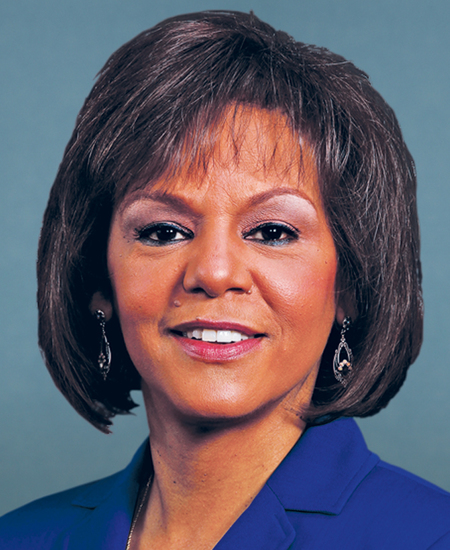
Rep. Robin L. Kelly
Sponsored bills
Maddy summaryThis bill amends Medicare to cover dental and oral health services for the first time, affecting all current and future Medicare beneficiaries. It defines covered services to include routine cleanings, fillings, extractions, root canals, crowns, dentures, and emergency care. For most individuals, federal payment for these services will gradually increase from 0% to 80% over an eight-year period, while low-income individuals eligible for prescription drug subsidies will receive 80% coverage immediately. The legislation also establishes frequency limits, such as two cleanings and exams per year and a five-year limit on full dentures, and requires the U.S. Preventive Services Task Force to include at least one oral health professional.
Maddy summaryThis concurrent resolution formally recognizes the persistent wage gap between Black women and white, non-Hispanic men in the United States. It highlights data showing that Black women earn significantly less than their male counterparts and reaffirms Congress's support for existing laws that prohibit pay discrimination based on sex or race. The document does not create new laws or change policy but serves as a symbolic statement to raise awareness about the economic disparities faced by Black women.
Maddy summaryHR 2001 increases annual funding for a grant program supporting dental workforce development from $13.9 million to $15 million, extending the program through fiscal years 2026-2030 (previously 2019-2023) under the Public Health Service Act. The bill modifies existing funding levels to maintain support for addressing dental workforce shortages, with funds remaining available until expended. This change directly affects the operation of the grant program and its ability to fund dental workforce initiatives.
Maddy summaryThis resolution asks the President and the Secretary of Health and Human Services to provide the House of Representatives with specific documents regarding a freeze on federal payments to five states. The requested materials include communications about how the payment freeze was decided, records of the tweet that announced it, and details on funding drawdowns, disciplinary actions, and data sharing plans related to those states. The bill specifically targets documents concerning Temporary Assistance for Needy Families, Child Care, and Social Services Block Grant programs in California, Colorado, Illinois, Minnesota, and New York. If the agencies possess the records, they must submit them to Congress within 14 days of the resolution's adoption.
Maddy summaryThe Mamas First Act aims to reduce maternal mortality rates by expanding Medicaid coverage to include support services from doulas, midwives, tribal midwives, and lactation providers. This legislation modifies the Social Security Act to allow these professionals to bill Medicaid for prenatal, labor, and postpartum care delivered in various settings, including homes, hospitals, and clinics. To qualify for reimbursement, doulas must hold a certification requiring continuing education and gather specific client or provider recommendations, while midwives and lactation support providers must meet defined state or international standards. The bill also prohibits Medicaid programs from charging copayments or deductibles for these essential services, with the changes taking effect on January 1, 2027.
Maddy summaryThe Patients First Act of 2026 modifies how Medicare reimburses physicians and primary care providers to improve access and stabilize payments. It establishes a new hybrid payment model for primary care services from 2027 to 2031, which pays a monthly fee per patient to eligible independent practices while covering specific services like care management and telehealth without cost-sharing for patients. The bill also updates the formula for calculating reimbursement rates to account for high inflation years and requires more frequent updates to the costs used in calculating payments. Additionally, the legislation reforms the performance-based payment system by adding care efficiency measures, creating a task force to recommend new quality metrics, and adjusting penalties for providers who fail to report on certain data.
Maddy summaryThis bill requires Medicare Advantage plans to implement electronic pre-approval systems for medical services by 2028 and meet transparency reporting standards starting in 2027. Plans must publicly report data on approval/denial rates, appeal outcomes, response times, and technology use for pre-approval requests, including details on how denials relate to clinical criteria. It establishes a 24-hour response timeframe for certain requests and mandates annual reviews of pre-approval requirements based on data and input from seniors and providers. The law directly affects Medicare Advantage plans, seniors enrolled in these plans, and healthcare providers who submit pre-approval requests. These changes aim to make the pre-approval process faster, more transparent, and more accountable for seniors seeking covered medical services.
Maddy summaryThis resolution commemorates the fourth anniversary of the July 4, 2022, Independence Day Parade shooting in Highland Park, Illinois, which resulted in seven deaths and over 40 injuries. It formally honors the seven victims by name and acknowledges the bravery of the numerous law enforcement officers, first responders, and medical personnel who assisted during the attack and in the aftermath. The document also recognizes the ongoing efforts of volunteer counselors supporting the community and expresses continued support for Highland Park as it marks this tragic milestone.
Maddy summaryThe LIFT the BAR Act aims to restore access to federal benefits for lawfully present noncitizens by repealing several restrictions imposed by the 1996 welfare reform law and a 2024 reconciliation bill. Specifically, it would allow eligible noncitizens to receive SNAP food assistance, Medicaid, CHIP, and child nutrition programs, while also updating legal terminology to refer to "noncitizens" rather than "aliens" in relevant statutes. The legislation includes provisions to ensure these individuals can qualify for premium tax credits and would require federal agencies to issue implementation guidance within 180 days of enactment.