

Maddy summaryHR 4119 requires the U.S. State Department to submit a detailed report within 180 days of enactment on the Polisario Front’s leadership, military activities, and ties to Iran, Russia, Hezbollah, the IRGC, and the PKK. It also mandates that the State Department and Treasury submit within 90 days whether the Polisario Front meets criteria for designation as a foreign terrorist organization or for sanctions under existing laws. The bill establishes a process for potential sanctions but includes a waiver if the Polisario Front engages in good-faith negotiations toward Morocco’s 2007 autonomy plan for Western Sahara. This legislation focuses on gathering evidence for future designations rather than immediately imposing sanctions. It directly affects U.S. foreign policy decisions regarding the Polisario Front and Western Sahara.
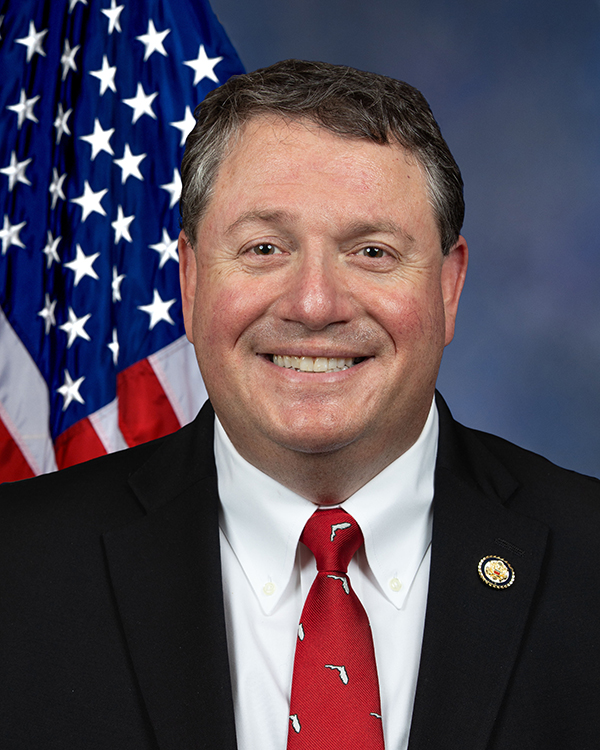
Rep. Randy Fine
Sponsored bills
Maddy summaryThe LEDGER Act (HR 4091) requires the Treasury Department to create a system tracking every government payment within 180 days of enactment. It mandates that all federal departments, agencies, and branches (executive, legislative, judicial) must report disbursements from every funding source, including how long funds remain available for spending. This system will detail each payment's origin, recipient, and timing across all government accounts. The bill directly affects all federal spending entities by standardizing expenditure tracking previously handled inconsistently.
Maddy summaryThis bill mandates a 90-day government review to determine if CAIR (Council on American-Islamic Relations) meets criteria for designation as a foreign terrorist organization under U.S. law. The review, led by the Secretary of State with input from the Attorney General and Treasury Secretary, would assess CAIR's ties to terrorism based on findings cited in the bill, including alleged connections to Hamas, the Holy Land Foundation, and individuals convicted of terrorism-related offenses. The bill does not immediately designate CAIR as a terrorist group but requires a formal evaluation and a congressional report on the outcome. This process directly affects CAIR by triggering an official government assessment of its status, though no immediate action is taken by the bill itself.
Maddy summaryHR 4092, the Protect RAIL Act, amends U.S. immigration law to make certain crimes involving stolen goods transported by carriers (like trains, trucks, or ships) grounds for denying entry or deporting non-citizens. It adds new inadmissibility and deportability provisions for anyone convicted of theft from interstate or foreign shipments under Title 18, Section 659 of the U.S. Code. The bill directly affects non-citizens who commit these specific theft offenses, making them ineligible to enter the U.S. or subject to removal. This changes immigration consequences for existing criminal offenses, not the crimes themselves.
Maddy summaryThis symbolic House resolution (HRES 521) expresses support for Israel’s military actions against Iran’s nuclear facilities, citing Iran’s nuclear enrichment progress (including 60% enriched uranium stockpiles nearing weapons-grade levels) and Iran’s attacks on Israeli civilians. It specifically endorses Israel’s "proportional" strikes on Iranian nuclear sites and military targets following Iran’s rejection of diplomatic efforts, while condemning Iran’s attacks that killed 24 Israelis and wounded 590. The resolution calls on Iran to halt nuclear enrichment and dismantle its program, reaffirms U.S. support for Israel’s security, and urges global condemnation of Iran’s nuclear activities. As a non-binding resolution, it does not enact policy but formally aligns the House with Israel’s actions against Iran’s nuclear program.
Maddy summaryHR 3966 requires certain tax-exempt organizations, including think tanks and cultural nonprofits, to annually disclose foreign contributions exceeding $10,000 from foreign governments, political parties, or entities controlled by them. The bill mandates that these organizations report the name of the foreign source and the total amount received, with this information made publicly available in a searchable IRS database. It directly affects nonprofits receiving significant foreign funding, aiming to increase transparency about potential foreign influence operations. The legislation targets funding from sources like foreign governments or entities linked to the Chinese Communist Party, as highlighted in congressional findings about influence campaigns. The policy change creates a new reporting requirement under the Internal Revenue Code, effective for tax years after enactment.
Maddy summaryHR 3946, the FIGHT Act of 2025, amends the Animal Welfare Act to specifically prohibit gambling on animal fighting events and restrict the interstate transport of roosters used in such ventures. It defines "rooster" as male chickens over six months old and makes it unlawful to sponsor, exhibit, attend (for those under 16), or gamble on animal fighting events - whether in-person or broadcast. The bill creates a civil enforcement mechanism allowing any person to file a lawsuit to stop violations after providing 60 days' notice to authorities, with potential fines up to $5,000 per violation. It also establishes seizure of property used to facilitate violations and clarifies that state laws on animal fighting remain in effect unless directly conflicting with federal provisions.
Maddy summaryThis bill would require the Attorney General to annually identify state or local governments that fail to comply with federal immigration cooperation laws, such as sharing immigration status information or honoring detainer requests. Jurisdictions found non-compliant would lose eligibility for all federal financial assistance (including grants and programs) for at least one year. The law mandates annual reports to Congress and allows any member of Congress to request compliance reports on specific jurisdictions. It directly affects cities, counties, and states that do not follow federal immigration enforcement directives.
Maddy summaryThis bill increases penalties for nonimmigrant visa overstays under U.S. immigration law. It directly affects individuals admitted on temporary visas (like students or workers) who remain in the U.S. past their authorized stay, defining a violation as failing to maintain status for 10 cumulative days. Key provisions raise civil fines from $50-$250 to $500-$1,000 per violation, with doubled penalties for repeat offenses, and add criminal penalties of up to 6 months (first violation) or 2 years (repeat offenses). The law also clarifies that these penalties apply in addition to existing civil or criminal penalties.
Maddy summaryHRES 472 is a symbolic House resolution condemning an antisemitic terrorist attack in Boulder, Colorado, on June 1, 2025, which targeted Jewish individuals. The resolution explicitly condemns the attack - where the perpetrator used Molotov cocktails against victims aged 52-88, including a Holocaust survivor - and calls for prosecuting the perpetrator. It also expresses concern about rising antisemitism on campuses and online, while urging Congress to secure borders and deport visa overstayers (though this is a symbolic call, not a new law). The resolution directly affects the Boulder Jewish community and victims of the attack, with no new policy changes enacted.