Maddy summaryThis bill requires Congress to authorize any U.S. vote to allocate IMF funds (Special Drawing Rights) or support quota increases for eight specific countries: China, Russia, Iran, North Korea, Cuba, Venezuela, Nicaragua, and Afghanistan under Taliban control. It directs the U.S. Treasury to oppose IMF proposals that would benefit these nations through funding or policy changes. The law applies directly to U.S. representation at the International Monetary Fund, preventing automatic U.S. support without legislative approval. It targets countries designated as adversaries or subject to U.S. sanctions.
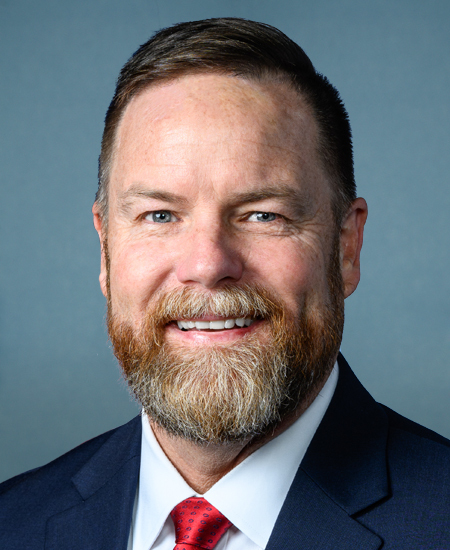
Rep. Aaron Bean
Sponsored bills
Maddy summaryHR 5427 prohibits individuals convicted of fraud against the government from receiving most Small Business Administration (SBA) financial assistance. Specifically, it blocks eligibility for any SBA aid (except standard Section 7(b) loans) if a small business has an "associate" (such as an officer, director, owner over 20%, or key employee) who was finally convicted of fraud involving SBA-covered loans or grants. Covered programs include pandemic-era loans like the PPP and grants under the American Rescue Plan Act. The rule applies only to new assistance after the bill's enactment, not existing contracts.
Maddy summaryHRES 793 is a resolution passed by the U.S. House of Representatives calling on Hamas to immediately release all 199 hostages taken during Hamas' October 7, 2023 attack on Israel. The resolution condemns Hamas for the attack, the taking of hostages, and threats against hostages, while stating that holding hostages violates international humanitarian law under the Geneva Conventions. It demands the immediate release of all hostages and expresses sympathy for victims and their families. As a symbolic resolution, it does not create legal obligations but formally expresses the House's position.
Maddy summaryHR 6419 requires colleges and universities receiving federal funding to report on campus policies addressing anti-Semitism and preventing support for foreign terrorist organizations. Institutions must detail anti-Semitism response plans, incident reporting procedures, and screening processes for applicants with ties to terrorist groups. Students convicted of terrorism-related offenses, such as providing material support to terrorist organizations, would lose eligibility for federal financial aid. Additionally, schools must report foreign student violations of these policies to immigration authorities through the Student and Exchange Visitor System.
Maddy summaryThis bill appropriates $14.3 billion in supplemental security funding to Israel following the October 7, 2023 attacks. The funding includes $4 billion for Iron Dome and David's Sling defense systems, $1.35 billion for the Iron Beam defense system development, and $3.5 billion for foreign military financing. The bill requires regular reporting to Congress on security assistance provided to Israel and designates all funds as "emergency requirements" under federal budget law. It also modifies existing laws to facilitate the transfer of defense articles and services to Israel, aiming to strengthen Israel's defense capabilities against rocket threats.
Maddy summaryThe SHIP Act imposes sanctions on foreign entities that knowingly handle Iranian petroleum, targeting those involved in port operations, transportation, refining, or ship-to-ship transfers of Iranian oil. Starting 90 days after enactment, the President must block assets, deny visas, and impose penalties on individuals or companies engaging in these activities, including family members or owners of sanctioned entities. It requires annual reports tracking Iran's oil exports, revenues, and key players like shipping companies and ports. The sanctions terminate if the President certifies Iran has stopped supporting terrorism and dismantled weapons programs.
Maddy summaryThis bill prohibits federal funding for Planned Parenthood Federation of America and its affiliates, clinics, or related entities. It directs that funds previously allocated to Planned Parenthood must instead support other providers - including community health centers, hospitals, and clinics - that offer women’s health services like contraception, cancer screenings, and prenatal care. The bill explicitly states it does not reduce overall federal funding for women’s health care or affect existing abortion-related funding restrictions in appropriations laws. It ensures continued access to these services through alternative providers, particularly in underserved communities.
Maddy summaryHRES 798 is a House resolution condemning support for Hamas, Hezbollah, and other terrorist organizations at colleges and universities. It states such support may create a hostile environment for Jewish students, faculty, and staff, citing incidents like blaming Israel for the October 7 Hamas attack. The resolution urges the Secretary of Education to direct the Office for Civil Rights to investigate and take action where appropriate. This non-binding resolution expresses the House's position but does not create new law or policy changes.
Maddy summaryHR 6211, the SAFE Act of 2023, prohibits U.S. immigration benefits for individuals holding passports issued by the Palestinian Authority. It blocks the issuance or renewal of visas, temporary protected status, asylum, refugee status, and parole for these individuals, and mandates the revocation of any such status granted on or after October 1, 2023. The bill also declares covered aliens inadmissible and requires immigration authorities to identify and remove Palestinians without lawful status who arrived after that date. This law directly affects Palestinian passport holders seeking to enter or remain in the United States through standard immigration pathways.
Maddy summaryHR 662, the Block Grant Assistance Act of 2023, amends the Disaster Relief Supplemental Appropriations Act of 2023 to allow the Secretary of Agriculture to provide disaster loss assistance to eligible states and territories through block grants. This change permits states and territories to use the funds more flexibly for disaster recovery under the existing disaster relief framework, rather than requiring direct federal disbursement for specific losses. The bill directly affects states and territories experiencing disasters covered by the Disaster Relief Act. It modifies the current process by adding a specific provision enabling block grants as an option for distributing relief funds.