Maddy summaryThis is a symbolic joint resolution (HJR 25), not a law, expressing Alaska's support for recruiting and retaining international educators on J-1 and H-1B visas. It highlights how rural school districts (like Kuspuk, Kodiak, and North Slope) rely on these visas to address critical teacher shortages in math, science, and special education. The resolution acknowledges challenges these educators face - such as visa duration uncertainty and limited job mobility - but does not create new legal requirements or funding. It formally encourages continued use of J-1 and H-1B programs to maintain educational quality in underserved communities. (Note: As a resolution, it has no legal force and serves only to affirm legislative support.)
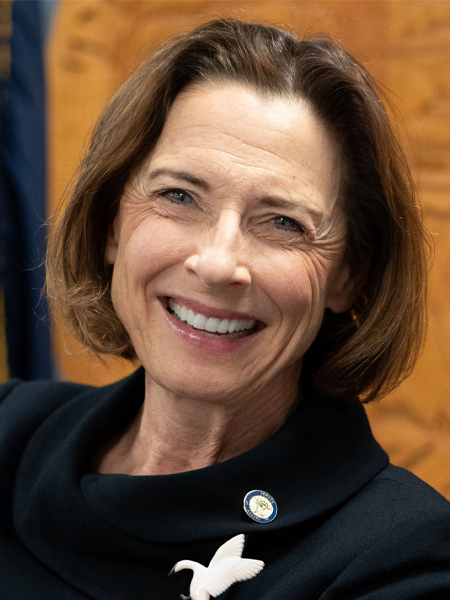
Sen. Cathy Giessel
Sponsored bills
Maddy summarySB 47 clarifies management responsibilities for Chugach State Park by assigning road maintenance within the park to the Department of Transportation and Public Facilities (except for roads maintained by municipalities under new rules). It adds requirements for municipalities seeking easements: they must hold public hearings and demonstrate the easement improves public access or serves the public interest. The bill takes effect July 1, 2025, and directly affects state agencies (DOT, Fish & Game) and municipalities seeking access rights within the park.
Maddy summaryHJR 11 is a symbolic resolution recognizing Alaska's relationship with Canada. It highlights shared natural resources, trade (including $596 million in annual exports from Alaska to Canada), historical military partnerships, and cultural ties through decades of collaboration. The resolution does not create new laws, funding, or obligations - it serves only as an official statement of support. It was passed by the Alaska Legislature and transmitted to the Governor for filing.
Maddy summarySJR 19 is a non-binding resolution passed by the Alaska Legislature urging the U.S. Congress to honor historical agreements requiring Alaska to receive 90% of federal revenue from oil and gas leases on two specific federal lands: the Arctic National Wildlife Refuge and the National Petroleum Reserve in Alaska. It references the 1958 Alaska Statehood Act and a 1957 amendment to the Mineral Leasing Act, which established Alaska's right to this 90% share as part of statehood negotiations. The resolution does not change current law but requests Congress fulfill this long-standing commitment, particularly as federal energy development expands in these areas. It is a statement of policy position, not a legislative proposal with immediate effect.
Maddy summarySB 134 amends Alaska's insurance code to expand regulatory oversight of pharmacy benefits managers (PBMs) and third-party administrators. The bill requires the state insurance director to examine these entities whenever necessary, adding them to the list of entities subject to routine financial and operational reviews. It also clarifies that these entities must be licensed to operate in Alaska and establishes payment procedures for examination costs. The bill directly affects PBMs and third-party administrators providing pharmacy benefit services in the state, increasing their regulatory compliance obligations.
Maddy summarySB 122 requires Alaska health insurance companies to maintain provider networks that include a minimum percentage of medical providers in each of six defined regions. Insurers must cover at least 85% of providers in Anchorage, 90% in two other regions, and 95% in the remaining areas for each medical specialty. The bill also mandates that networks include all licensed hospitals, mental health facilities, and Alaska tribal health organizations, along with their employed staff. This ensures Alaskans with health insurance have access to a broader range of in-network health care providers.
Maddy summarySJR 21 is a joint resolution (not a bill) expressing legislative support for recruiting and retaining international educators on J-1 and H-1B visas in Alaska schools. It acknowledges these educators' critical role in addressing teacher shortages - particularly in rural districts and subjects like math, science, and special education - while noting challenges like visa unpredictability and limited job mobility. The resolution does not create new laws or policies but formally recognizes the contributions of international educators and urges continued support for their retention. It follows examples from districts like Kuspuk and Kodiak, which have successfully used these visa programs to maintain staffing.
Maddy summarySB 32 allows certain electric cooperatives in Alaska to include costs for small-scale renewable energy projects (under 15,000 kilowatts) and battery storage systems in their utility rates, provided the projects are approved by the utility's board. It specifically covers facilities using geothermal, wind, solar, hydro, tidal, biomass, or other renewable energy sources. The bill directly affects electric cooperatives organized under Alaska law that participate in utility reliability organizations. This change enables these utilities to recover eligible costs through customer rates rather than bearing them entirely themselves.
Maddy summarySB 103 requires Alaska's certified nurse aide training programs to cover 12 specific competencies, including safe care techniques, communication skills for diverse clients (such as those with dementia or cognitive disabilities), and methods to support client independence and dignity. The bill directly affects nurse aide training providers across Alaska by mandating these standardized curriculum requirements. Key provisions include training aides to recognize health changes, respect client choices, and provide dementia-specific care (defining "activities of daily living" as eating, dressing, grooming, bathing, and toileting). The requirements take effect January 1, 2026.
Maddy summarySB 90 allows minors aged 16 or older to consent to up to five outpatient behavioral or mental health appointments (90 minutes each) without parental permission. After five appointments, providers must obtain parental consent or justify why seeking consent would harm the minor (e.g., if services relate to abuse allegations or risk the minor rejecting treatment). The bill also requires documentation for homeless minors (16+) to bypass parental consent for medical services, verified by specific officials or two adults. It applies directly to minors 16+, mental health providers, and their parents/guardians.