Issue · Immigration

Immigration

Every immigration bill, vote, and legislator stance in Alaska, automatically classified by Maddy, our AI policy reader.

Total bills
12
119th Congress
Top supporter
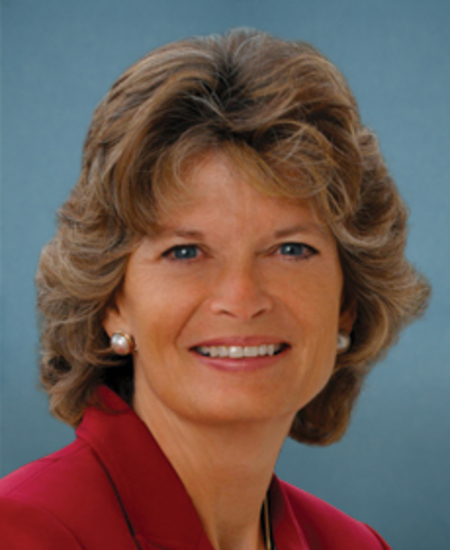
Lisa Murkowski
51% support rate
Top opponent
Nicholas J. Begich III
19% support rate
Ranked legislators
3
1 support · 2 oppose
Key legislators

Who's moving immigration in Alaska

Legislators moving immigration in Alaska
Legislator Party Stance Support rate Votes
Lisa Murkowski
Lisa Murkowski Senate
R
Mixed
51% 179
Nicholas J. Begich III
Nicholas J. Begich III House · District At-Large
R
Strong −
19% 150
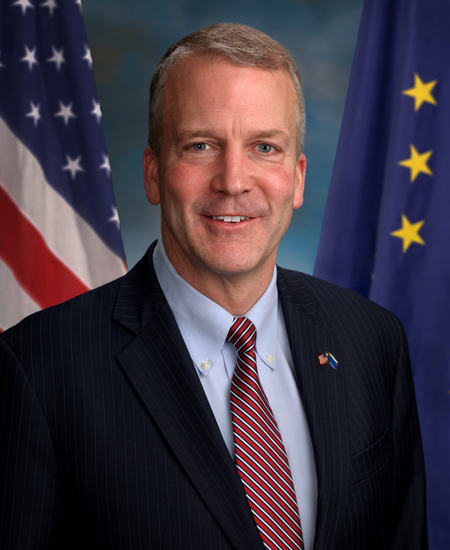
Dan Sullivan
Dan Sullivan Senate
R
Mixed −
46% 180
Showing 1–10 of 12 bills

All immigration bills

in committee · United States · Senate Aug 6, 2026

S 5308: Afghanistan TPS Act of 2026

The Afghanistan TPS Act of 2026 grants Temporary Protected Status to Afghan nationals who have been continuously present in the United States since the bill's enactment, providing them with legal protection and work authorization until July 1, 2029. To qualify, applicants must register with biometric data and pass criminal and national security background checks, while the Department of Homeland Security is required to process these applications within 90 days, subject to a potential extension for specific security concerns. The legislation also allows recipients to apply for waivers on filing fees and permits brief international travel in cases of emergency or extenuating circumstances.
in committee · United States · Senate Jul 16, 2026

S 5012: Welcome Back to the Health Care Workforce Act

The Welcome Back to the Health Care Workforce Act authorizes federal grants to help internationally educated health care professionals integrate into the U.S. workforce. These funds will be awarded to groups such as hospitals, universities, and government agencies that partner to provide career support, including licensing assistance, English language training, and mentoring programs. The legislation prioritizes projects that address workforce shortages in rural areas and communities with significant gaps in health care staffing. Recipients must use at least 20 percent of the grant money for system-wide improvements like employer education and career ladders, while the rest can support individual needs such as exam preparation and living expenses. The bill also requires grant recipients to submit annual reports on how many professionals they helped employ and retain.
in committee · United States · Senate Mar 12, 2026

S 4087: A bill to exempt public school employees from non-processing related fees for H-1B visas imposed by Presidential Proclamation 10973.

This bill exempts public school employees from a $100,000 fee required for H-1B work visas under a 2025 presidential proclamation. It directly affects foreign workers seeking to work in specialty occupations at public schools or school districts in the United States. The legislation removes the financial barrier for these specific workers while leaving other visa fee requirements unchanged. This change ensures that public school employees can apply for H-1B visas without paying the additional non-processing related fee imposed by the proclamation.
in committee · United States · House Feb 14, 2025

HR 1379: Trafficking Survivors Relief Act of 2025

This bill allows survivors of human trafficking to seek court orders to vacate convictions or expunge arrests related to non-violent crimes they committed while being trafficked. Survivors can file motions supported by affidavits from anti-trafficking service providers, and courts must determine if the crime was directly caused by trafficking. It applies to all past and future cases, including retroactive relief for convictions, and adds a new "human trafficking defense" in criminal trials. The law requires annual reports tracking how many survivors use this relief and the outcomes of their cases.
in committee · United States · House Mar 18, 2026

HR 5688: Non-Domiciled CDL Integrity Act

HR 5688, the Non-Domiciled CDL Integrity Act, changes rules for issuing commercial driver's licenses (CDLs) to people who don't live in the state where the license is issued. It allows states to issue CDLs to foreign nationals with lawful U.S. immigration status and work-related visas (valid for up to one year or until their stay ends), requiring states to verify status before issuing and keep records for two years. For residents of U.S. territories like Puerto Rico, it requires proof of U.S. citizenship or permanent residency before issuing CDLs, with similar verification and record-keeping rules. The bill directly affects commercial drivers from foreign countries and U.S. territories seeking CDLs in states where they are not residents.
in committee · United States · Senate Feb 6, 2025

S 461: Filipino Veterans Family Reunification Act of 2025

Filipino Veterans Family Reunification Act of 2025 This bill exempts from immigrant visa limitations the children of certain individuals who were naturalized due to their military service during World War II. Specifically, this applies to the children of veterans who served honorably during World War II in the U.S. Armed Forces or in Filipino military units such as the Philippine Army, Philippine Scouts, or recognized guerilla units.
in committee · United States · Senate Apr 3, 2025

S 1292: Save Our Seafood Act

S 1292, the Save Our Seafood Act, exempts foreign workers employed as fish processors (including roe processors and supervisors) from the annual H-2B visa numerical cap. This directly affects nonimmigrant aliens working in specific seafood processing roles, such as handling, preparing, or packaging fish, mollusks, or crustaceans (excluding harvesting or retail). The bill amends immigration law to clarify that the visa cap does not apply to these workers, using defined terms to exclude roles like vessel-based processing or retail. It does not change visa requirements for other industries or create new visa categories. The key mechanism is removing a barrier for seafood processing employers seeking foreign labor in these defined roles.
in committee · United States · Senate Feb 24, 2025

S 696: Protecting Our Guests During Hostilities in Ukraine Act

S 696 creates "Ukrainian guest status" for individuals paroled into the U.S. under the Uniting for Ukraine program (announced April 2022). This status, effective from their initial parole date, grants eligible Ukrainians employment authorization and temporary legal presence. The status expires 120 days after the Secretary of State certifies that Ukraine hostilities have ended and safe return conditions exist. It can be revoked if the Secretary of Homeland Security determines an individual meets specific grounds under immigration law. This bill directly affects Ukrainians admitted through the Uniting for Ukraine parole process.
Sub-Topics Work Authorization
in committee · United States · Senate Apr 3, 2025

S 1298: Religious Workforce Protection Act

This bill extends temporary work visas for religious workers (like pastors or missionaries) who face long delays in obtaining permanent residency due to annual visa caps. It allows them to keep their temporary status while waiting for a final decision on their permanent residency application, rather than having to leave the U.S. after five years. The bill also permits these workers to change employers under certain conditions and exempts them from a mandatory one-year foreign residence requirement if they were forced to leave due to the five-year visa limit. These changes directly affect religious workers with pending permanent residency applications stuck in visa backlogs.
in committee · United States · Senate Sep 18, 2025

S 2886: America’s CHILDREN Act of 2025

The America’s CHILDREN Act of 2025 would create a pathway to permanent residency for young adults who entered the U.S. as children and were dependents of nonimmigrant workers (with specific work visas, excluding certain categories) for at least 8 years. To qualify, applicants must have graduated from a U.S. college or university, been lawfully present in the U.S. for 10 years total, and meet other eligibility criteria like not being inadmissible. The bill includes key protections: it prevents "aging out" by using the date a parent’s visa petition was filed to determine child status (instead of current age), allows reconsideration of past denials under the new rules, and retains priority dates for family-based immigration applications. This directly affects young adults who grew up under these visa statuses and completed higher education in the U.S.
Sub-Topics DACA & Dreamers
Showing 1 to 10 of 12 bills
1 2 Next