

Restoring America's Leadership in Innovation Act of 2021 This bill revises several aspects of patent law. The bill changes the U.S. patent system back to a first-to-invent system, in which the first inventor to conceive of an invention is entitled to a patent. Currently, the first person to file an application that meets all the necessary requirements is entitled to the patent. Several types of administrative patent challenge proceedings are abolished, as well as the Patent and Trademark Office (PTO) body that decides those proceedings. The bill relaxes the standard for what constitutes patent-eligible subject matter. The only ineligible inventions shall be those that exist in nature independent or prior to human activity or that exist solely in the human mind. The bill also makes it easier for a patent owner that has won an infringement case in court to secure a permanent injunction against the infringing defendant. Specifically, there shall be a presumption that further infringement would cause irreparable harm to the prevailing patent owner, and the burden shall be on the infringer to prove otherwise. (Currently, a prevailing patent owner seeking a permanent injunction must prove, among other things, that further infringement would cause irreparable harm.) The bill limits what types of publications shall be treated as prior art that could be used to make an invention be considered to be anticipated or obvious (and therefore not patentable). The bill authorizes the PTO to keep and spend all the fees that it collects.
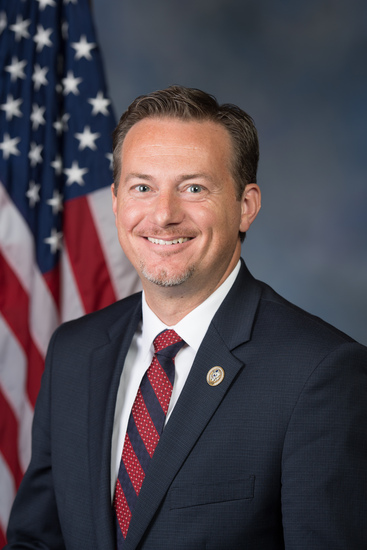
Rep. Michael Cloud
Sponsored bills
Illegal Immigrant Payoff Prohibition Act This bill prohibits the payment of a settlement to an alien for a civil action brought against the United States in connection with the alien's inadmissibility to, or unlawful presence in, the United States.
Protect Communities from a Porous Border Act of 2021 This bill requires the Department of Homeland Security (DHS) to notify a state before placing an alien in that state and gives the state final authority to prohibit such a placement. At least 10 business days before placing (e.g., detaining or housing) such an individual in a state, DHS must provide certain information to that state, including (1) the individual's biographic and biometric information, including DNA; and (2) a certification that the biometric and biographic information has been checked in various law enforcement and counterterrorism databases. No federal court shall have jurisdiction to review (1) the requirements and procedures established under this bill, or (2) a decision by a state to prohibit the placement of such an individual in the state. The bill also prohibits any federal official from waiving any of the bill's requirements.
Stop Settlement Slush Funds Act of 2021 This bill prohibits the federal government from entering into or enforcing a settlement agreement on behalf of the United States that provides for a payment to any person or entity other than the United States. The bill provides exceptions to allow payments that (1) remedy actual harm (including to the environment) caused by the party making the payment, or (2) constitute a payment for services rendered in connection with the case. Government officials or agents who violate this prohibition may be removed from office or required to forfeit to the government any money they hold for such purposes to which they may otherwise be entitled. Agencies must report annually for seven years to the Congressional Budget Office about the parties, funding sources, and distribution of funds for their settlement agreements permitted by the exceptions in this bill. The Office of Inspector General for each agency must also report annually on any settlement agreements that violate the bill's requirements.
Backing the Independent Decisions of Employees against Nefarious Mandates Act of 2021 This bill creates a private right of action for an individual against an employer for a vaccine-related injury or death in connection with a COVID-19 vaccine mandate.
Don't Jab Me Act This bills allows a civil action to be brought against the United States by a federal employee for injuries sustained as a result of a COVID-19 vaccination mandate.
Make the Migrant Protection Protocols Mandatory Act of 2021 This bill requires the Department of Justice (DOJ) to remove certain aliens from the United States while such an alien's application for admission is pending. Specifically, if an alien arrived by land from a foreign country bordering the United States and the alien is not clearly and beyond a doubt entitled to admission into the United States, DOJ must return that alien to that bordering foreign country while the alien's application for admission is pending. (Currently, DOJ may choose to detain such an alien or return the alien to the bordering foreign country while the application for admission is pending.)
Freedom From Union Violence Act of 2021 This bill revises the federal criminal statute commonly known as the Hobbs Act, which prohibits the obstruction of interstate commerce by robbery or extortion (or by attempting or conspiring to commit robbery or extortion). Currently, an extortion offense includes obtaining property of another with consent through the wrongful use of force, violence, or fear. Typically, violations are investigated by the Federal Bureau of Investigation and prosecuted by the U.S. Attorney's Office. First, this bill broadens the scope of prohibited conduct by (1) eliminating the requirement that the means used to obtain property (i.e., the use of force, violence, or fear) must be wrongful, and (2) expanding extortion to include obtaining property of another by wrongful use of fear not involving force or violence. Second, the bill explicitly states that the maximum fine is $100,000. Third, the bill exempts from the federal prohibition conduct that (1) is incidental to peaceful picketing during a labor dispute, (2) consists solely of minor bodily injury or damage to property, and (3) is not part of a pattern of violent conduct or of a coordinated violent activity. A violation involving exempted conduct is subject to prosecution only by state and local authorities.
Teleabortion Prevention Act of 2021 This bill restricts the use of telehealth for chemical abortions (also known as medication abortions). Specifically, it requires a provider who dispenses or prescribes medication for a chemical abortion to physically examine the patient, be physically present at the location of the chemical abortion, and schedule a follow-up visit. The bill provides an exception for a chemical abortion that is necessary to save the life of a mother whose life is endangered by a physical disorder, illness, injury, or condition. The bill establishes criminal penalties—a fine, a prison term of up to two years, or both—for a provider who does not comply with the requirements. A patient who undergoes a chemical abortion may not be prosecuted.
No Taxpayer Funding for the Central American Minors Program Act This bill prohibits using federal funds to carry out the Central American Minors program, a Department of Homeland Security and Department of State program that reunites qualified children from El Salvador, Guatemala, and Honduras with their parent who is lawfully present in the United States.