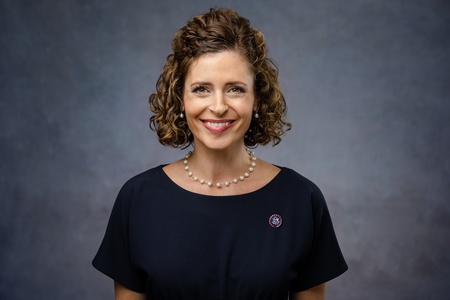
Photo of Julia Letlow
R United States House · District 5 · Louisiana

Rep. Julia Letlow

Compare
Total votes
2,748
all sessions
Attendance
97%
78 missed
Lower than 85% of chamber peers
With party
94%
of cast votes
Higher than 92% of chamber peers
Bipartisan score
3%
crosses aisle rarely
Lower than 96% of chamber peers
Sponsored
493
bills & resolutions
Lower than 84% of chamber peers
Committees
5
assignments
493 bills and resolutions

Sponsored bills

Total
493
Primary
32
Co-sponsor
461
This page
493
matching current filters
Primary HR 8515
In committee · Alabama House · Lead sponsor
Consumer Price Information Act of 2026

Maddy summaryThis bill requires federal agencies to publish a Consumer Price Information Statement alongside any major rule that could affect consumer prices. The statement must explain how the rule might impact costs for essential items like energy, food, housing, transportation, and healthcare, while also identifying vulnerable groups such as low-income households and seniors who might be disproportionately affected. Agencies must make these statements available in the Federal Register and on their websites, using existing funding rather than requesting new appropriations. The requirement takes effect 60 days after the bill is enacted.

In committee Apr 27, 2026 0 co-sponsors
Primary HR 8485
In committee · Alabama House · Lead sponsor
No Rogue Jurors Act

Maddy summaryThe "No Rogue Jurors Act" prohibits the use of federal funds for organizations, schools, or entities that promote jury nullification. Specifically, it bans federal grants, contracts, and financial assistance to any group that conducts training, produces materials, or engages in outreach to encourage individuals to seek jury service in federal or District of Columbia courts with the intent to vote contrary to evidence or applicable law. This includes promoting the deliberate act of voting to acquit a defendant regardless of whether the elements of the charged offense have been established. This bill directly affects organizations that advocate for or educate on jury nullification and receive federal funding.

In committee Apr 23, 2026 0 co-sponsors
Primary HR 8379
In committee · Alabama House · Lead sponsor
Freedom from Ideological Requirements in Employment Act

Maddy summaryThis bill, the Freedom from Ideological Requirements in Employment (FIRE) Act, prohibits the use of federal funds for certain diversity, equity, and inclusion (DEI) requirements and trainings for federal employees and job applicants. It prevents federal agencies from mandating DEI training or the endorsement of DEI principles as a condition for federal hiring or continued employment. The bill also bars the use of federal funds to develop or purchase training courses for the federal workforce related to DEI, critical theory, intersectionality, or assertions of group superiority or inferiority. It defines DEI for its purposes as practices asserting group superiority/inferiority or discussing systemic racism, but clarifies it does not apply to sexual harassment prevention training.

In committee Apr 20, 2026 0 co-sponsors
Co-sponsor HR 8374
In committee · Alabama House · Co-sponsor
Equal Treatment for Farmers Act

Maddy summaryThe Equal Treatment for Farmers Act removes references to 'socially disadvantaged farmers and ranchers' from multiple federal agricultural laws and programs. This bill amends various statutes including the Federal Crop Insurance Act, Consolidated Farm and Rural Development Act, and other agricultural legislation to eliminate special preferences or categories based on social disadvantage status. The legislation also prohibits the USDA from providing any preference, priority consideration, or enhanced benefits based on race or gender in its programs. These changes affect how federal agricultural assistance, loans, and benefits are categorized and distributed to farmers and ranchers.

In committee Apr 20, 2026 1 co-sponsor
Primary HR 8337
In committee · Alabama House · Lead sponsor
Buy American Seafood Act

Maddy summaryHR 8337, the Buy American Seafood Act, mandates that federal agencies procure seafood for various government food programs exclusively from domestic sources. This requirement applies to programs such as emergency food assistance, Department of Defense food services, and school lunch and breakfast programs, directly impacting federal procurement and the domestic seafood industry. Seafood must be harvested in the U.S. by a U.S.-flagged vessel, or produced and processed domestically through aquaculture or local facilities. Agencies can obtain a waiver if the Secretary of Agriculture determines U.S.-produced seafood is insufficient or doesn't meet safety standards, but these waivers must be publicly reported to Congress.

In committee Apr 16, 2026 0 co-sponsors
Co-sponsor HR 8295
In committee · Alabama House · Co-sponsor
Protecting Families from Fertility Fraud Act of 2026

Maddy summaryHR 8295, the Protecting Families from Fertility Fraud Act of 2026, creates a new federal crime for knowingly misrepresenting the nature or source of DNA used in assisted reproductive technology or assisted insemination. This directly affects fertility clinics, practitioners, and patients undergoing such procedures. Individuals found guilty could face up to 10 years in prison, a fine, or both. The bill defines federal jurisdiction for these offenses, primarily involving interstate commerce, and extends the statute of limitations to 10 years after identification through DNA testing. It also adds this new crime to the list of "racketeering activities" under federal law.

In committee Apr 15, 2026 1 co-sponsor
Primary HR 1011
Passed · Alabama House · Lead sponsor
Emergency Conservation Program Improvement Act of 2025

Maddy summaryThis bill amends two conservation programs to provide upfront payments for emergency repairs. Agricultural producers can receive up to 50% of fencing repair costs or up to 75% for other farmland rehabilitation work before starting repairs. Forest landowners may get up to 75% of emergency restoration costs before implementing measures, with funds needing to be spent within 180 days or returned. It also clarifies that federally-caused wildfires (if spread by natural causes) qualify for payments under the program.

Passed Apr 15, 2026 0 co-sponsors
Co-sponsor HR 8213
In committee · Alabama House · Co-sponsor
Defending Women in the Workplace Act

Maddy summaryThis bill amends Title VII of the Civil Rights Act of 1964 to clarify that protections against sex discrimination do not extend to gender identity. It directly affects employers, employees, and individuals involved in workplace discrimination claims by explicitly excluding gender identity from the definition of sex-based discrimination. The key provision is a rule of construction that interprets existing federal law in a specific way, rather than creating new protections or restrictions. This change would limit the scope of federal sex discrimination claims to biological sex rather than including gender identity as a protected category.

In committee Apr 9, 2026 1 co-sponsor
Co-sponsor HR 7722
In committee · Alabama House · Co-sponsor
Child Care Integrity Monitoring Act of 2026

Maddy summaryThis bill requires the federal government to conduct a comprehensive review of each state's child care program performance every three years. States with unresolved audit issues, repeated failures to fix problems, or ongoing noncompliance with approved plans would be labeled "high risk." High-risk states would then face additional federal monitoring. The law directly affects all 50 states and territories that receive federal child care funding under the Child Care and Development Block Grant program. It creates a structured, periodic review system to ensure states meet federal accountability standards.

In committee Apr 6, 2026 1 co-sponsor
Co-sponsor HR 7723
In committee · Alabama House · Co-sponsor
Safeguarding Taxpayer Dollars in Child Care Act of 2026

Maddy summaryThis bill strengthens fraud prevention in two federal child care programs: the Child Care and Development Block Grant (CCDBG) and the Child and Adult Care Food Program (CACFP). It requires the Secretary to investigate fraud involving program funds and mandates permanent debarment (removal from the program) for providers found to have committed fraud, such as submitting false information, misrepresenting services, or improperly spending funds. Providers debarred from one program (like CACFP) face automatic debarment from the other (CCDBG), creating a unified enforcement mechanism. The law directly affects child care providers receiving federal funding, aiming to protect taxpayer dollars by ensuring only compliant providers continue to serve eligible families.

In committee Apr 6, 2026 1 co-sponsor
Showing 31 to 40 of 493 bills
Previous 1 … 3 4 5 … 50 Next