Maddy summaryThe SAFE for Manatees Act directs the Secretary of the Interior to conduct a study identifying potential new habitats for manatees in Florida as industrial sites are decommissioned and water temperatures change. This study must evaluate natural warm-water locations and explore methods for building artificial warm-water refuges in cooperation with the Army Corps of Engineers and Florida wildlife officials. The bill requires the Interior Department to publish a report on these findings within 180 days of enactment to inform future conservation efforts.
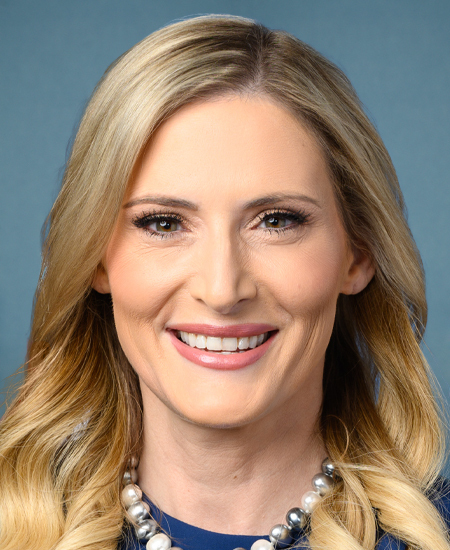
Rep. Laurel M. Lee
Sponsored bills
Maddy summaryThis bill, titled the Restore Florida Water Independence Act of 2026, aims to streamline environmental permitting for the State of Florida by recognizing a specific federal biological opinion as fully compliant with the Endangered Species Act. By deeming this existing document sufficient, the legislation eliminates the need for additional federal consultations regarding dredge and fill projects under the Clean Water Act. The primary effect is to allow the Environmental Protection Agency to approve Florida's request to manage its own state-level permitting program without further federal oversight on these specific environmental matters.
Maddy summaryHR 5267, the American Franchise Act, clarifies when franchisors can be considered joint employers of franchisee employees under federal labor laws. It defines "substantial direct and immediate control" over essential employment terms like wages, benefits, hours, hiring, and discipline - requiring franchisors to actively set these terms to be deemed joint employers. The bill explicitly excludes routine brand standards, training, or minimal safety requirements from constituting such control. This directly affects franchisors and franchisees by limiting joint employer liability to cases where franchisors exert significant, ongoing influence over core employment decisions. The law applies prospectively to new cases after enactment, not past disputes.
Maddy summaryThe FEMA for Safe Recovery Act requires the Federal Emergency Management Agency to issue regulations within one year that prevent gender-based violence, human trafficking, and sexual exploitation during disaster response and recovery operations. Key provisions include establishing joint federal and local coordination centers, improving staff stability in shelters, and creating non-adjudicatory reporting mechanisms for abuse by housing providers. The bill also mandates that all FEMA employees receive training on identifying and referring victims of these crimes, while ensuring that state and local governments retain the authority to implement stricter protections or manage their own emergency systems.
Maddy summaryThe Ballots by Election Day Act would amend federal election laws to require that all ballots for Federal office, including absentee and mail-in votes, be received by election officials no later than the time polls close on Election Day. This change directly affects voters in states that currently allow ballots postmarked before the deadline but received afterward to be counted. The bill creates a specific exception for uniformed service members and overseas citizens, whose ballots would not be subject to this strict receipt deadline. These new rules would apply to Federal elections held in 2027 and any subsequent years.
Maddy summaryThis bill designates a 34-mile segment of the Myakka River in Sarasota County, Florida, as part of the National Wild and Scenic Rivers System. It classifies specific river segments as "wild" (11.2 miles), "scenic" (multiple segments totaling 22.9 miles), or "recreational" (1.5 miles), based on their natural character. The bill establishes cooperative management through the existing Myakka River Management Coordinating Council and prohibits the Secretary of the Interior from administering the river as a National Park System unit or using land condemnation. It requires the Secretary to work with Florida and local entities to implement a management plan already developed under state law, without altering current land ownership or management authority.
Maddy summaryThe Right to Worship Act makes it unlawful for individuals to knowingly disrupt religious services or prevent people from entering houses of worship within 100 feet of an entryway during the hour before and after a scheduled service. The bill applies to conduct that meaningfully interferes with a service's normal operation or unreasonably hinders participation, while explicitly allowing free speech as long as it adheres to these specific time, place, and manner restrictions. Violators face escalating civil fines ranging from $2,500 for a first offense to $10,000 for subsequent offenses, assessed by the Attorney General. Additionally, the act permits aggrieved individuals, the U.S. Attorney General, or state attorneys general to file civil lawsuits seeking injunctive relief, compensatory damages, and attorney fees.
Maddy summaryHR 7008, the Stop Insider Trading Act, restricts Members of Congress, their spouses, and dependent children from purchasing certain investments like stocks in publicly traded companies. It requires 7-14 days' advance public notice before selling any such investment, including the sale date, description, and number of shares. Exceptions apply for work-related transactions (e.g., employer compensation) and reinvesting dividends. Violations trigger a fee of $2,000 or 10% of the investment’s value (whichever is greater), plus any net gain, paid from personal funds - not congressional allowances or campaign donations. The bill aims to prevent conflicts of interest by increasing transparency around congressional financial dealings.
Maddy summaryThe Stealth Bot Prohibition Act makes it illegal to use automated software, known as stealth bots, to access websites without revealing their identity or purpose. Specifically, the law bans deploying these bots in ways that harm online services and prohibits disguising them as human users when interacting with generative artificial intelligence systems. Violations can result in civil penalties of up to $53,000 per incident, which are enforced by the Federal Trade Commission and state attorneys general. The bill defines a stealth bot as any program that scrapes or scans the internet without disclosing its nature or intended use to the website operator.
Maddy summaryThis bill directs the Attorney General to create guidance for local and state governments on establishing voluntary registries for individuals at risk of receiving false emergency calls, commonly known as swatting. The guidance will outline best practices for data privacy, secure technology integration, and training law enforcement to use registry information to de-escalate dangerous situations without mandating a federal registry. Additionally, the bill allows the Justice Department to provide technical assistance and funding to help communities implement these safety measures while ensuring that participation remains optional and that officer safety is not compromised.