Maddy summaryThe Ending Restaurant Purchases with SNAP Act of 2026 would prohibit the use of Supplemental Nutrition Assistance Program (SNAP) benefits to buy meals at restaurants and other private food service establishments. The bill achieves this by removing specific legal provisions from the Food and Nutrition Act of 2008 that currently allow states to run optional restaurant programs for eligible groups such as the elderly, disabled, and homeless individuals. If enacted, these changes would take effect 180 days after the date of enactment, directly affecting SNAP recipients who rely on these state-level options for dining out.
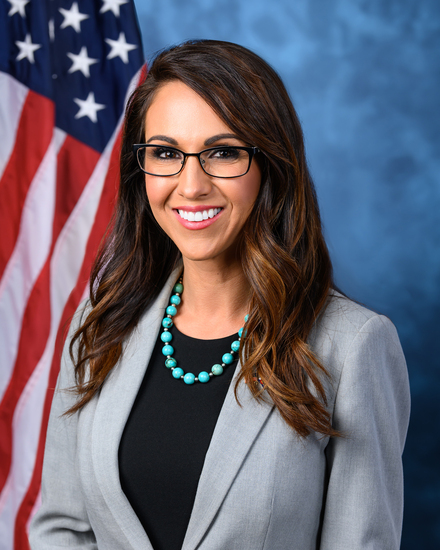
Rep. Lauren Boebert
Sponsored bills
Maddy summaryThe Kids Safety on Set Act of 2026 mandates that adults with supervisory roles or frequent private contact with minors on entertainment productions must pass a criminal background check within 90 days before starting work. This check, which costs no more than $100 and is paid by the production company, specifically screens for offenses involving sex, violence, stalking, or minors. If a production employs someone who fails to meet this requirement, the Attorney General can seek a civil penalty of up to twice the cost of that person's project involvement. Additionally, the law requires an immediate halt to all production activities involving the non-compliant employee until they are terminated and stripped of any ownership interest greater than 2 percent in the project.
Maddy summaryThe Flock-Off Act prohibits federal agencies, state and local governments, and other recipients of federal funds from using federal money to purchase, operate, or maintain automated camera systems that capture biometric data or license plate information. The bill requires these entities to remove any existing covered camera systems within 180 days of enactment, with violations resulting in the withholding of further federal funding until reimbursed. Specific exceptions allow for the continued use of such systems within one mile of the U.S. borders for security purposes and on toll roads strictly for toll collection and enforcement.
This resolution states that the House of Representatives condemns and denounces socialism in all its forms, including the Democratic Socialists of America, and opposes the implementation of socialist policies in the United States; reaffirms its support for free, fair, and secure elections and calls for enactment of the SAVE America Act; reiterates that American elections are for American citizens only; and recommits itself to upholding the U.S. Constitution.
Maddy summaryH.Res. 1497 is a House resolution that commemorates the fifth anniversary of the Abbey Gate bombing, in which 13 U.S. servicemembers were killed during the withdrawal from Afghanistan. The bill lists the names of the fallen soldiers and formally condemns the Biden-Harris administration for what it describes as dereliction of duty and the forfeiture of military property to the Taliban. It asserts that the withdrawal was a disastrous failure that ignored security warnings and left Americans at risk, while also criticizing the lack of accountability from officials involved in the decision-making process.
Maddy summaryThe Advancing Botanical Drug Development Act of 2026 extends the market exclusivity period for new FDA-approved botanical drugs from five years to twelve years. This change directly affects pharmaceutical companies and other sponsors that develop plant-based medicines, providing them with a longer window of protection against generic competitors. The bill aims to offset the high costs and unique manufacturing challenges associated with developing these complex therapies by offering stronger financial incentives. By securing this extended exclusivity, the legislation seeks to encourage private investment in research for multi-target treatments of chronic and age-related diseases.
Maddy summaryHR 7487, the Rural Jobs and Hydropower Expansion Act, expands hydropower development opportunities on Bureau of Reclamation water projects. It removes restrictions that previously limited hydropower to "small conduit" systems or pumped storage, now allowing all types of hydropower projects using Bureau facilities. The bill clarifies definitions for "transferred works facilities" (operated by non-federal entities) and "reserved works facilities," and updates rules for Federal Energy Regulatory Commission (FERC) authorizations to remain active until expired or renewed. This directly affects developers seeking to build hydropower projects on federal water infrastructure managed by the Bureau of Reclamation.
Maddy summaryThis bill, titled the Permanent CBDC Ban Act, aims to permanently prohibit the Federal Reserve from issuing a central bank digital currency. It achieves this by amending the Federal Reserve Act to remove the specific legal authority that allows the Reserve to create such a digital currency. The legislation directly affects the Federal Reserve by stripping away its power to launch a digital version of the dollar. By deleting the relevant subsection of the law, the bill ensures that the Reserve cannot issue a CBDC in the future.
Maddy summaryThe Freedom to Ship Act prohibits motor carriers from discriminating against the lawful transportation of firearms, ammunition, and related components across state lines. It specifically bans carriers from refusing to transport these items, imposing unreasonable conditions, charging higher fees than for similar goods, or forcing shippers to waive privacy protections. Violations can result in civil penalties of up to $10,000 per incident and allow harmed shippers to sue for damages. The bill also repeals an existing federal statute that previously allowed carriers to refuse such shipments based on state laws.
Maddy summaryThis bill, known as the Trump-Reagan Election Enforcement Act, would require all U.S. states to implement strict new rules proving U.S. citizenship for anyone registering to vote in federal elections. Under the proposed law, states that fail to enforce these specific documentation requirements by fiscal year 2027 would face federal funding penalties, with 10 percent of certain transportation funds withheld initially and an additional 5 percent cut each subsequent year. The legislation mandates that applicants provide specific documents like a passport or certified birth certificate, requires states to actively remove noncitizens from voter rolls, and allows private lawsuits or criminal charges against election officials who register ineligible individuals.