Issue · Budget & Taxes

Budget & Taxes (Property Tax)

Every budget & taxes bill, vote, and legislator stance in Wyoming, automatically classified by Maddy, our AI policy reader.

Total bills
5
2026 Regular Session
Top supporter
J.D. Williams
82% support rate
Top opponent
Nina Webber
9% support rate
Ranked legislators
10
5 support · 5 oppose
Key legislators

Who's moving property tax in Wyoming

Legislators moving property tax in Wyoming
Legislator Party Stance Support rate Votes
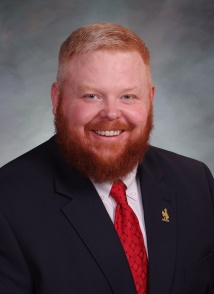
J.D. Williams
J.D. Williams House · District 2
R
Strong +
82% 11
Cody Wylie
Cody Wylie House · District 39
R
Strong +
80% 10
J.T. Larson
J.T. Larson House · District 17
R
Support
78% 9
Brian Boner
Brian Boner Senate · District 2
R
Support
75% 4
Bob Davis
Bob Davis House · District 47
R
Support
73% 11
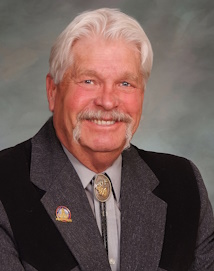
Nina Webber
Nina Webber House · District 24
R
Strong −
9% 11
Reuben Tarver
Reuben Tarver House · District 52
R
Strong −
9% 11
Darin McCann
Darin McCann House · District 48
R
Strong −
11% 9
Ann Lucas
Ann Lucas House · District 43
R
Strong −
18% 11
Daniel Singh
Daniel Singh House · District 61
R
Strong −
18% 11
Showing 5 of 5 bills

All budget & taxes bills

died · Wyoming · House Mar 4, 2026

HB 127: Voter approval for recreation mill levy.

HB 127 requires voter approval before school districts or county commissioners in Wyoming can impose new mill levies for recreational facilities and public recreation systems. It limits new levies to one mill (one dollar per $1,000 of assessed property value) and mandates that any new levy must be approved by a majority vote at the same election as the general election. The levy would expire after four years unless reapproved by voters at subsequent general elections held every four years. Existing levies not approved by voters before December 31, 2028, would also expire. This directly affects local governments seeking to fund recreation programs through property taxes.
Sub-Topics Property Tax Tags Local Government
failed · Wyoming · House Feb 10, 2026

HB 124: Property tax exemption reduction.

HB 124 would have reduced property tax exemptions for single-family homeowners in Wyoming by lowering the percentage used to calculate the exemption from 4% to 2% of the prior year's assessed value. This change would apply to both the home structure and associated land, resulting in a smaller tax break for qualifying homeowners as their exemption amount would decrease. The bill, which failed to pass in the Wyoming House of Representatives on February 10, 2026, was scheduled to take effect on July 1, 2026. It directly affects residential property owners who currently qualify for this exemption under Wyoming law.
failed · Wyoming · House Feb 9, 2026

SJ 3: Residential property tax-constitutional amendment.

This bill proposes amending Wyoming's constitution to eliminate property taxes on residential homes. It would change Article 15, Section 11(b) to set the tax rate for residential property at 0%, meaning no property tax would be assessed on residential real estate. The amendment requires voter approval at the next general election to take effect. It directly affects all Wyoming homeowners who currently pay property tax on their primary residences.
died · Wyoming · House Feb 23, 2026

HB 109: Property tax exemptions-application date.

Wyoming's HB 109 changes the rules for claiming the homeowner property tax exemption. Starting in 2026, homeowners must actually live in their primary residence for at least eight months each year to qualify, unless they or an immediate family member are active-duty military personnel whose service prevents meeting this requirement (in which case the property must be their legal home address). Homeowners must submit exemption claims to their county assessor by May 2 each year. The bill applies to tax years beginning January 1, 2026, and modifies existing law (W.S. 39-11-105(a)(xlvi)).
introduced · Wyoming · House Feb 14, 2026

HB 58: Voter approval for mill levy imposition.

HB 58 requires voter approval for new mill levies imposed by school districts and educational boards for recreational facilities, cooperative education services, and special school taxes. Before any new levy can be implemented, a proposition must be submitted to voters at the general election, requiring majority approval. Approved levies would last four years and require renewal votes at the second general election every four years. This bill applies only to new levies; existing levies are unaffected by this requirement.
Sub-Topics Property Tax