Issue · Housing

Housing

Every housing bill, vote, and legislator stance in West Virginia, automatically classified by Maddy, our AI policy reader.

Total bills
64
2026 Regular Session
Top supporter
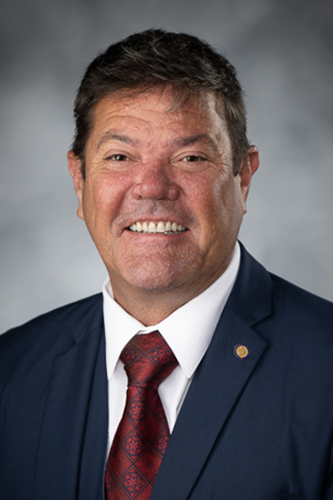
J.B. Akers
100% support rate
Top opponent
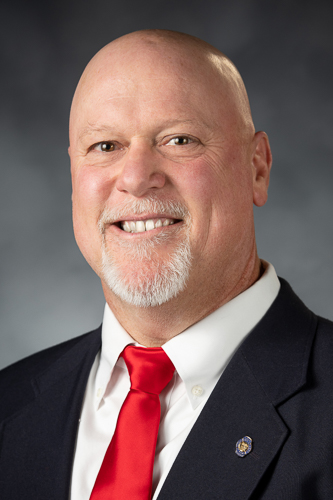
George Street
20% support rate
Ranked legislators
10
5 support · 5 oppose
Key legislators

Who's moving housing in West Virginia

Legislators moving housing in West Virginia
Legislator Party Stance Support rate Votes
J.B. Akers
J.B. Akers House · District 55
R
Strong +
100% 20
Mark Dean
Mark Dean House · District 34
R
Strong +
100% 17
Lisa White
Lisa White House · District 96
R
Strong +
100% 20
Mike Hornby
Mike Hornby House · District 93
R
Strong +
100% 20
Bill Bell
Bill Bell House · District 8
R
Strong +
100% 20
George Street
George Street House · District 83
R
Strong −
20% 17
Marty Gearheart
Marty Gearheart House · District 37
R
Strong −
20% 20
Wayne Clark
Wayne Clark House · District 99
R
Strong −
20% 19
Dave Foggin
Dave Foggin House · District 14
R
Strong −
20% 20
Buck Jennings
Buck Jennings House · District 84
R
Oppose
40% 19
Showing 21–30 of 64 bills

All housing bills

in committee · West Virginia · House of Delegates Feb 10, 2026

HB 5425: Relating to acquisitions of properties by land reuse agencies and urban renewal authorities.

HB 5425 amends West Virginia law to clarify how urban renewal authorities and land reuse agencies can acquire property. It specifically allows these agencies to purchase tax-delinquent properties meeting certain criteria (such as being valued under $100,000, vacant for 24+ months, or having municipal liens exceeding back taxes) with priority over other buyers. The bill requires municipalities to provide lists of qualifying properties to agencies and grants them the right to buy these properties by paying outstanding taxes. This directly affects urban renewal authorities, municipalities, and property owners with tax-delinquent properties in redevelopment zones.
in committee · West Virginia · House of Delegates Feb 13, 2026

HB 5526: Clarifying Purchaser Requirements for Tax Abandoned Land Auctions by the Auditor

HB 5526 clarifies rules for purchasing tax-abandoned land at public auctions held by West Virginia's State Auditor. It requires all bidders - individuals and businesses - to register in advance or submit a notarized affidavit confirming eligibility, with disqualifications for those with unpaid taxes, code violations, or prior auction defaults. The bill specifically allows 501(c)(3) nonprofit housing organizations to win auctions if their bid is no more than 5% below the highest non-profit bid, excluding for-profit entities or religious groups. It also mandates that businesses (foreign or domestic) must provide proof of valid registration to participate in these land sales.
in committee · West Virginia · House of Delegates Feb 13, 2026

HB 5509: Mountain Homes Act

HB 5509, the Mountain Homes Act, establishes a state-funded program to support housing construction for workers in West Virginia as the state's economy diversifies beyond energy. The bill creates the Mountain Homes Fund, which will provide financial assistance for new housing projects targeting the workforce needed to support businesses and economic development. Applicants must meet specific eligibility criteria and submit detailed applications, with the Department of Economic Development administering the fund and reporting to the legislature on its use. The program aims to remove funding barriers for housing construction, directly benefiting workers and businesses by improving housing availability in growing economic sectors.
in committee · West Virginia · Senate Feb 21, 2026

SB 1047: Establishing Community Well-Being, Recovery Housing, and Family Stabilization Act

SB 1047 creates a non-criminal system to address homelessness, addiction, and mental health challenges by requiring law enforcement to issue verbal warnings, then written warnings, and finally refer individuals to community behavioral health centers after three encounters - replacing arrests or citations. The bill sets standards for recovery housing to be substance-free, trauma-informed, and long-term, with specific provisions for family recovery housing supporting pregnant women and mothers with children. It prohibits criminalizing homelessness or addiction, integrates community behavioral health centers with recovery housing services, and mandates an annual report from a state advisory team, all using existing state resources without new funding. The law takes effect on July 1, 2026.
in committee · West Virginia · Senate Feb 25, 2026

SB 725: Creating First-Time Home Buyer Savings Account Act

SB 725 creates a tax-advantaged savings account program for first-time homebuyers in West Virginia. It allows eligible residents (those who haven't owned a home in 3 years) to contribute to a savings account, with contributions reducing their taxable income for state tax purposes. Funds can only be used for down payments and closing costs toward purchasing a qualifying single-family residence (including condos or manufactured homes) in West Virginia. Account holders are limited to one account, and early withdrawals for non-eligible purposes incur penalties. The program applies to West Virginia residents filing state income tax returns.
in committee · West Virginia · House of Delegates Feb 16, 2026

HB 5603: To fine and hold legally responsible land owners from out of state who neglect their land

HB 5603 requires out-of-state landowners (those with primary residence or business outside West Virginia) to register their West Virginia properties with local authorities within 60 days of purchase, providing a physical address, in-state agent, and contact details. If a property is deemed dilapidated (unsafe, code-violating, or vacant over 12 months), local authorities must issue a 30-day notice for repairs, with failure to fix resulting in escalating fines: $15,000 for the first 30 days, doubling every subsequent 30 days. Each month of noncompliance is treated as a separate violation, with penalties accruing automatically. The bill targets out-of-state owners of neglected properties, aiming to address public safety hazards and reduce local government burdens from unremedied properties.
in committee · West Virginia · House of Delegates Feb 12, 2026

HB 5460: Construction Cost Relief Act

HB 5460, the Construction Cost Relief Act, provides a sales tax rebate for construction materials used in new single-family homes built for residential ownership in West Virginia. The rebate covers up to 30% of the home's sale price (or construction loan amount if the builder occupies the home), calculated using a county-specific housing index relative to the state average. Homeowners and builders must claim the refund within one year of construction completion using state forms, and the refund cannot be transferred to another party. This law applies only to new construction starting on or after July 1, 2026.
in committee · West Virginia · Senate Feb 9, 2026

SB 869: Creating WV Housing Stability Fund

This bill creates the West Virginia Housing Stability Fund to provide housing vouchers and utility bill assistance to families and children facing housing instability. Administered by the Department of Human Services, the fund will receive state appropriations, grants, donations, and investment income to disburse grants to child welfare agencies, housing authorities, and qualifying nonprofits. These organizations will use the funds to directly provide housing assistance vouchers and utility bill help to eligible residents, targeting those at risk of homelessness or unsafe living conditions. The legislation aims to reduce evictions, child welfare referrals, and foster care placements by addressing housing costs and utility affordability.
Sub-Topics Homelessness
passed · West Virginia · House of Delegates Feb 25, 2026

HB 4537: Requiring municipalities take action when potential customers apply for water and sewer service.

HB 4537 requires West Virginia municipalities and public service districts to determine the cost of extending water or sewer service to new customers and apply for state infrastructure grants to cover these costs. If grants are approved, the municipality must extend service after customers pay required fees, and grant funds must reimburse customers for upfront costs like application fees and service extension contributions. This directly affects potential customers seeking new service connections and municipalities managing utility infrastructure. The bill streamlines access to state funding to reduce customer financial barriers for service extensions.
Tags Local Government
in committee · West Virginia · Senate Jan 28, 2026

SB 396: Creating WV Job training and Placement Act

SB 396 creates the West Virginia Job Training and Placement Act, allowing certified retailers (specifically "workforce training community centers" meeting strict criteria) to keep 75% of sales tax revenue collected after their first $1 million in annual sales. These retailers must use the retained funds exclusively to provide job training and placement services for people facing barriers to employment, such as disabilities, criminal records, homelessness, or low education. The law requires certified organizations to serve at least three people per $10,000 retained, with an average of 2.25 successful job placements, and to monitor job retention for 90 days. Certification lasts three years, with renewal possible, and organizations must report usage to the state Department of Revenue.
Showing 21 to 30 of 64 bills
Previous 1 2 3 4 7 Next