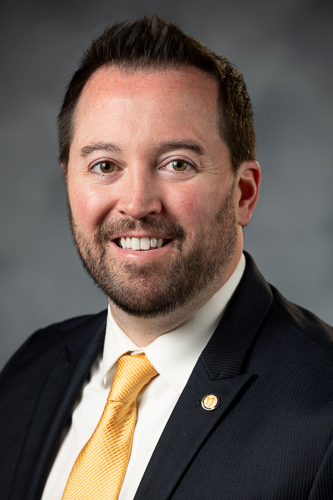
This bill requires West Virginia's State Treasurer to participate in a federal tax credit scholarship program. Specifically, the Treasurer must annually identify and publish a list of qualified nonprofit scholarship organizations operating in the state by December 1st, accept applications year-round for inclusion on this list, and certify the list for federal submission. It defines eligible schools (meeting existing WV requirements) and students (eligible for public school enrollment), allowing scholarship funds to cover standard K-12 education expenses under federal rules. The bill directly affects the State Treasurer's office, scholarship organizations seeking to participate, and students receiving scholarships under the program.
SB 802 requires West Virginia public schools to schedule two "Leave Teachers Alone" days before the school year begins, which teachers can use for activities that improve instruction. The bill prohibits county boards from requiring teachers to use school preparation days (for opening and closing) for any purpose other than those specific tasks. These changes directly affect public school teachers and county boards of education across West Virginia. The bill amends the state's school calendar law to give teachers more autonomy over professional development time without administrative mandates.
This bill adds "educational leave days" to West Virginia's list of excused absences, allowing up to five days per school year for approved educational activities (like field trips or workshops). Parents must submit a note within three days explaining the purpose, and schools can reject days that don't meet state-defined criteria. It directly affects students, parents, and school staff managing attendance records. The bill also clarifies that 4-H, FFA, and similar activities already count toward the existing 10-day limit for school-approved activities, so they aren't subject to the new educational leave cap.
Senate Bill 925 modifies West Virginia's school attendance law to exempt Future Farmers of America (FFA)-sanctioned activities from the 10-day annual limit on excused absences. It directly affects West Virginia students participating in FFA events, ensuring these absences are counted as excused without reducing their annual excused absence allowance. The bill requires schools to mark students present for FFA activities (like they would for field trips), mandates documentation from FFA, and requires students to make up missed work without grade penalties. It aligns FFA with existing exemptions for 4-H, SkillsUSA, and similar programs under the same attendance rules.
SB 633 modernizes West Virginia's Commission on Holocaust Education by updating its membership structure and governance. The bill replaces outdated provisions relying on Holocaust survivors (many now deceased) with a new framework allowing commission-appointed voting members and non-voting student advisory members, while explicitly requiring Holocaust education to remain the commission's sole purpose. It strengthens safeguards to protect historical accuracy and ensures the commission continues providing centralized educational resources for schools, churches, and communities studying the Holocaust. These changes aim to maintain the commission's mission as a permanent statewide resource for Holocaust education amid evolving circumstances.
This bill establishes the West Virginia Professional Charter School Board and sets specific qualifications for its appointed voting members. It requires board members to be state citizens with experience in public or nonprofit governance, school leadership, or education law, while also mandating geographic diversity and limiting political party representation to no more than three members. The legislation also creates conflict-of-interest rules that prevent appointments for individuals currently employed by charter schools or companies serving them, and it defines the board's duties including authorizing charter schools, investigating complaints, and conducting audits.
SB 388 requires all public elementary and secondary schools in West Virginia to make the Aitken Bible available in fourth, eighth, and 10th grade social studies classrooms. Schools may only use private donations to obtain the Bible - public funds cannot be used for this purpose. The bill explicitly applies to public charter schools authorized under West Virginia law. This legislation mandates the availability of the Aitken Bible in specified grades while restricting funding sources for its distribution.
SB 445 adds Potomac State College of West Virginia University as an eligible institution for West Virginia's Learn and Earn Program, making its participation permanent instead of temporary. The bill removes the previous "pilot program" designation for Potomac State, which had limited eligibility through the 2025-2026 academic year. The Learn and Earn Program allows students in technical programs to work with participating employers while studying, requiring employers to provide a dollar-for-dollar cash match (not in-kind contributions) for student salaries. This change directly affects Potomac State College students and employers partnering with the college to offer paid work-study opportunities.