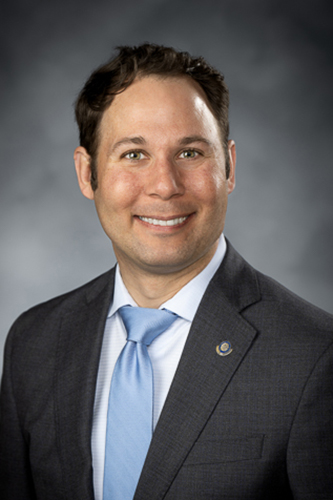
Key legislators
Who's moving education in West Virginia
Showing 4 of 4
bills
All education bills
SB 841 adds $30,498 to the State Board of Education's fund 3951 for the Hope Scholarship Program, using an unappropriated surplus from lottery net profits. This supplemental appropriation allocates existing lottery revenue - specifically from the surplus balance not included in the initial budget - to fund the Hope Scholarship Program during fiscal year 2026. The bill does not change the program's eligibility or structure but provides additional funding for student scholarships. The funds are designated for expenditure before June 30, 2026, as part of the state's budget process.
This bill (SB 814) allocates $70,357,538 in unappropriated surplus funds from the State General Revenue Fund to the Hope Scholarship Program under the State Board of Education. It directly affects the Hope Scholarship Program by providing supplemental funding for fiscal year 2026. The bill does not change program rules or eligibility - it simply reallocates existing surplus funds to cover program costs. This is a routine budget adjustment, not a new policy.
HB 5453 modifies West Virginia's school funding formula, shifting to a block grant of $6,100 per student for county school districts starting in 2029-2030 (with a minimum 1,200-student threshold per county), while public charter schools receive $8,600 per student. It creates a "Supplemental School Aid Fund" to provide additional per-pupil funding for Tier II ($3,050) and Tier III special needs students beginning in 2029-2030. School districts may also request supplemental funding for specific needs like transportation, vocational centers, or pilot programs through this fund. The bill requires annual oversight reports by the Legislative Oversight Commission on Education Accountability and defines "maladministration" as financial mismanagement that could trigger funding restrictions.
HB 5106 allows the Cabell County Board of Education to provide funds from its special and excess levies to the Greater Huntington Park and Recreation District. This would give the park district an additional funding source for maintaining parks and recreational facilities, using money currently collected for educational purposes. The park district must submit a written request for these funds, and the school board would then decide whether to transfer them. The bill does not require the school board to provide funds, only authorizes the option.