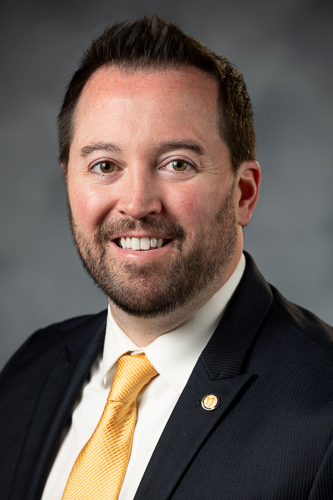
HB 5048 ensures foster children in temporary care facilities continue their education through virtual learning while awaiting residential placement. It requires that virtual instruction occur in the county where the child was last enrolled (or the current county if unavailable, or the nearest capable county), and mandates that virtual learning begins within three days of placement in temporary care. Foster care agencies responsible for the child must receive IT training to support this transition. Once placed with a foster family, all educational records and virtual learning details are transferred to the new county and foster family. The bill directly affects foster children in temporary care and the agencies managing their placement.
HB 4087 establishes the West Virginia-Ireland Education Alliance Partnership to strengthen academic, cultural, and workforce connections between West Virginia and Ireland. It creates a formal partnership requiring five four-year universities and five two-year colleges in West Virginia to collaborate with Irish institutions. The bill provides for five $50,000 grants to fund joint programs between these institutions. This partnership is governed by a commission with specific membership rules, including legislative and community representatives. The bill directly affects West Virginia higher education institutions and their Irish counterparts through structured collaboration and grant opportunities.
HB 4765 increases annual base salaries for West Virginia State Police officers, public school teachers, school service personnel, and forensic laboratory staff, effective July 1, 2026. The bill establishes specific salary schedules for police ranks (e.g., troopers, sergeants, captains), school personnel, and forensic roles (e.g., evidence custodians, forensic scientists), with detailed pay tables showing incremental increases. It directly affects over 10,000 state employees across law enforcement, education, and forensic services. The legislation provides fixed annual salary adjustments based on position and length of service, with no additional provisions beyond these compensation changes.
HB 4005, "Skills to Work," creates a state-funded Youth Apprenticeship Program for West Virginia students aged 16 or older in 11th or 12th grade. It allows these students to earn high school credit and job skills certifications through structured apprenticeships in fields like manufacturing, healthcare, and office technology, requiring 135 classroom hours and 400 on-the-job training hours per program. The bill mandates schools to partner with employers to develop approved apprenticeships, with standards including progressive wages, performance evaluations, and school approval. It also clarifies that apprenticeships cannot include hazardous occupations prohibited for minors under federal and state child labor laws. The program must be fully implemented across all school systems by the 2025-2026 school year.
HB 4028 exempts construction contractors from West Virginia's sales and use taxes on building materials and services used for constructing, repairing, or improving public elementary, secondary, or vocational school facilities. This applies to materials permanently installed in school buildings (like framing, wiring, or plumbing), but excludes tools, equipment, gasoline, or motor vehicle purchases. The bill directly affects contractors working on public school projects by reducing their costs for qualifying materials. It clarifies that this exemption applies to both state-level and municipal sales taxes on eligible school construction work. The policy change takes effect July 1, 2026, with no new revenue impact on the state.
HB 4575 transfers $8 million from the State Fund's unappropriated surplus balance to the State Board of Education's Temporary Shortfall Supplement Fund for County Boards of Education. This supplemental appropriation directly affects county school districts in West Virginia by providing funds to address budget shortfalls, as authorized under W. Va. Code §18-2E-5b. The bill amends the fiscal year 2026 appropriations for the State Board of Education (Fund 0313) by adding a new line item for this specific purpose. It does not create new policy but reallocates existing state funds to support local school district budgets.
SB 841 adds $30,498 to the State Board of Education's fund 3951 for the Hope Scholarship Program, using an unappropriated surplus from lottery net profits. This supplemental appropriation allocates existing lottery revenue - specifically from the surplus balance not included in the initial budget - to fund the Hope Scholarship Program during fiscal year 2026. The bill does not change the program's eligibility or structure but provides additional funding for student scholarships. The funds are designated for expenditure before June 30, 2026, as part of the state's budget process.
SB 871 allocates $12.66 million from West Virginia's Excess Lottery Fund to the Hope Scholarship Program for fiscal year 2026. This supplemental appropriation adds a new funding line (Fund 3517) to the State Board of Education's budget, directing unappropriated lottery surplus funds toward scholarship payments. The bill does not change program eligibility, rules, or structure - it only provides additional funding for existing scholarship disbursements. It is a procedural budget adjustment, not a new policy.
SB 890 changes West Virginia's public school calendar requirements from day-based to hour-based standards. It replaces the 180-day instructional requirement with a minimum of 900 instructional hours per year and changes the teacher employment term from 200 days to 1,600 hours. The bill allows counties to use up to 25 hours of alternative instruction (like remote learning during closures) toward the total hour requirement and permits flexible scheduling for educator development time. These changes directly affect all public school districts, teachers, and students in West Virginia by shifting how school calendar compliance is measured.
SB 899 allows teachers with 15 years of experience at a specific school level (elementary, middle, or high) to become certified school principals without traditional administrative coursework. Instead, they must complete a year-long program developed by the West Virginia Department of Education, covering school administration topics like instructional leadership and finance. The bill applies directly to current teachers seeking principal roles in schools matching their teaching experience level. This change takes effect July 1, 2026, replacing previous education requirements for principal certification. The policy aims to create a new pathway for experienced educators to transition into school leadership.