Issue · Criminal Justice

Criminal Justice (Corrections)

Every criminal justice bill, vote, and legislator stance in West Virginia, automatically classified by Maddy, our AI policy reader.

Total bills
50
2026 Regular Session
Top supporter
Elliott Pritt
100% support rate
Top opponent
Mickey Petitto
0% support rate
Ranked legislators
10
5 support · 5 oppose
Key legislators

Who's moving corrections in West Virginia

Legislators moving corrections in West Virginia
Legislator Party Stance Support rate Decisive votes
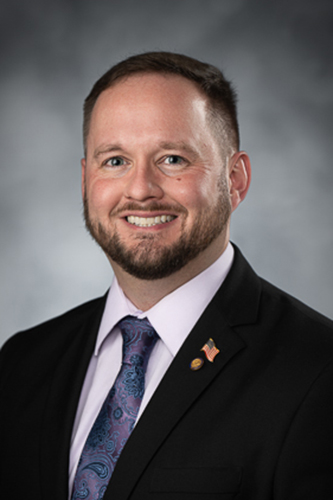
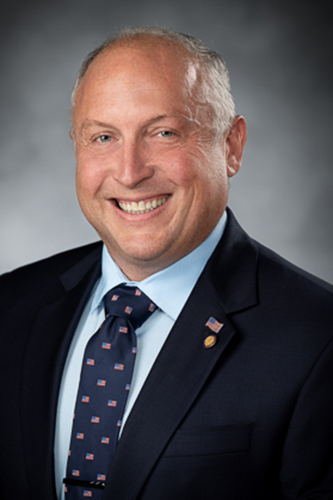
Elliott Pritt
Elliott Pritt House · District 50
R
Strong +
100% 3
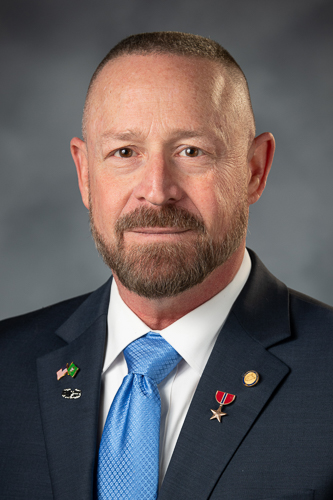
Doug Smith
Doug Smith House · District 39
R
Support
75% 4
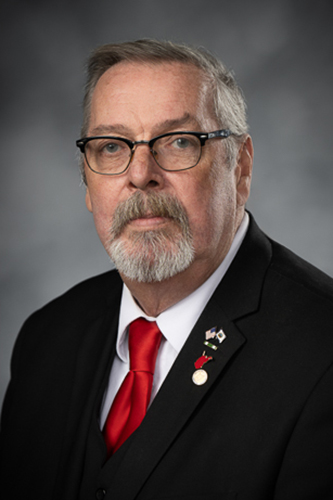
Jonathan Pinson
Jonathan Pinson House · District 17
R
Support
75% 4
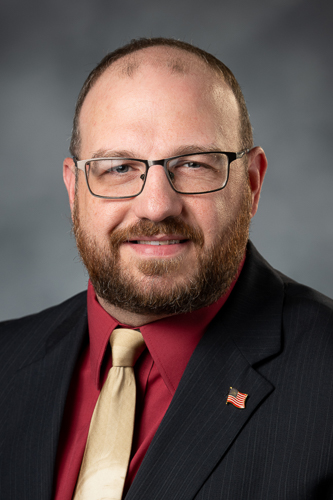
Margitta Mazzocchi
Margitta Mazzocchi House · District 31
R
Support
75% 4
Marshall Clay
Marshall Clay House · District 51
R
Support
75% 4
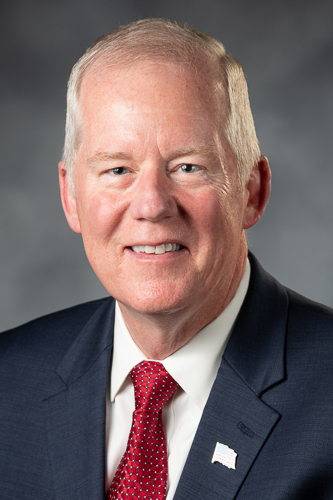
Mickey Petitto
Mickey Petitto House · District 70
R
Strong −
0% 3
Adam Vance
Adam Vance House · District 35
R
Oppose
25% 4
Bill Anderson
Bill Anderson House · District 10
R
Oppose
25% 4
Bill Flanigan
Bill Flanigan House · District 4
R
Oppose
25% 4
Bob Fehrenbacher
Bob Fehrenbacher House · District 11
R
Oppose
25% 4
Showing 31–40 of 50 bills

All criminal justice bills

in committee · West Virginia · Senate Jan 15, 2026

SB 425: Requiring minimum time be served for first degree murder before parole eligibility

This bill changes the parole rules for individuals convicted of first-degree murder who receive a life sentence with parole eligibility ("life with mercy"). It requires them to serve a minimum of 30 years in prison before becoming eligible for parole. The law directly affects those sentenced under West Virginia Code §61-2-2 for first-degree murder, specifically altering their parole timeline. This policy change eliminates early parole consideration for these offenders, mandating a 30-year minimum term before parole review.
in committee · West Virginia · House of Delegates Jan 29, 2026

HB 4966: Increase the penalty for adults who buy vapes and cartiges for underage children

HB 4966 increases penalties for adults who purchase tobacco products (including vapes and cartridges) for minors under 21. It directly affects adults who buy these products for underage children, not the minors themselves. The bill imposes a $500 fine for a first offense, with higher fines ($1,500-$5,000) for repeat violations within specific timeframes, and allows for jail time (up to 60 days) for third offenses. Retail employees who violate the law face non-criminal penalties like education programs instead of fines, while employers may terminate employees who sell to minors after prior written warnings.
signed · West Virginia · House of Delegates Jun 29, 2026

HB 4999: Relating to crimes against athletic officials

HB 4999 expands legal protections for both athletic officials (like referees) and participants (players) in West Virginia by making assault or battery against them a misdemeanor. It increases penalties: assault fines of $250-$500 with up to six months in jail, and battery fines of $500-$1,000 with up to one year in jail. The bill also allows school boards to ban convicted offenders from all school sports events for at least one year, with violating this ban treated as trespassing. However, it explicitly exempts normal sports actions - such as hard fouls within game rules - from prosecution.
in committee · West Virginia · House of Delegates Jan 22, 2026

HB 4758: Raise the Penalties for Murder and attempted Murder

HB 4758 modifies parole eligibility for individuals convicted of first-degree murder or attempted first-degree murder in West Virginia. It increases the minimum prison term for attempted first-degree murder from 3 to 10 years and requires inmates convicted of these offenses to serve a longer portion of their sentence before becoming parole-eligible. Specifically, these individuals must serve at least three years or the maximum sentence imposed (whichever is less) before parole consideration, rather than the previous standard terms. The bill directly affects inmates serving sentences for murder or attempted murder of the first degree.
in committee · West Virginia · House of Delegates Jan 21, 2026

HB 4671: Relating to illegal immigrants

HB 4671 requires West Virginia law enforcement to immediately transfer individuals determined to be in the country without legal immigration status to U.S. Immigration and Customs Enforcement (ICE) for deportation. For a second offense (if the same person is again found without legal status), the bill classifies it as a felony, mandating 3 to 5 years in state prison before deportation. The bill also prohibits state and local law enforcement from interfering with this process or overriding federal immigration policy. It directly affects individuals without legal immigration status who are apprehended by law enforcement in the state.
passed · West Virginia · Senate Mar 5, 2026

SB 590: Relating to exhibition of obscene material

Senate Bill 590 makes it a crime for performers to host adult cabaret shows - defined as performances featuring topless, go-go, exotic, or stripper dancers that appeal to prurient interest - where minors could view them, whether on public property or in accessible locations. Violating this law carries penalties: a first offense is a misdemeanor, while repeat offenses become felonies punishable by up to $25,000 fines, five years in prison, or both. The bill explicitly overrides any existing local ordinances about such performances. It directly affects venues and performers hosting these shows in public or viewable areas, ensuring uniform state-level enforcement.
Sub-Topics Corrections
in committee · West Virginia · House of Delegates Jan 14, 2026

HB 4041: Making it a mandatory 25 year sentence for an assault on any law enforcement or animal

HB 4041 proposes amending West Virginia law to establish mandatory minimum sentences for assaults on specific professionals acting in their official capacity. The bill would require a minimum 3-year prison term (up to 15 years) for malicious assaults on law enforcement officers, health care workers, emergency personnel, utility workers, or correctional employees, and a minimum 2-year term (up to 5 years) for unlawful assaults on these same groups. The bill's title incorrectly references "animal" and a 25-year sentence; the actual proposed penalties are 3-15 years for malicious assault and 2-5 years for unlawful assault. This is a proposed amendment (introduced January 14, 2026, to the Judiciary Committee) to West Virginia Code §61-2-10b, not yet enacted law.
in committee · West Virginia · House of Delegates Jan 16, 2026

HB 4434: Increasing penalties for Corruption

HB 4434 increases criminal penalties for bribery and corrupt practices in West Virginia. It upgrades violations of bribery provisions (Section 3) to a felony punishable by 1-10 years in prison or fines up to $250,000 for corporations, while misdemeanor violations (Sections 4-5) carry up to 1 year in jail or $105,000 in fines. All convicted individuals face permanent disqualification from holding any state office or government position. The bill also extends the statute of limitations for misdemeanor corruption cases to six years. This directly affects public officials, contractors, and others engaging in bribery or corrupt acts under state law.
Sub-Topics Corrections
in committee · West Virginia · Senate Jan 14, 2026

SB 140: Increasing penalty for voluntary manslaughter

Senate Bill 140 would increase penalties for voluntary manslaughter in West Virginia by raising the minimum prison sentence from 3 years to 5 years and the maximum from 15 years to 25 years. It also changes parole eligibility requirements, requiring convicted individuals to serve at least 5 years before becoming eligible for parole (previously 3 years). This bill directly affects people convicted of voluntary manslaughter under West Virginia law, altering their sentencing range and parole timelines. The change applies to all future convictions under this statute.
passed · West Virginia · House of Delegates Feb 17, 2026

HB 4997: Relating to residency restrictions for persons convicted of terroristic threats

HB 4997 prohibits individuals convicted of terroristic threats involving schools or children (under §61-6-24(b)) from residing within 1,000 feet of any educational facility, including public/private schools, preschools, or daycares where children are regularly present. This residency restriction applies automatically during probation or parole, or as a sentencing condition if no supervision is ordered. Violations are classified as felonies punishable by 1-5 years in prison, up to $10,000 in fines, or both, and may lead to revocation of probation. The bill uses GIS or property records to measure proximity and aligns with existing sex offender residency rules under §62-12-26.
Showing 31 to 40 of 50 bills
Previous 1 … 3 4 5 Next