Issue · Budget & Taxes

Budget & Taxes

Every budget & taxes bill, vote, and legislator stance in West Virginia, automatically classified by Maddy, our AI policy reader.

Total bills
460
2026 Regular Session
Top supporter
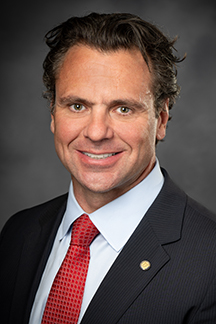
Ryan Browning
93% support rate
Top opponent
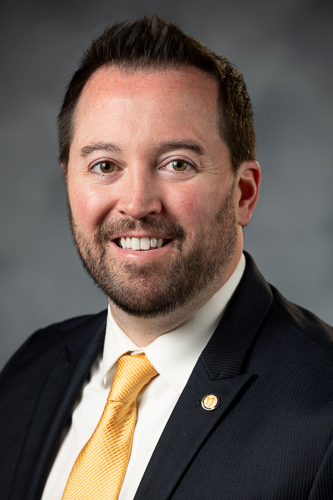
Corby Dillon
14% support rate
Ranked legislators
10
5 support · 5 oppose
Key legislators

Who's moving budget & taxes in West Virginia

Legislators moving budget & taxes in West Virginia
Legislator Party Stance Support rate Votes
Ryan Browning
Ryan Browning House · District 28
R
Strong +
93% 46
J.B. Akers
J.B. Akers House · District 55
R
Strong +
93% 48
Jonathan Pinson
Jonathan Pinson House · District 17
R
Strong +
93% 48
Chris Phillips
Chris Phillips House · District 68
R
Strong +
93% 48
Jordan Maynor
Jordan Maynor House · District 41
R
Strong +
93% 48
Corby Dillon
Corby Dillon House · District 29
R
Strong −
14% 47
Shawn Fluharty
Shawn Fluharty House · District 5
D
Oppose
31% 45
Marty Gearheart
Marty Gearheart House · District 37
R
Oppose
33% 37
Evan Hansen
Evan Hansen House · District 79
D
Oppose
40% 48
Mike Pushkin
Mike Pushkin House · District 54
D
Oppose
40% 48
Showing 351–360 of 460 bills

All budget & taxes bills

in committee · West Virginia · House of Delegates Jan 16, 2026

HB 4397: Relating to privilege tax on holding a license to operate interactive wagering

HB 4397 increases the state tax rate for licensed online gambling operators in West Virginia from 15% to 25% of their adjusted gross revenue from interactive wagering. This bill directly affects companies holding licenses to operate online lottery and gambling services in the state. The tax replaces all other state and local taxes on these operations (except property tax), and operators must pay weekly via electronic transfer. The bill also prohibits tax credits for investments in gaming equipment or property used for these services. This is a straightforward tax rate adjustment with no new program provisions.
Sub-Topics Property Tax
in committee · West Virginia · House of Delegates Jan 14, 2026

HB 4162: WV Economic Development and Property Revitalization Tax Credit

HB 4162 creates a tax credit program to encourage property rehabilitation in West Virginia. It provides businesses and property owners a 25% credit (up to $2 million) on eligible renovation costs or a 50% credit on increased property value (annual for 5 years), requiring a $50,000 investment, 30% value increase, and 5 years of active commercial use. Additional credits (up to 15% total) apply for projects in rural areas (population <50,000, high unemployment, or designated zones), brownfield sites, or registered historic properties. The program is budget-neutral, capped at $50 million annually, and requires annual reporting on investments, jobs created, and property use.
Sub-Topics Business Taxes Tax Credits Tax Incentives Tags Economic Development
in committee · West Virginia · House of Delegates Jan 20, 2026

HB 4619: Relating to the creation of a special revenue account to expand in-state residential treatment capacity for children

HB 4619 creates a special revenue account within West Virginia’s Department of Human Services to fund expanded in-state residential treatment capacity for children, directly targeting youth currently placed out-of-state (over 10% of children in care). It establishes a Commission composed of agency leaders and stakeholders to study current placement practices, in-state facility capacity, and strategies to reduce out-of-state placements - focusing on older youth in juvenile justice systems. The Commission must develop recommendations on improving collaboration between child-serving agencies, promoting community-based alternatives, and making in-state placement availability accessible via an online system. These recommendations will guide future funding decisions and policy changes to build a more integrated, cost-effective system for at-risk children and families.
in committee · West Virginia · House of Delegates Jan 14, 2026

HJR 14: Eliminate the exchanging of funds for paying personal property taxes

This House Joint Resolution proposes a constitutional amendment to allow West Virginia's Legislature to exempt certain business property from ad valorem property taxes. Specifically, it would enable future laws to exclude tangible machinery/equipment, business inventory, and business-use motor vehicles from property tax assessments. The amendment requires voter approval at the 2026 general election to take effect. If passed, it would change how the state taxes business assets, potentially reducing tax burdens for qualifying businesses. This is a procedural constitutional change, not an immediate tax law.
in committee · West Virginia · House of Delegates Jan 15, 2026

HB 4035: Relating to providing a credit against the business and occupation tax imposed on coal-fired electric generating units to help off-set environmental compliance costs

HB 4035 provides a 35% tax credit against West Virginia's business and occupation tax for coal-fired electric power plants that spend on pollution control equipment. It directly affects coal-fired power plants operating in West Virginia (excluding those exempt from the tax), covering costs for installing, repairing, or maintaining equipment to meet environmental regulations like air/water pollution controls or carbon capture. The credit cannot reduce a plant's tax bill by more than 50% in a single year, and unused portions can be carried forward for up to five years. This bill aims to offset compliance costs while supporting continued operation of coal plants serving West Virginia residents.
in committee · West Virginia · House of Delegates Jan 21, 2026

HB 4645: Institue a 50% reduction in the property tax paid by childcare facilities.

HB 4645 would reduce property taxes by 50% for all day care facilities in West Virginia. The bill requires that property used by these facilities be assessed at full value, but the tax due on that property would be cut in half. This directly affects day care facilities by lowering their property tax burden, which could help them reduce operational costs. The policy change is straightforward: a fixed 50% reduction applies to all qualifying facilities' property taxes.
signed · West Virginia · Senate Jun 24, 2026

SB 570: Supplemental Appropriation to Department of Health, fund 8802

This bill (SB 570) allocates $199,476,099 in unspent federal funds to the West Virginia Department of Health's "Rural Health Transformation Program" for fiscal year 2026. It adds a new funding line (Fund 8802, Org 0506) under the Department's Central Office to support this specific program. The funds are designated for rural health initiatives and directly affect the Department of Health's ability to implement these programs. This is a procedural funding measure, not a policy change, using existing federal funds without new tax implications.
Sub-Topics Appropriations
in committee · West Virginia · House of Delegates Jan 16, 2026

HB 4455: Relating to taxation

HB 4455 gradually increases West Virginia's homestead property tax exemption for eligible homeowners, starting at $20,000 in 2028 and rising to $40,000 by 2031. It directly affects homeowners aged 65 or older, or those certified as permanently and totally disabled, who have resided in West Virginia for two consecutive years. The bill requires a constitutional amendment to take effect and removes a cap on property tax books while repealing a prior limitation on levy rates. This change aims to reduce property tax burdens for qualifying senior and disabled residents over time.
in committee · West Virginia · Senate Feb 4, 2026

SB 450: Relating to tax credit for qualified rehabilitated buildings investment

SB 450 establishes a 25% state income tax credit for property owners who rehabilitate certified historic buildings in West Virginia. It directly affects residential and non-residential property owners who work on structures listed on the National Register of Historic Places or within designated historic districts, after review by the West Virginia Division of Culture and History. The credit applies to "qualified rehabilitation expenditures" meeting specific criteria, including a requirement that rehabilitation costs equal at least 20% of the building's assessed value. The bill reorganizes existing historic preservation tax rules into a new centralized article (§11-13NN) with defined terms and procedures for claiming the credit.
in committee · West Virginia · House of Delegates Jan 15, 2026

HB 4367: Allowing for surplus money collected above voter approved excess levy requests to remain with specific county and placed in general fund

HB 4367 allows counties that receive voter approval for a special excess levy to retain any surplus funds collected above the specific amount approved by voters. These surplus funds would remain with the county and be added to its general fund, rather than being redirected elsewhere. The bill amends West Virginia Code §11-8-16 to clarify that counties must retain such surplus money, which must be accounted for in the county's general fund and used like other general fund revenues. This directly affects counties that have approved special excess levies through voter elections. The change ensures counties can use unspent levy funds for general county purposes without needing additional voter approval.
Sub-Topics State Budget
Showing 351 to 360 of 460 bills
Previous 1 35 36 37 46 Next