Issue · Criminal Justice

Criminal Justice

Every criminal justice bill, vote, and legislator stance in Vermont, automatically classified by Maddy, our AI policy reader.

Total bills
109
119th Congress
Top supporter
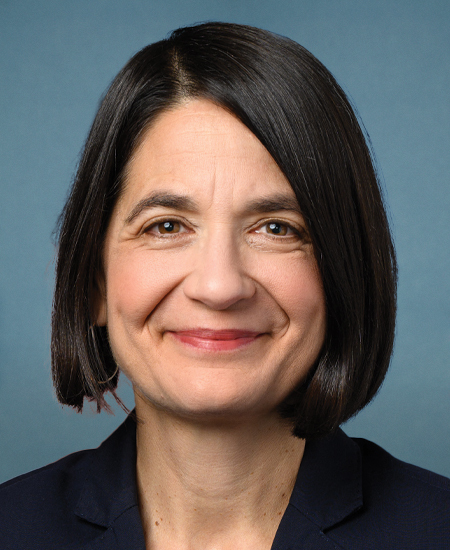
Becca Balint
63% support rate
Top opponent
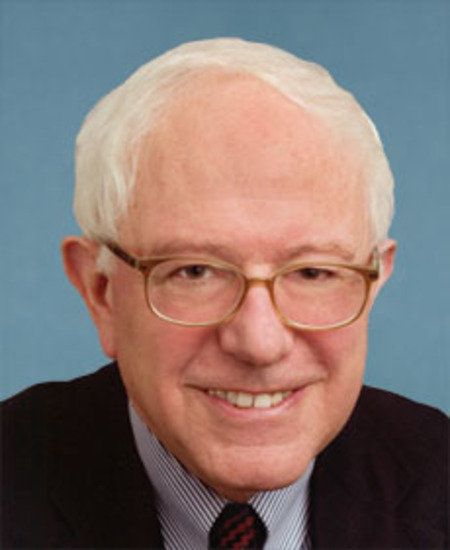
Bernard Sanders
23% support rate
Ranked legislators
3
1 support · 2 oppose
Key legislators

Who's moving criminal justice in Vermont

Legislators moving criminal justice in Vermont
Legislator Party Stance Support rate Votes
Becca Balint
Becca Balint House · District At-Large
D
Support
63% 154
Bernard Sanders
Bernard Sanders Senate
I
Oppose
23% 167
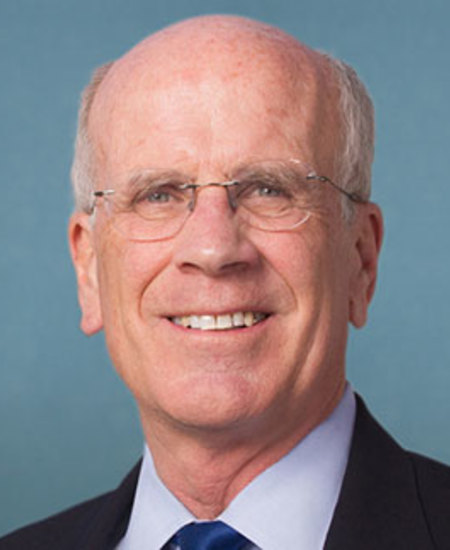
Peter Welch
Peter Welch Senate
D
Oppose
26% 168
Showing 1–10 of 109 bills

All criminal justice bills

in committee · United States · Senate Jul 30, 2026

S 5201: Lori Jackson-Nicolette Elias Domestic Violence Survivor Protection Act

The Lori Jackson-Nicolette Elias Domestic Violence Survivor Protection Act expands federal firearm restrictions to include individuals subject to any domestic violence restraining order, including temporary or emergency orders issued without the abuser's presence. It broadens the legal definition of an "intimate partner" to cover dating partners and other relationships protected by state laws, closing previous loopholes that allowed some abusers to keep guns. The bill also creates a federal grant program for states and tribes to fund the removal, storage, and return of firearms from individuals subject to these orders, requiring them to partner with local domestic violence service providers to ensure victim safety.
in committee · United States · House Sep 3, 2026

HR 10245: 9–8–8 and 9–1–1 Integration Act

The 9-8-8 and 9-1-1 Integration Act directs the Secretary of Health and Human Services to establish a multidisciplinary panel that will develop recommendations for training and protocols for emergency dispatchers. The primary goal is to ensure that individuals experiencing behavioral health or substance use crises are connected to appropriate care services rather than being met solely by law enforcement. The panel must consider integrating the 9-8-8 crisis line with the 9-1-1 system, utilizing standardized assessment tools to evaluate caller needs, and implementing training on cultural competency and implicit bias. Additionally, the legislation requires the creation of data collection standards to track response outcomes and disparities while protecting caller privacy, with reports submitted to Congress upon the release of recommendations and every five years thereafter.
Sub-Topics Law Enforcement Mental Health Tags Public Safety
in committee · United States · Senate Aug 3, 2026

S 5212: No Payoffs for Pardons Act

The No Payoffs for Pardons Act requires individuals who receive presidential clemency to file financial disclosure reports if they provided gifts or payments worth at least $10,000 to the President, their family members, or related political entities in exchange for that clemency. These reports must detail the nature and value of the benefits provided and will be made publicly available by the Department of Justice, with penalties including fines and imprisonment for those who willfully fail to comply or submit false information. Additionally, the bill updates federal bribery laws to explicitly include executive clemency as a bribe and extends the statute of limitations for prosecuting such bribery cases to ten years. By mandating transparency around the exchange of money for pardons, the legislation aims to prevent the misuse of the pardon power while leaving the President's actual decision-making authority on granting clemency unchanged.
in committee · United States · Senate Jul 23, 2026

S 5122: Inclusive Democracy Act of 2026

The Inclusive Democracy Act of 2026 ensures that individuals convicted of criminal offenses retain the right to vote in federal elections, regardless of whether the conviction occurred before or after the law's enactment. It mandates that courts, prisons, and parole offices notify incarcerated and supervised individuals that their criminal record does not strip them of their voting rights. The bill also requires carceral settings to provide voter registration forms and absentee ballot applications, allowing inmates to use either their prison address or their last known home address to register. Additionally, the legislation permits candidates and nonpartisan groups to distribute voting materials inside prisons and prohibits prosecution of inmates who mistakenly vote in local or state elections while registered for federal offices.
Sub-Topics Civil Rights Corrections Probation & Parole Tags Elections
in committee · United States · Senate Jul 16, 2026

S 5022: Cannabis Administration and Opportunity Act

The Cannabis Administration and Opportunity Act fundamentally changes federal law by removing marijuana from the Controlled Substances Act, effectively decriminalizing it at the federal level and allowing states to regulate their own cannabis markets without federal interference. To manage this new landscape, the bill creates a new federal agency called the Alcohol, Tobacco, and Cannabis Tax and Trade Bureau to oversee licensing, collect taxes, and prevent illicit trade, while also establishing a new Center for Cannabis Products within the FDA to regulate safety and labeling. The legislation includes significant restorative justice measures, such as automatically expunging federal cannabis convictions and prohibiting discrimination against individuals with such records in areas like immigration, security clearances, and access to federal benefits. Additionally, the bill provides billions of dollars in funding to support research into the health effects of cannabis, expand access to financial services for legitimate cannabis businesses, and assist communities and individuals harmed by past prohibition enforcement.
in committee · United States · Senate Jul 14, 2026

S 4966: High Court Gift Ban Act

The High Court Gift Ban Act prohibits federal judges from accepting gifts from individuals or entities that have a current or potential interest in cases before them. Under this law, judges can only accept items of value from prohibited sources if the gift is worth less than $50 and the total value from that source in a calendar year does not exceed $100. The bill includes specific exceptions for gifts from relatives, other judges, honorary degrees, public events, and certain professional organization benefits. Violations of the ban can result in civil penalties of up to $50,000 or criminal charges including fines and imprisonment. The Supreme Court and the Judicial Conference are required to create regulations within 180 days to enforce these new restrictions.
Sub-Topics Courts
in committee · United States · House Jul 14, 2026

HR 9688: High Court Gift Ban Act

The High Court Gift Ban Act prohibits federal judicial officers from accepting gifts from sources likely to appear before them, unless the gift is under $50, the total annual value from that source remains $100 or less, or it falls under specific exceptions like gifts from relatives or public events. The law defines a "gift" broadly to include items, services, and reimbursements, while allowing exceptions for personal hospitality within IRS limits and certain professional benefits available to the general public. Enforcement mechanisms include referrals to the Attorney General for violations, which can result in civil or criminal penalties similar to those for other federal ethics breaches. The bill requires the Supreme Court and the Judicial Conference to create implementing regulations within 180 days of enactment to ensure compliance.
Sub-Topics Courts
in committee · United States · Senate May 20, 2026

S 4608: Federal Death Penalty Prohibition Act

The Federal Death Penalty Prohibition Act bans the imposition of the death penalty for any federal crime committed on or after the date the law takes effect. It directly affects individuals currently facing or serving federal death sentences by requiring that all such cases be resentenced to a penalty other than death. This legislation removes the death penalty as a sentencing option for federal offenses and mandates a review for those already sentenced to die before the bill becomes law.
Sub-Topics Sentencing
in committee · United States · House May 13, 2026

HR 8798: Universal School Meals Program Act of 2026

The Universal School Meals Program Act of 2026 mandates that all public schools provide free breakfast and lunch to every enrolled student, regardless of income. It establishes specific funding rates for these meals, adjusts payments based on the use of locally sourced food, and eliminates the ability of schools to collect debt for unpaid charges. Additionally, the bill expands free meal access to summer programs, afterschool care, and incarcerated juveniles while updating poverty measurement standards across various federal education and nutrition laws.
Sub-Topics Student Health
passed · United States · Senate Jun 15, 2026

S 4394: Promoting Police Leadership Act

The Promoting Police Leadership Act directs the Attorney General to create and certify specialized training programs for police commanders, focusing on leadership, community trust, and data-driven policing. This initiative requires the training to be primarily in-person and include practical problem-solving exercises where officers develop and refine solutions for real-world challenges. The bill mandates that the Attorney General consult with local agencies and universities to design these curricula and publish a list of law enforcement units that successfully complete the courses. Additionally, the legislation requires periodic reports to Congress and a review by the Government Accountability Office to assess the program's effectiveness and implementation barriers. Importantly, the act does not override state or local authority to set their own certification standards for law enforcement officers.
Showing 1 to 10 of 109 bills
1 2 3 11 Next