Maddy summaryThis House resolution formally recognizes suicide as a significant public health issue in the United States and highlights the impact of the 988 Suicide and Crisis Lifeline on individuals and communities. It commends the establishment of the 988 number as a nationwide three-digit dialing code for crisis support, noting its role in connecting people to mental health resources. The bill supports the designation of September 8, 2026, as "988 Day" to raise awareness about the service and promote access to mental health care. Additionally, it encourages continued public education and federal, state, and local efforts to expand crisis intervention programs for high-risk populations.

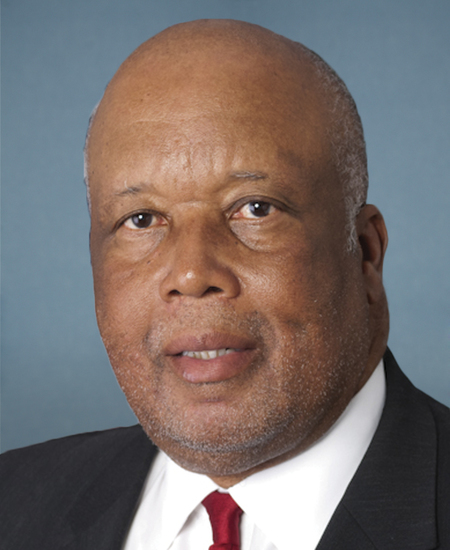
Rep. Bennie G. Thompson
Sponsored bills
Maddy summaryThis House resolution marks the 25th anniversary of the September 11, 2001 terrorist attacks by formally honoring the memory of the nearly 3,000 victims and recognizing the sacrifices made by first responders, military personnel, and the passengers of United Airlines Flight 93. The bill acknowledges the ongoing health challenges faced by survivors and responders, highlighting the role of the World Trade Center Health Program in providing long-term medical support. It also credits charitable organizations and community groups that have continued to assist victims' families and veterans over the past two decades. Finally, the resolution urges the American public to observe the anniversary with ceremonies and reaffirms Congress's commitment to remembering the events and lessons of that day.
Maddy summaryThis House concurrent resolution directs the President to withdraw U.S. Armed Forces from hostilities with any presidentially designated terrorist organization in the Western Hemisphere. The directive is issued under section 5(c) of the War Powers Resolution and applies unless Congress has separately authorized military action through a declaration of war or specific legislation.
Maddy summaryThis bill designates the U.S. Postal Service facility at 825 Highway 198 in Beaumont, Mississippi, as the "Jeremy Malone Post Office." It updates all official references in federal documents, maps, and records to reflect this new name. As a naming bill, it has no policy or funding impact - it solely commemorates an individual through the facility's official designation. The change affects only the postal facility and its official documentation.
Maddy summaryThis joint resolution expresses the support of the U.S. House of Representatives for designating November 9 of each year as Gold Star Father's Day. The bill honors fathers who have lost a child while serving in the Armed Forces by recognizing their sacrifice and the unique bond between fathers and their children. It does not create new legal requirements or funding but serves as a formal statement of congressional backing for this observance, which has already been adopted by several state legislatures.
Maddy summaryThe Green New Deal for Public Schools Act directs over $700 billion in federal funding to public schools, prioritizing those serving the most vulnerable communities based on CDC social vulnerability rankings. The legislation establishes a new Office of Sustainable Schools and authorizes grants for "healthy green retrofits" that convert school buildings into zero-carbon facilities with clean air, water, and energy systems, while also providing funds to hire additional educators, mental health professionals, and support staff. Additionally, the bill mandates increased federal funding for special education under the Individuals with Disabilities Education Act and creates a climate resiliency program that allows schools to function as community centers during natural disasters. All grant recipients must adhere to strict labor standards, including prevailing wage requirements, Buy American provisions, and local hiring goals that prioritize residents of the surrounding community.
Maddy summaryThe DHS Acquisition Documentation Integrity Act requires the Department of Homeland Security to maintain complete, accurate, and risk-tailored documentation for all major acquisition programs, which are defined as projects costing at least $300 million over their life cycle. Under this bill, agencies must prepare detailed cost estimates, performance analyses, and logistics plans that are verified against independent data and approved according to departmental policy. The law also mandates that the Under Secretary for Management submit a detailed breach report to Congress within 30 days if a program faces a cost overrun of more than 15 percent, a delay of over 180 days, or a failure to meet key performance thresholds. These reports must include explanations of causes, updated baselines, and remediation plans, with additional scrutiny required if cost overruns exceed 20 percent or delays surpass 12 months.
Maddy summaryThe Tuskegee Airmen Memorial Act of 2026 authorizes the organization Tuskegee Airmen, Inc. to build a commemorative monument on federal land in Washington, D.C., honoring the original Tuskegee Airmen who served in World War II. This legislation allows the group to accept private donations and cover all costs for the project without using federal funds, while requiring any leftover money to be deposited into specific government accounts. The bill also mandates that the memorial be constructed in compliance with existing federal standards for commemorative works.
Maddy summaryThe Wildfire Reduction Market Expansion Act of 2026 updates the Clean Air Act to broaden the definition of renewable biomass eligible for carbon credits. It specifically allows materials from forest management, such as slash, storm debris, and wood residuals, to be counted as renewable fuel if they come from sustainably managed lands or public forests designated for fuel reduction. The bill also includes vegetation cleared from defensible space around buildings and from wildfire risk reduction projects in the wildland-urban interface. By clarifying these categories and establishing certification requirements, the legislation aims to increase the supply of biomass available for generating renewable energy credits.
Maddy summaryThis bill requires pharmacy benefits managers (PBMs) administering prescription drug benefits for federal employee health plans to reimburse pharmacies at specific rates, including the national average drug cost plus a small percentage or $50, whichever is lower. It prohibits PBMs from favoring their own pharmacies, restricting patient choice, or reducing pharmacy payments after claims are processed. The bill establishes $10,000 civil penalties for violations, with debarment from federal health plans after 10 penalties in 10 years. This directly affects PBMs, in-network pharmacies, and federal health benefit plans covering millions of federal employees and their families. The law aims to ensure fair reimbursement practices and maintain pharmacy choice under the Federal Employees Health Benefits Program.