Issue · Transportation

Transportation

Every transportation bill, vote, and legislator stance in United States, automatically classified by Maddy, our AI policy reader.

Total bills
728
119th Congress
Top supporter
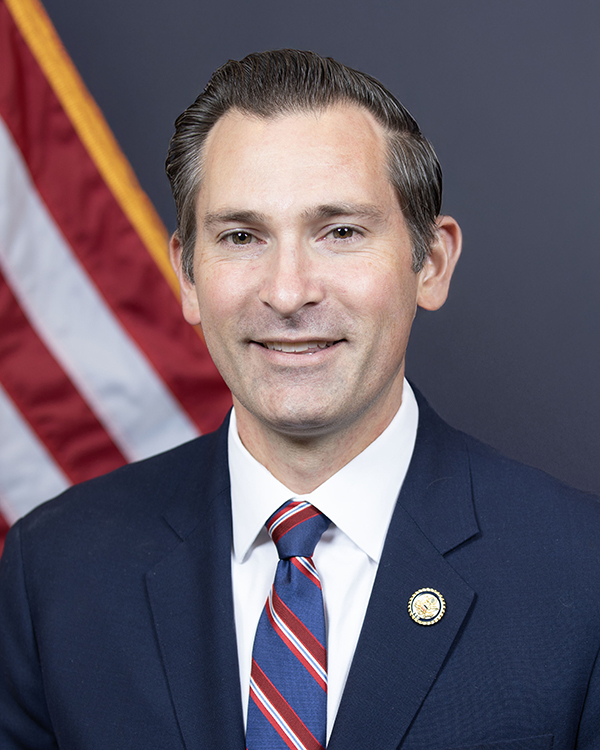
Matt Van Epps
86% support rate
Top opponent
Adelita S. Grijalva
14% support rate
Ranked legislators
10
5 support · 5 oppose
Key legislators

Who's moving transportation in United States

Legislators moving transportation in United States
Legislator Party Stance Support rate Votes
Matt Van Epps
Matt Van Epps House · District 7
R
Strong +
86% 67
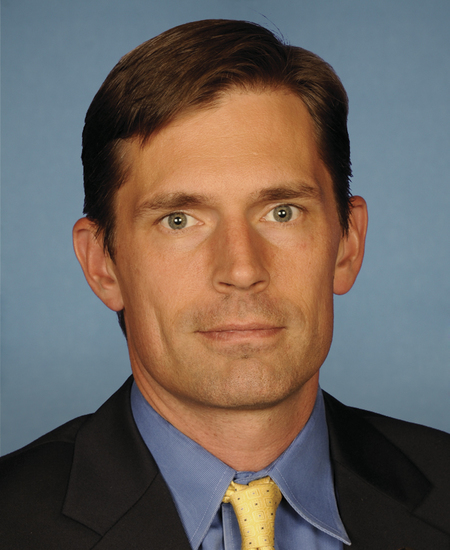
Martin Heinrich
Martin Heinrich Senate
D
Support
78% 133
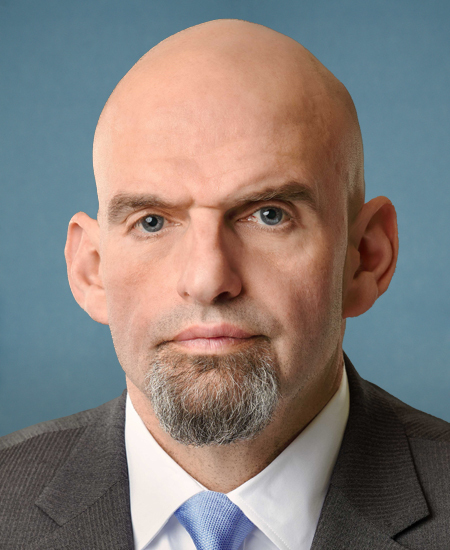
John Fetterman
John Fetterman Senate
D
Support
70% 150
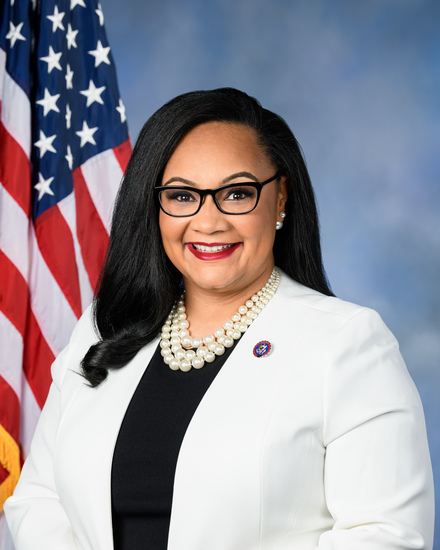
Nikema Williams
Nikema Williams House · District 5
D
Support
70% 113
Greg Casar
Greg Casar House · District 35
D
Support
70% 105
Adelita S. Grijalva
Adelita S. Grijalva House · District 7
D
Strong −
14% 72
James R. Walkinshaw
James R. Walkinshaw House · District 11
D
Strong −
14% 80
Josh Gottheimer
Josh Gottheimer House · District 5
D
Strong −
14% 109
Marsha Blackburn
Marsha Blackburn Senate
R
Oppose
22% 128
Donald Norcross
Donald Norcross House · District 1
D
Oppose
25% 107
Showing 1–10 of 728 bills

All transportation bills

in committee · United States · House Sep 4, 2026

HR 10303: FLIGHT DECK Act

The FLIGHT DECK Act requires the Federal Aviation Administration to create a voluntary program that allows certified air traffic controllers to sit on the flight deck of commercial or general aviation aircraft during flights. This initiative is designed to help controllers better understand the onboard conditions and complex requirements faced by flight crews. Participation is limited to one round trip within the United States, its territories, Alaska, and Hawaii, with no government reimbursement for travel expenses. The FAA must consult with pilot and controller unions to establish safety policies and ticketing rules, and it must submit a report to Congress one year after the program begins detailing participation levels and any barriers encountered.
Sub-Topics Airports
in committee · United States · House Sep 8, 2026

HR 10304: Drone Safety Statement Modernization Act

The Drone Safety Statement Modernization Act requires manufacturers of small unmanned aircraft systems to provide a safety statement to operators at the time they first activate their drones. Operators must electronically acknowledge that they have read and understood this document, which covers applicable laws, airspace restrictions, and potential penalties for unsafe operation. The Federal Aviation Administration is tasked with developing these requirements and issuing an example statement within 120 days of enactment. The FAA must also review and update the safety statement requirements annually to ensure they remain current.
Sub-Topics Airports
in committee · United States · House Aug 13, 2026

HR 10099: Freedom Haulers Act

The Freedom Haulers Act extends the existing waiver period for military service members seeking a commercial driver's license from 12 to 24 months after separation. It requires states to waive specific knowledge and driving tests for current or former military personnel who held designated vehicle operator roles, such as motor transport operators or fuelers, within the last two years. To qualify, applicants must certify they have operated comparable commercial vehicles during that period and maintain a clean record with no serious traffic violations, license suspensions, or at-fault crashes. The bill also mandates waivers for specialized endorsements related to passenger transport, tank vehicles, and hazardous materials, provided the applicant meets similar service and safety criteria.
in committee · United States · House Sep 8, 2026

HR 10307: Anaktuvuk Pass Food Security Access Act

The Anaktuvuk Pass Food Security Access Act amends the Alaska National Interest Lands Conservation Act to allow local residents of Anaktuvuk Pass to use snowmobiles, motorboats, and various off-road vehicles for subsistence purposes. This change overrides existing restrictions that generally prohibit such vehicle use on federal lands in the area. The bill directly affects residents who rely on these modes of transportation to hunt, fish, or gather food. It also specifies that certain other provisions regarding land management do not apply to these authorized subsistence activities.
in committee · United States · House Sep 3, 2026

HR 10241: I–47 Future Interstate Act of 2026

The I-47 Future Interstate Act of 2026 designates a specific stretch of United States Route 287 as a high-priority transportation corridor. This route runs from State Highway 87 in Port Arthur, Texas, to United States Route 89 in Choteau, Montana. The bill formally assigns the number I-47 to this designated path within the national interstate highway system.
passed · United States · House Sep 1, 2026

HRES 1499: Providing for consideration of the bill (H.R. 1501) to amend the FAST Act to include certain mineral production activities as a covered project, and for other purposes; providing for consideration of the bill (H.R. 9436) to amend the Consolidated Appropriations Act, 2023 to extend the time period for which certain regulations concerning the North Atlantic right whale are effective; providing for consideration of the resolution (H. Res. 1490) providing for the condemnation and denouncement of socialism in all its forms, and for other purposes; providing for consideration of the bill (H.R. 4795) to amend the Higher Education Act of 1965 to prohibit an institution that participates in a nonexpressive commercial boycott of Israel from being eligible for certain funds under that Act, to require an institution that participates in certain programs under that Act to certify that students are not unreasonably obstructed from participating in academic programs in Israel, and for other purposes; and relating to consideration of motions to suspend the rules.

H.Res. 1499 is a procedural resolution that establishes specific rules for the House of Representatives to consider four separate legislative measures and a constitutional amendment proposal. It allows for the consideration of H.R. 1501, which would amend the FAST Act to classify certain mineral production activities as covered infrastructure projects, and H.R. 9436, which extends the effective period of regulations concerning North Atlantic right whales. The resolution also provides the framework for debating H.Res. 1490, a measure condemning socialism, and H.R. 4795, which would restrict federal funding for higher education institutions that participate in commercial boycotts of Israel or obstruct student participation in academic programs there. Additionally, it extends debate time to one hour for a joint resolution proposing a constitutional amendment to fix the size of the Supreme Court at nine justices.
in committee · United States · House Sep 2, 2026

HR 10237: REVOKE Act

The REVOKE Act requires trucking companies and other commercial vehicle operators to maintain an active USDOT number in order to legally conduct business. It prohibits employers from operating without this active status and mandates that the Department of Transportation only issue numbers after verifying all registration requirements are met. Additionally, the bill directs officials to immediately deactivate any USDOT number if a company lacks valid registration or fails to submit required periodic updates.
Sub-Topics Freight
in committee · United States · House Aug 13, 2026

HR 10102: Data Center Community Reinvestment Act of 2026

The Data Center Community Reinvestment Act of 2026 imposes a federal excise tax of one cent per kilowatt-hour on electricity consumed by data centers with a peak power load exceeding one megawatt. The revenue generated from this tax is divided equally among five specific government funds: the Land and Water Conservation Fund, the Housing Trust Fund, the Hazardous Substance Superfund, the Highway Trust Fund, and a newly established Energy Technology Trust Fund. This legislation directly affects large-scale data center operators by adding a cost to their energy usage, while directing the collected funds toward infrastructure, environmental cleanup, housing, and energy technology initiatives.
in committee · United States · Senate Aug 6, 2026

S 5311: Cabin Air Safety Act of 2026

The Cabin Air Safety Act of 2026 mandates that commercial airlines install real-time air quality monitoring equipment on their aircraft to detect engine oil or hydraulic fluid fumes, while also requiring annual safety training for pilots, flight attendants, and mechanics. The bill establishes a standardized reporting system for these events, allowing the Federal Aviation Administration (FAA) to investigate incidents where medical attention is required and to share aggregated data with the public through a searchable website. Additionally, it requires aircraft manufacturers to include procedures for responding to air quality alerts in their flight manuals and directs the FAA to continue researching technologies that prevent cabin air contamination.
Sub-Topics Airports
in committee · United States · Senate Aug 5, 2026

S 5264: Bus Operator Safety and Security Act

The Bus Operator Safety and Security Act requires that new fixed route buses purchased with specific federal funds be equipped with protective barriers separating the driver's area from passengers. This mandate applies to buses at least 30 feet long with a useful life of 10 years or more, excluding those funded under section 5311. The required barrier must extend from the floor to the ceiling and fully enclose the workstation to prevent unauthorized entry by people, fluids, or objects while maintaining the driver's line of sight. This requirement takes effect two years after enactment, unless a labor organization representing the majority of frontline workers agrees to waive it for that specific purchase.
Sub-Topics Public Transit
Showing 1 to 10 of 728 bills
1 2 3 73 Next