Issue · Labor & Employment

Labor & Employment (Labor Standards)

Every labor & employment bill, vote, and legislator stance in United States, automatically classified by Maddy, our AI policy reader.

Total bills
264
119th Congress
Top supporter
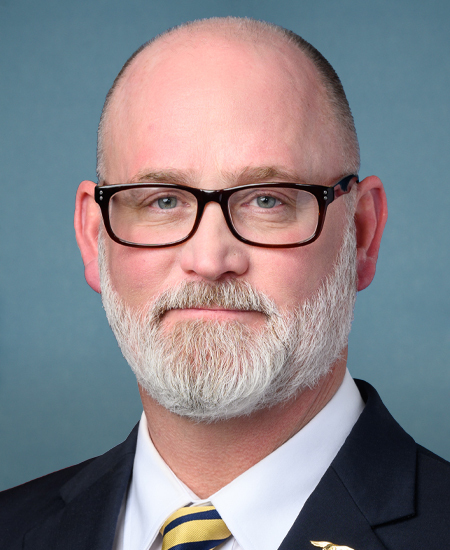
Derrick Van Orden
100% support rate
Top opponent
Julie Fedorchak
33% support rate
Ranked legislators
10
5 support · 5 oppose
Key legislators

Who's moving labor standards in United States

Legislators moving labor standards in United States
Legislator Party Stance Support rate Decisive votes
Derrick Van Orden
Derrick Van Orden House · District 3
R
Strong +
100% 3
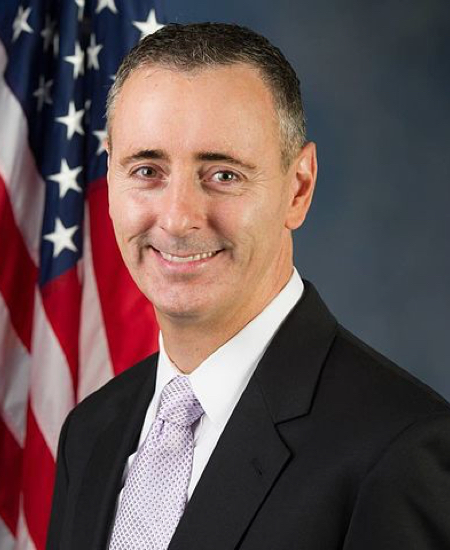
Brian K. Fitzpatrick
Brian K. Fitzpatrick House · District 1
R
Strong +
86% 7
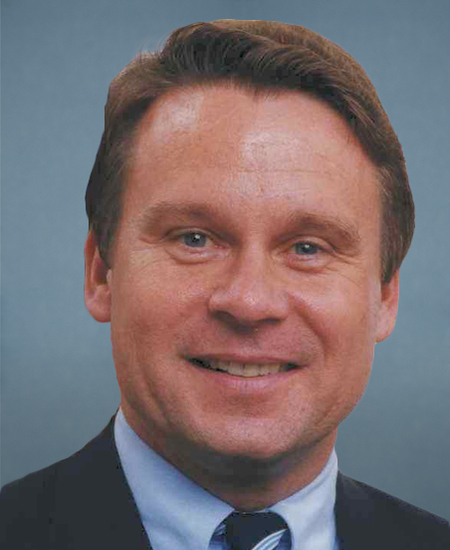
Christopher H. Smith
Christopher H. Smith House · District 4
R
Strong +
86% 7
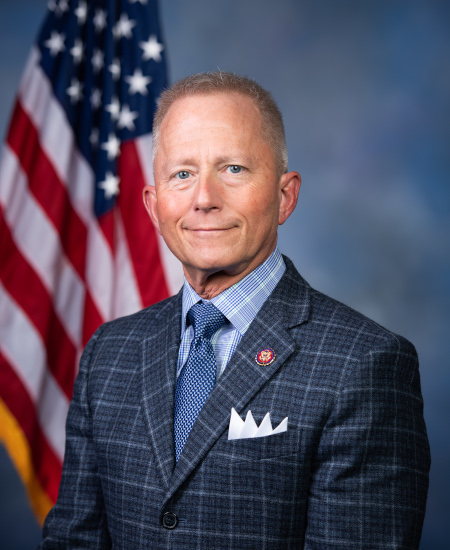
Jefferson Van Drew
Jefferson Van Drew House · District 2
R
Strong +
86% 7
Nick LaLota
Nick LaLota House · District 1
R
Strong +
86% 7
Julie Fedorchak
Julie Fedorchak House · District At-Large
R
Oppose
33% 6
Mike Rogers
Mike Rogers House · District 3
R
Oppose
33% 6
Russ Fulcher
Russ Fulcher House · District 1
R
Oppose
33% 6
Gregory F. Murphy
Gregory F. Murphy House · District 3
R
Oppose
33% 3
Wesley Hunt
Wesley Hunt House · District 38
R
Oppose
33% 3
Showing 141–150 of 264 bills

All labor & employment bills

in committee · United States · House May 13, 2025

HR 3367: Improving Training for School Food Service Workers Act of 2025

HR 3367, the "Improving Training for School Food Service Workers Act of 2025," requires school food service workers in public schools to receive mandatory training during paid working hours. The bill mandates that training must be offered in-person when appropriate, include hands-on practice, and cost workers nothing. If training occurs outside regular hours, workers must be paid at their regular rate (including overtime), consulted about scheduling, and protected from penalties for not attending. This law amends the Child Nutrition Act of 1966 and does not override existing state or local labor laws governing employer-employee relationships.
in committee · United States · Senate Apr 9, 2025

S 1381: Protecting Employees and Retirees in Business Bankruptcies Act of 2025

Protecting Employees and Retirees in Business Bankruptcies Act of 2025 This bill establishes limits on executive compensation and provides protections for employee wages and benefits if an employer files for Chapter 11 (reorganization) bankruptcy. First, the bill increases the limit on claims for wages, salaries, other employee benefits, and commissions from $10,000 to $20,000 and eliminates the requirement that such claims must have been earned within 180 days before the filing of the bankruptcy petition. The bill grants certain claims higher priority in the bankruptcy process, including specific types of severance pay; contributions to an employee benefit plan; back pay, civil penalties, or damages arising from certain labor law violations; and certain pension plan withdrawal liabilities. The bill also limits executive compensation under a reorganization plan. For example, insiders (parties with close relationships to the debtor), senior executives, and others as specified by the bill may only receive payments or other distributions that are generally applicable to all full-time employees, subject to certain limits. The bill further restricts the compensation of any insider who continues to be employed by the debtor. A reorganization plan may only be approved if it provides for the recovery of claims relating to retiree benefits or for other financial returns paid under the plan. The bill also provides protections for collective bargaining agreements (CBAs) during bankruptcy proceedings. If a proceeding resulting from a CBA was or could have been commenced before the bankruptcy, the bankruptcy does not act as a stay in such a proceeding.
in committee · United States · House Jun 12, 2025

HR 3971: Domestic Workers Bill of Rights Act

The Domestic Workers Bill of Rights Act (HR 3971) would establish key labor protections for domestic workers, including nannies, housekeepers, and caregivers who work in private homes. The bill requires written agreements for workers employed 8+ hours per week, provides earned sick days (1 hour for every 30 hours worked), mandates fair scheduling practices with 72-hour notice for schedule changes, and extends overtime protections to live-in domestic employees. It also prohibits unfair wage deductions, guarantees meal and rest breaks, and ensures privacy protections including no monitoring in private living spaces. The bill directly affects approximately 2.2 million domestic workers across the U.S., who are disproportionately women of color and immigrants. Enforcement would be handled by the Department of Labor through new complaint resolution mechanisms and oversight.
in committee · United States · House Apr 30, 2025

HR 3118: No Tax on Overtime Act

HR 3118, the "No Tax on Overtime Act," creates a new tax deduction for workers who earn overtime pay under the Fair Labor Standards Act (FLSA). It allows taxpayers to deduct up to $100 per 100 hours of overtime (capped at 300 hours yearly) from their taxable income, with a phaseout for higher earners ($100 reduction for every $1,000 over $100,000 AGI). Employers must report overtime amounts on W-2 forms, and taxpayers must include the recipient’s Social Security number to claim the deduction. The deduction applies to tax years beginning after December 31, 2024.
in committee · United States · House Sep 9, 2025

HR 5222: ESP, Paraprofessional, and Education Support Staff Family Leave Act

This bill modifies the Family and Medical Leave Act (FMLA) to extend eligibility to school support staff, including paraprofessionals, cafeteria workers, bus drivers, and clerical staff. It allows these employees to qualify for FMLA leave if they work 60% of their expected monthly hours (instead of the standard 1,250 hours), based on their school’s assigned schedule. Employers must maintain records of expected hours for each staff member. The change directly benefits part-time and seasonal education support staff who previously faced barriers to FMLA coverage.
in committee · United States · House Dec 18, 2025

HR 6880: Honoring Family-Friendly Workplaces Act

This bill establishes a voluntary federal certification program recognizing employers that meet specific family-friendly workplace standards. To qualify, employers must offer paid family leave (at least 12 weeks annually for reasons like childbirth, adoption, or caring for sick family members), paid sick days separate from other leave, fertility/adoption assistance, child care subsidies, flexible scheduling after parental leave, remote work options when feasible, and lactation support. The program, administered by the Secretary of Labor, would certify employers demonstrating these policies through a submitted application. The certification aims to publicly recognize companies supporting employees in balancing work and family responsibilities.
in committee · United States · Senate Dec 17, 2025

S 3550: Schedules That Work Act

The Schedules That Work Act would require employers in retail, food service, cleaning, hospitality, and warehouse sectors to provide workers with at least 14 days' advance notice of their schedules and pay predictability pay for last-minute changes. It gives employees the right to request schedule changes for reasons including health conditions, caregiving responsibilities, or enrollment in career training programs. Employers must engage in a good-faith process to address these requests unless they have a legitimate business reason to deny them. The bill aims to address widespread problems with unpredictable schedules that make it difficult for low-wage workers to manage family responsibilities, access healthcare, and secure stable housing and child care.
in committee · United States · House Feb 13, 2026

HR 7577: TIP Improvement Act of 2026

HR 7577, the TIP Improvement Act of 2026, raises the minimum wage for tipped employees to the standard federal minimum wage (not the lower tipped wage) and requires employers to retain all tips for employees, allowing only permitted tip pooling. It also updates tax rules by doubling the qualified tip deduction limit for joint returns ($50,000), adding safeguards against fraud (like requiring tips be paid to unrelated individuals without business ownership ties), and including automatic gratuities in hospitality, food service, and cosmetology professions as deductible tips. The bill directly affects tipped workers in these industries by improving their pay security and tax benefits. Key provisions take effect for tax years beginning after December 31, 2025.
in committee · United States · House Feb 12, 2026

HR 7541: U.S. Farmworker Protection Act

HR 7541, the U.S. Farmworker Protection Act, sets a 400,000 annual cap on H-2A visa positions for temporary agricultural workers, with exceptions for jobs covered by union collective bargaining agreements. This directly affects agricultural employers seeking H-2A workers and U.S. farmworkers who may face wage or job competition from the program. The key mechanism limits total certified H-2A positions per fiscal year (excluding union-represented roles), addressing concerns about the program's rapid growth - from 82,099 jobs in 2008 to 384,865 in 2024 - potentially impacting U.S. farmworker wages and conditions. The bill does not change existing H-2A rules but adds this numerical restriction to Congress's stated policy concerns.
in committee · United States · House Aug 5, 2025

HR 4896: Warehouse Worker Protection Act

The Warehouse Worker Protection Act establishes new requirements for employers in warehouse facilities to protect workers from harmful quotas and workplace surveillance practices. It requires employers to provide written descriptions of quotas and workplace monitoring to workers, prohibits quotas that interfere with breaks, safety compliance, or anti-discrimination rights, and gives workers the right to access their work speed data. The bill creates a Fairness and Transparency Office within the Department of Labor to enforce these requirements and investigate violations, with enforcement also involving the Federal Trade Commission. Employers with more than 200 employees at covered warehouse facilities (including distribution centers, couriers, and warehouses) are directly affected by these new requirements, which include new protections against retaliation for workers who exercise these rights.
Showing 141 to 150 of 264 bills
Previous 1 … 14 15 16 … 27 Next