Issue · Labor & Employment

Labor & Employment (Collective Bargaining)

Every labor & employment bill, vote, and legislator stance in United States, automatically classified by Maddy, our AI policy reader.

Total bills
117
119th Congress
Top supporter
Adam Gray
100% support rate
Top opponent
Chip Roy
0% support rate
Ranked legislators
10
5 support · 5 oppose
Key legislators

Who's moving collective bargaining in United States

Legislators moving collective bargaining in United States
Legislator Party Stance Support rate Votes
Adam Gray
Adam Gray House · District 13
D
Strong +
100% 7
Brian K. Fitzpatrick
Brian K. Fitzpatrick House · District 1
R
Strong +
100% 7
Brittany Pettersen
Brittany Pettersen House · District 7
D
Strong +
100% 7
Chris Pappas
Chris Pappas House · District 1
D
Strong +
100% 7
Christopher H. Smith
Christopher H. Smith House · District 4
R
Strong +
100% 7
Chip Roy
Chip Roy House · District 21
R
Strong −
0% 7
Eric Burlison
Eric Burlison House · District 7
R
Strong −
0% 7
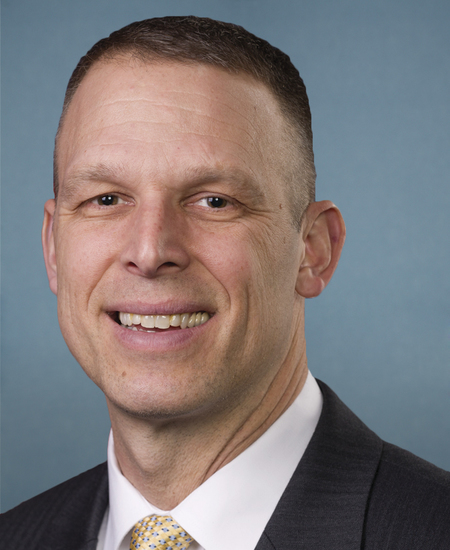
Scott Perry
Scott Perry House · District 10
R
Strong −
0% 7
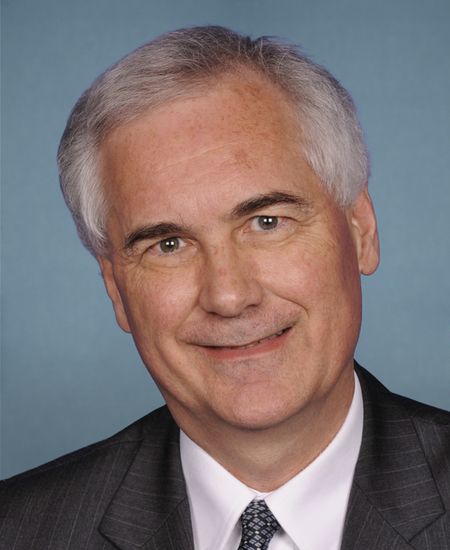
Tom McClintock
Tom McClintock House · District 5
R
Strong −
0% 7
Celeste Maloy
Celeste Maloy House · District 2
R
Strong −
0% 6
Showing 111–117 of 117 bills

All labor & employment bills

in committee · United States · Senate Nov 6, 2025

S 3124: Protection on the Picket Line Act

This bill (S 3124, "Protection on the Picket Line Act") amends federal labor law to protect employees engaging in union-related activities, like picketing. It clarifies that employers cannot discipline workers for such activity unless the General Counsel proves the employer knew about the protected activity and acted with animus against it, and the employer fails to show they would have taken the same action regardless. The key mechanism shifts the burden to employers to prove disciplinary actions would have occurred even without the protected activity. This directly affects workers participating in union organizing and employers disciplining them for those activities under current labor law.
in committee · United States · Senate Apr 3, 2025

S 1286: Tax Fairness for Workers Act

This bill would allow workers to deduct union dues directly from their taxable income (an "above-the-line" deduction) and restore deductions for other work-related expenses like uniforms or tools that were disallowed after 2017. It affects employees who pay union dues or incur job-specific costs, particularly those in unionized workplaces or professions requiring specialized equipment. The key mechanism creates a new deduction for union dues under existing tax code sections and revives the ability to itemize other work expenses, excluding them from the 2% floor on miscellaneous deductions. These changes would apply to tax returns filed for years beginning after December 31, 2024.
passed · United States · House Jun 10, 2026

HR 5408: Faster Labor Contracts Act

HR 5408, the Faster Labor Contracts Act, requires employers to begin negotiating a first contract with a newly certified union within 10 days of written request. If no agreement is reached within 90 days, the parties must seek mediation, and if unresolved after 30 days of mediation, the dispute moves to binding arbitration by a three-member panel. The arbitration decision, based on factors like employer finances, industry standards, and cost of living, becomes binding for two years. This bill directly affects newly certified unions and their employers during initial contract negotiations, aiming to reduce delays that currently average 465 days.
in committee · United States · House Jun 26, 2025

HR 4154: Employee Rights Act

The Employee Rights Act (HR 4154) makes several significant changes to labor law. It requires secret ballot elections for union representation, prohibits employees without lawful immigration status from voting in union elections, and establishes new privacy protections for employee information used in organizing campaigns. The bill also changes the criteria for determining employee status under labor laws, creates "independent negotiating" for workers who have left union representation, and restricts what can be included in collective bargaining agreements regarding diversity initiatives. These changes would affect workers, employers, and labor organizations across the United States.
in committee · United States · House Sep 11, 2025

HR 5338: Union Auto Workers Job Protection Act

HR 5338, the Union Auto Workers Job Protection Act, requires federal agencies to mandate detailed labor and safety information from contractors bidding on vehicle assembly contracts. Specifically, bidders must disclose plant locations, average/minimum/maximum wages, temporary worker counts, and any labor (NLRB) or safety (OSHA) violations at each facility. This applies directly to motor vehicle assembly employers (like auto plants) and affects federal contracts for vehicle assembly. The bill also prohibits federal spending on delivery vehicles unless contractors agree to remain neutral in union organizing and comply with union neutrality agreements, as seen in the Postal Service's Oshkosh Defense contract.
in committee · United States · Senate Nov 19, 2025

S 3215: Putting American Workers First Act

S 3215, the "Putting American Workers First Act," amends the National Labor Relations Act to prohibit employers from hiring unauthorized workers (individuals without legal work status) and labor organizations from representing them in collective bargaining. It makes these actions unfair labor practices, unless the employer or labor organization used a good-faith verification system like E-Verify to confirm the individual’s legal status. The bill directly affects employers and labor unions by requiring proof of work authorization before hiring or representing workers. Key provisions clarify that using the existing immigration verification system (Section 274A of the Immigration and Nationality Act) satisfies the good-faith requirement for avoiding penalties. The bill does not ban hiring unauthorized workers outright but mandates verification to avoid unfair labor practice claims.
in committee · United States · Senate Mar 12, 2025

S 997: Rights for the TSA Workforce Act

This bill transitions Transportation Security Administration (TSA) employees from TSA-specific personnel systems to the standard federal system under Title 5 of the U.S. Code, requiring completion by December 31, 2025. It prohibits changes to current TSA personnel policies during transition, ensures no reduction in pay or benefits for employees, and preserves collective bargaining rights for screening agents. The bill mandates annual reports on workforce satisfaction, retention rates, and actions to improve morale, as well as reports on recruitment, diversity, and workplace safety to Congress. It includes specific protections for Federal Air Marshals regarding mental health, suicide rates, and workplace conditions. The TSA must submit detailed implementation plans to Congress within 7 days of the bill's enactment.
Showing 111 to 117 of 117 bills
Previous 1 10 11 12