Issue · Labor & Employment

Labor & Employment (Collective Bargaining)

Every labor & employment bill, vote, and legislator stance in United States, automatically classified by Maddy, our AI policy reader.

Total bills
117
119th Congress
Top supporter
Adam Gray
100% support rate
Top opponent
Chip Roy
0% support rate
Ranked legislators
10
5 support · 5 oppose
Key legislators

Who's moving collective bargaining in United States

Legislators moving collective bargaining in United States
Legislator Party Stance Support rate Votes
Adam Gray
Adam Gray House · District 13
D
Strong +
100% 7
Brian K. Fitzpatrick
Brian K. Fitzpatrick House · District 1
R
Strong +
100% 7
Brittany Pettersen
Brittany Pettersen House · District 7
D
Strong +
100% 7
Chris Pappas
Chris Pappas House · District 1
D
Strong +
100% 7
Christopher H. Smith
Christopher H. Smith House · District 4
R
Strong +
100% 7
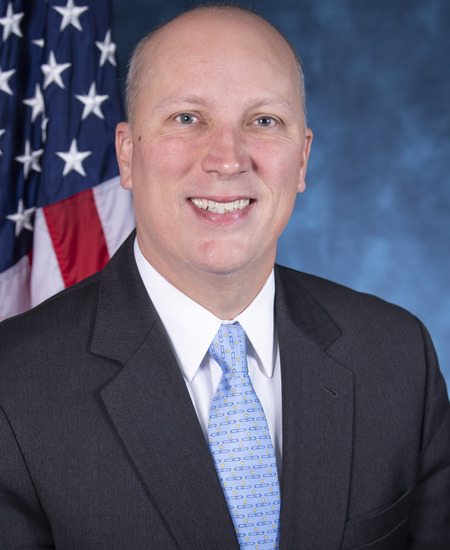
Chip Roy
Chip Roy House · District 21
R
Strong −
0% 7
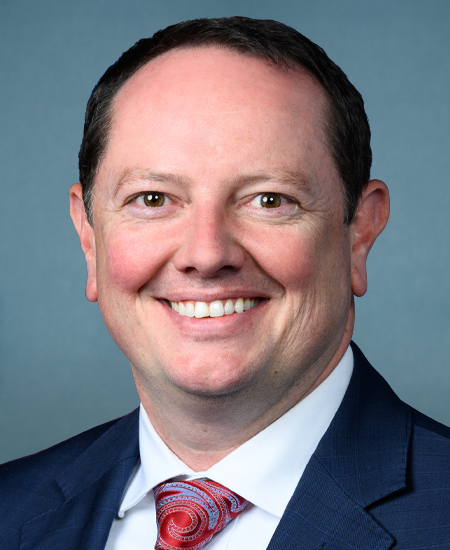
Eric Burlison
Eric Burlison House · District 7
R
Strong −
0% 7
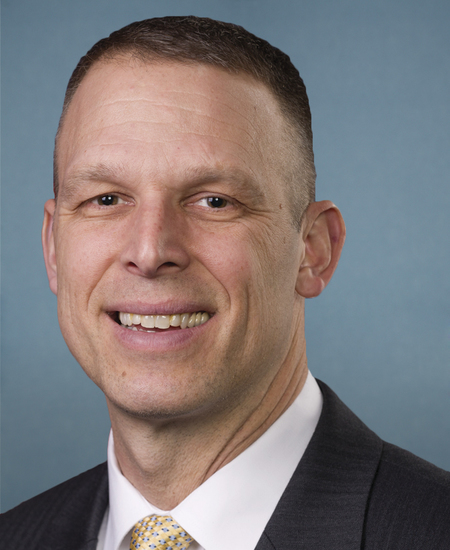
Scott Perry
Scott Perry House · District 10
R
Strong −
0% 7
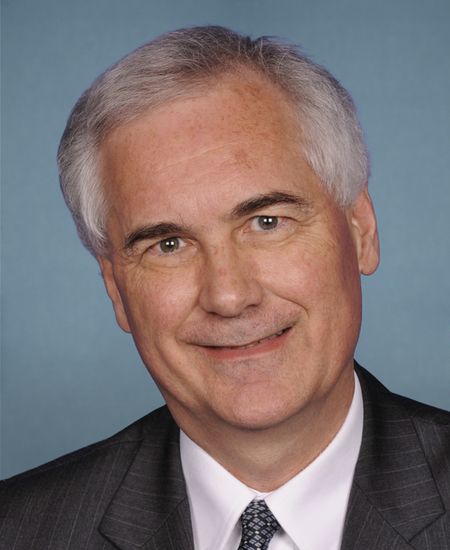
Tom McClintock
Tom McClintock House · District 5
R
Strong −
0% 7
Celeste Maloy
Celeste Maloy House · District 2
R
Strong −
0% 6
Showing 91–100 of 117 bills

All labor & employment bills

in committee · United States · Senate Feb 12, 2025

S 533: National Right-to-Work Act

S 533, the National Right-to-Work Act, eliminates requirements for workers to join a union or pay dues as a condition of employment in private-sector workplaces and railroads. It amends the National Labor Relations Act (NLRA) and Railway Labor Act by removing language that allowed "union security agreements," meaning employers and unions can no longer mandate union membership or financial dues for employees. This directly affects workers in unionized private companies and railroad jobs covered by collective bargaining agreements. The law applies to new or renewed contracts after its enactment, changing how labor agreements can structure financial obligations for employees.
in committee · United States · House Apr 8, 2025

HR 2676: No Union Time on the Taxpayer’s Dime Act

This bill amends Title 5 of the U.S. Code to eliminate "official time" for federal employees engaging in union activities. It requires employees to perform all union-related work during non-duty time (e.g., personal time, not paid work hours), directly affecting federal workers who are union members. The key provision changes Section 7131 to state that any labor organization business must occur when employees are in a non-duty status. This policy shift removes the previous allowance for using paid work time for union duties, making it a concrete change to federal employment rules.
in committee · United States · Senate Nov 18, 2025

S 3196: Right to Representation for Department of Veterans Affairs Workers Act of 2025

This bill (S 3196) gives most Department of Veterans Affairs (VA) employees the right to have a representative (like a union member or chosen person) present during any VA examination that might lead to disciplinary action, if the employee requests it. It directly affects VA workers in covered positions, excluding senior executives, certain appointed staff, and political appointees. The key provision requires the VA Secretary to provide this representation opportunity during such examinations, using the employee’s work time if needed. The bill aims to ensure VA employees have support during potentially disciplinary proceedings.
in committee · United States · Senate Apr 8, 2025

S 1352: Public Service Freedom to Negotiate Act of 2025

The Public Service Freedom to Negotiate Act of 2025 establishes federal minimum standards for collective bargaining rights for public employees and supervisory employees. The Federal Labor Relations Authority will determine if states' laws "substantially provide" these rights, and if not, the federal standards will apply to affected workers. The bill guarantees rights like forming labor organizations, negotiating wages and working conditions, and resolving disputes through mediation or arbitration, while prohibiting strikes that would disrupt emergency services. Existing collective bargaining agreements and units are protected from the bill's implementation.
in committee · United States · Senate Mar 5, 2025

S 852: Richard L. Trumka Protecting the Right to Organize Act of 2025

This bill, the Richard L. Trumka Protecting the Right to Organize Act of 2025, aims to strengthen workers' rights to organize and bargain collectively. It would make it harder for employers to classify workers as independent contractors by changing the definition of "employee," restricts employers from threatening to permanently replace workers who strike, and prohibits them from requiring employees to give up their right to pursue class or collective claims. The bill also changes election procedures to make it easier for workers to form unions, requires employers to post notices about workers' rights in conspicuous locations, and increases penalties for unfair labor practices. It directly affects employers and workers across various industries by altering the landscape of labor organizing and collective bargaining.
in committee · United States · House Mar 21, 2025

HR 2241: Secret Ballot Protection Act

The Secret Ballot Protection Act requires that workers choose their labor union representative through a secret ballot election conducted by the National Labor Relations Board (NLRB), replacing private agreements between employers and unions. It amends the National Labor Relations Act to mandate secret ballot elections for both initial union recognition and decertification (removing a union as representative), ensuring workers' choices remain free from employer influence. The law applies only to new or changed representation relationships after its enactment, leaving existing union contracts unaffected. The NLRB must update its regulations within six months to implement these changes.
in committee · United States · House Apr 7, 2025

HR 2692: No Tax Breaks for Union Busting (NTBUB) Act

The No Tax Breaks for Union Busting Act would deny tax deductions for employers who spend money to influence employees' decisions about union activities, such as union elections or collective bargaining. It defines "labor organization activities" broadly to include union elections, labor disputes, and collective actions. The bill requires employers to report such spending on tax returns and prevents them from deducting these expenses from taxable income. This would apply to employers using tactics like captive audience meetings, outside consultants, or other efforts to sway workers' union decisions. The policy aims to remove tax incentives for employers to interfere with workers' rights under labor law.
in committee · United States · Senate Nov 6, 2025

S 3115: NLRB Stability Act

The NLRB Stability Act (S 3115) amends the National Labor Relations Act to clarify court procedures for labor disputes. It requires that National Labor Relations Board (NLRB) cases involving alleged unfair labor practices be filed in the specific U.S. Court of Appeals for the circuit where the alleged violation occurred, or in the D.C. Circuit. The bill also adds a provision stating that NLRB orders must not conflict with decisions from the relevant federal appeals court. This changes venue rules to simplify where cases are heard, directly affecting employers, unions, and the NLRB in labor practice disputes.
in committee · United States · Senate May 6, 2025

S 1606: Overtime Wages Tax Relief Act

The Overtime Wages Tax Relief Act would create a new tax deduction for eligible workers, allowing them to subtract up to $10,000 of their overtime pay (or $20,000 for joint tax returns) from their taxable income. This deduction phases out for higher earners, reducing by $50 for every $1,000 their income exceeds $100,000 (or $200,000 for joint returns). To qualify, overtime pay must be at 1.5 times the regular rate for hours worked beyond 40 in a week, as defined by the Fair Labor Standards Act or a collective bargaining agreement. The bill also requires employers to report overtime pay on tax forms and adjusts withholding procedures, effective for tax years beginning after December 31, 2025.
in committee · United States · Senate Jul 31, 2025

S 2568: Protecting American Jobs Act

This bill amends the National Labor Relations Act to shift labor dispute resolution from the National Labor Relations Board (NLRB) to federal courts. It eliminates the NLRB’s authority to investigate unfair labor practice charges or file complaints, requiring workers or unions to instead file civil lawsuits in federal court for issues like retaliation or union interference. The NLRB’s rulemaking power is also restricted to internal operations, prohibiting it from creating rules affecting workers’ or employers’ substantive rights. This directly affects workers, unions, and employers involved in labor disputes, as it changes how allegations of unfair labor practices are addressed. The bill also mandates the NLRB to review and revise existing regulations within six months to align with these changes.
Showing 91 to 100 of 117 bills
Previous 1 9 10 11 12 Next